
AI-led digital transformation for real estate.
Modernise what is breaking quietly.
If your systems were built for a different era and the next phase of growth needs a stronger digital core, this is where we start. Senior-led advisory and implementation across 14 countries, redesigning workflows, customer journeys, and decisions around AI agents, automation, and the right data foundation.
Engagements delivered
Countries covered
Years experience
Modernise what is breaking quietly.
Most real estate businesses run on systems built for a different era. Platforms that no longer fit. Reporting that arrives a week late. Customer journeys held together by spreadsheets and goodwill. AI-led digital transformation exists to redesign what is quietly breaking, and to make sure what comes next is built deliberately, not assembled in panic.
Trusted by 50+ operators, PropTech companies & digital-first brands


























Three questions this transformation is built to answer.
01
What should the operating model actually look like next?
If your business is several times larger than it was when the operating model was first designed, this is the right place to start. We map how the business runs today, retire what no longer earns its place, and redesign the model the next phase needs.
A target operating model on a single page
A redesigned process catalogue across the value chain
An organisation structure that fits the next three years
02
How do AI agents fit into the customer and operator journeys?
If your buyers, residents, or operators experience the brand differently across every touchpoint, this is where we step in. From first enquiry to renewal, AI agents and decision intelligence rebuild the experience without rebuilding the team.
Journey maps for every audience the business serves
AI interventions that change the outcome at each step
A measurement framework that proves value inside Q1
03
How do we sequence the transformation without breaking the business?
If the technology will land but the team will not, this is the work to commission. We design the change programme that turns a roadmap into an adopted reality.
A phased rollout sequenced by risk and value
Operating rituals that hold the gains in place
Adoption metrics built into how the business runs
A structured engagement, run in stages.
Four stages. Each one has a defined output, a defined duration, and a senior advisor accountable for it. Typical engagement length is four to fourteen weeks for strategy, with optional oversight through implementation.
- 01
Diagnose
We audit the operating model, the technology stack, and the data foundation. Senior interviews with leadership, operations, finance, and technology surface what the business already knows but rarely says out loud.
- 02
Strategise
We build the target operating model, the technology and data strategy, and the sequenced roadmap. Every recommendation is costed and risk-adjusted. Every trade-off is named.
- 03
Mobilise
We select vendors, build the business case, prepare the organisation, and stand up the governance the transformation will need. The project leaves this phase with momentum.
- 04
Oversee
We stay involved through implementation as the independent owner of the value case. The engagement closes when the change holds. Not when the deck is delivered.
Ten AI consulting practices that pair with this transformation.
Where this practice adds the most value.
This work pays back fastest in six kinds of business. If your situation is below, the engagement is built for you.
- 01
Operators scaling faster than their systems
When the portfolio has grown three or four times in size but the operating model has barely changed, every additional asset adds friction. We rebuild the model around the size the business is now.
- 02
Developers planning a step change
Teams about to double their pipeline, enter a new geography, or move from a single asset class into several. The transformation work goes first so growth lands on systems that can absorb it.
- 03
PE-backed portfolios with a digital thesis
When value creation depends on getting this right and the holding period leaves no room for false starts. Senior-led delivery, lock-step with the value plan.
- 04
Corporate real estate teams inside large enterprises
For corporate occupiers and portfolio teams looking at workflows, technology, and customer experience at the same time. Digital transformation advisory at multi-country scale.
- 05
Family offices building real estate platforms
When the family is graduating from passive allocator to active platform builder and the operating model has to be designed before the first asset is bought.
- 06
Hospitality groups entering managed living
When hotel operators are moving into coliving, long-stay, or branded residences and the new operating model needs a transformation engagement to land.
What we often deliver alongside.
- AI and technology selection roadmapThe vendor-specific work that follows the transformation strategy. Useful when platforms have been shortlisted and the decision needs to be structured and defensible.
- AI-driven operational efficiencyThe margin recovery work that often runs in parallel with transformation. Useful when the business needs both a new model and a tighter cost stack.
- AI assessment and readinessThe audit that often precedes a transformation engagement. Useful when leadership needs an honest view of whether the business is ready for AI-led change.
Why most real estate digital transformations stall in month nine.
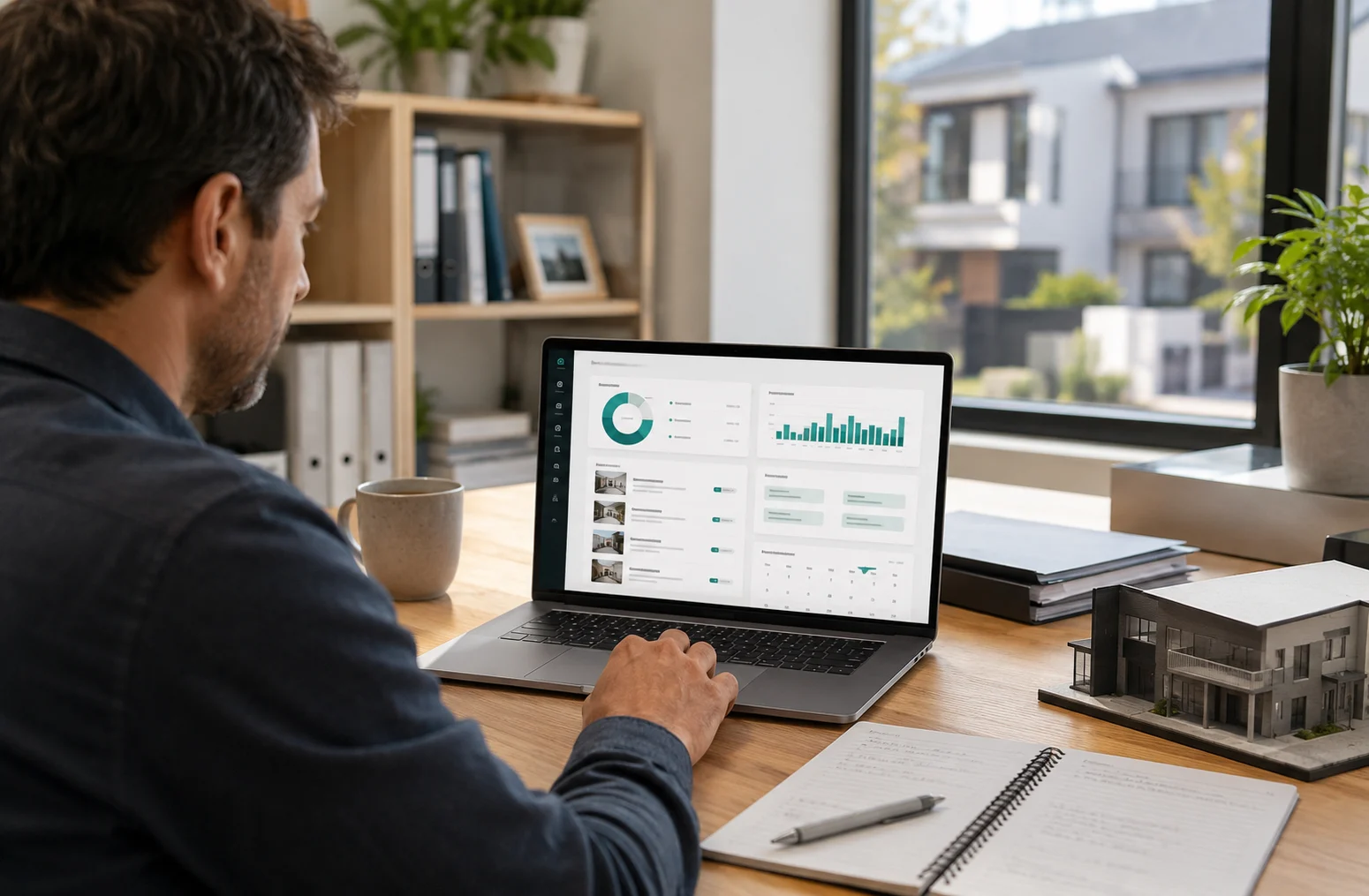
What should a PMS do for small-scale property managers?
The ideal PMS for a small-scale property manager (typically 10 to 500 units) should do ten things well: capture every rent payment automatically, log every maintenance ticket with photo evidence and vendor dispatch, hold every tenant lease and document in one searchable place, generate owner and investor statements in one click, run automated rent reminders and late-fee escalation, screen tenants with credit and eviction history, sync with the operator's accounting stack (QuickBooks, Xero), work on mobile so field checks and unit walks happen on a phone, integrate with a website for listing marketing and online applications, and produce broker-visible dashboards that let the manager see occupancy, delinquency, and cash flow at a glance. AppFolio Property Manager Core, Buildium, DoorLoop, Rentec Direct, and Hemlane are the platforms most adopted at this scale in 2026, at $1.40 to $4 per unit per month. This post covers what the ideal PMS should do, which platforms actually deliver it, and how to pick without overpaying.

Which AI tools work best for real estate developers in 2026?
The best AI tools for real estate developers in 2026 fall into eight categories that map to the developer lifecycle: land sourcing and site selection (Cherre, Reonomy, HouseCanary, LandGate), feasibility and financial modelling (Northspyre, TestFit, custom Excel plus GPT), design and architectural planning (Autodesk Forma, Higharc, Cove.tool, Snaptrude), construction management and progress tracking (Procore AI, Autodesk Construction Cloud, Buildots, Doxel, OpenSpace), pre-launch marketing and renders (Restb.ai, MidJourney, Adobe Firefly), off-plan sales CRM (Salesforce, HubSpot, Follow Up Boss, Rechat), ESG and net-zero analytics (Measurabl, Enertiv, Aquicore), and handover to operations (BIM AI, tenant portal AI). Used well, they cut construction cost 10 to 20 percent, compress design cycles 30 to 50 percent, and lift off-plan sales conversion 20 to 40 percent. Used badly, they burn subscription budget and produce plans that do not build. This post walks through each category, which tools actually work, and how to sequence adoption.
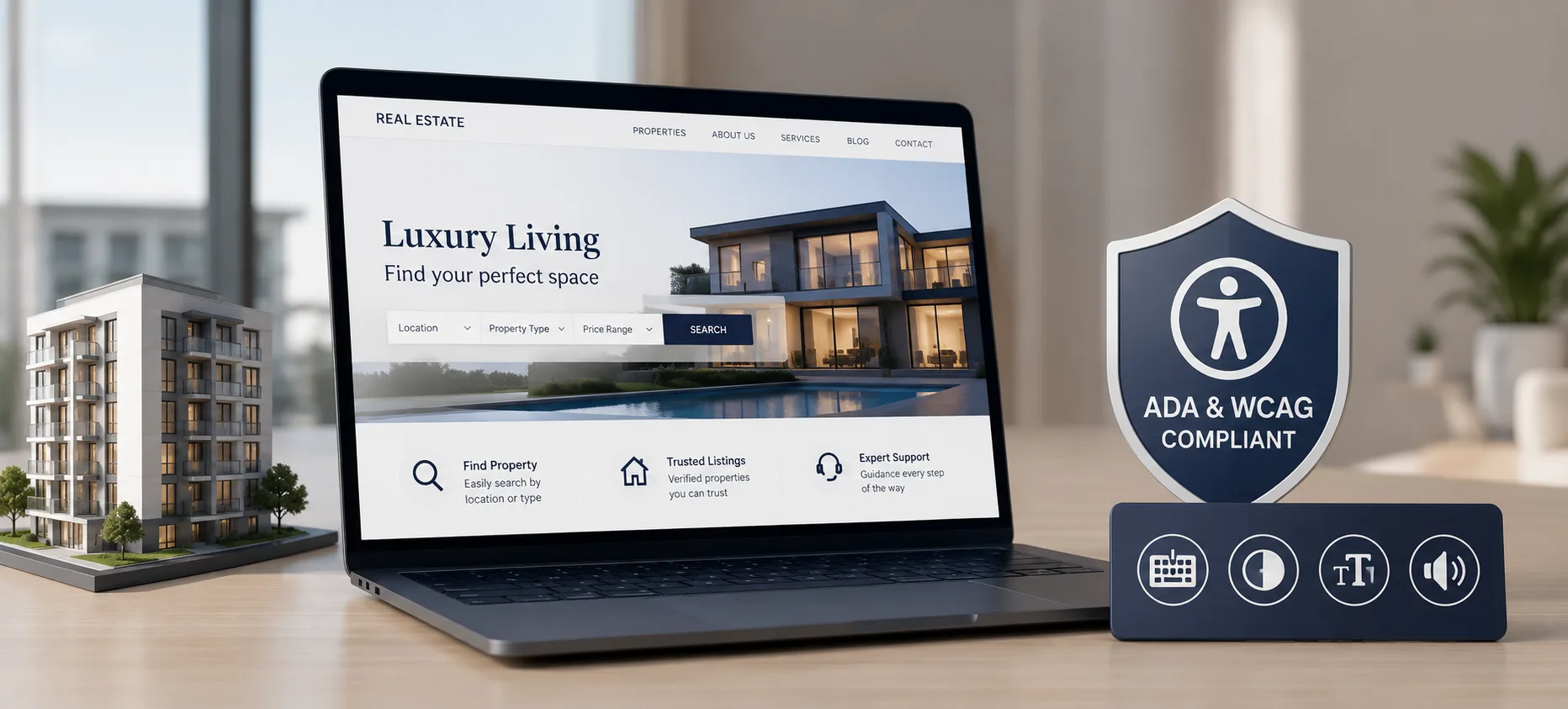
ADA & WCAG Accessibility Compliance for Real Estate Websites: What Operators Must Fix Before They Get Sued
This blog breaks down ADA and WCAG accessibility compliance for real estate websites, focused on what actually creates legal exposure. It explains why WCAG 2.1 Level AA has become the practical legal standard even without a formal Title III regulation for private businesses. It walks through the six accessibility failures responsible for 96% of all detected errors across the web, using real listing-page examples. It also warns against relying on accessibility overlay widgets, citing the FTC's 2025 action against accessiBe over deceptive compliance claims. The piece closes with a step-by-step audit process, an in-house versus compliance-partner comparison, and a 10-question FAQ section.
Have a digital transformation question worth getting right?
Tell us about your portfolio, your systems, or the decision in front of you. We respond within one business day with a clear point of view and, if there is a fit, a written scope.
No slides. No sales pitch.
Frequently asked questions
What does AI-led digital transformation actually include for a real estate business?
The redesign of how the business runs, anchored in three layers: the operating model, the technology and data foundation, and the customer or operator experience. AI agents and automation are deployed wherever they make the new model work. The engagement covers diagnosis, strategy, mobilisation, and optional oversight through implementation.
How is AI-led transformation different from traditional digital transformation?
Traditional digital transformation typically replaces software and rebuilds workflows around the new platforms. AI-led transformation goes further. AI agents are embedded into the workflows themselves, so the operating model evolves as the business grows. The result is a digital core that improves with use, rather than a stack that ages from the day it is installed.
How long does an AI-led digital transformation engagement run?
Strategy and roadmap engagements run four to fourteen weeks. Implementation oversight runs six to eighteen months. Most clients begin with a two-week diagnostic that scopes the full engagement before they commit budget.
Who from your team works on the engagement?
A senior advisor is on every project. Atul and Mayank set direction across the practice. A small team of senior practitioners delivers each engagement. There are no large pyramids of junior consultants, and no offshore delivery teams the client never meets.
What does the engagement cost?
Fixed-price for strategy and roadmap work, time-and-materials for implementation oversight. Both are scoped and agreed upfront. We share a typical range on the first call so the buyer can decide before any commitment is made.