

Mayank Pokharna
COO, Noseberry Digitals & Industry Expert
What should a PMS do for small-scale property managers?
Published August 22, 2026|11 min read
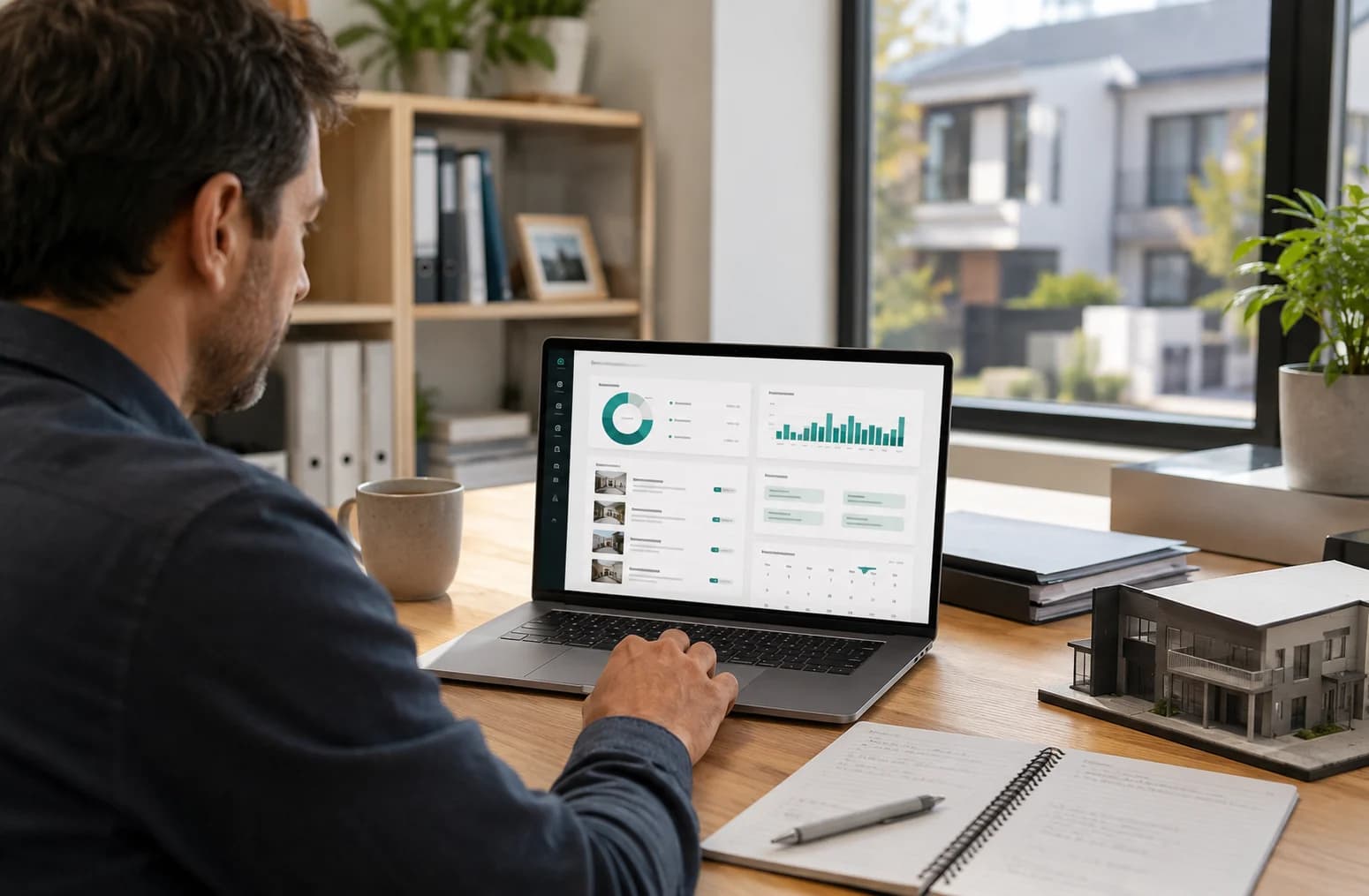
The ideal PMS for a small-scale property manager (typically 10 to 500 units) should do ten things well: capture every rent payment automatically, log every maintenance ticket with photo evidence and vendor dispatch, hold every tenant lease and document in one searchable place, generate owner and investor statements in one click, run automated rent reminders and late-fee escalation, screen tenants with credit and eviction history, sync with the operator's accounting stack (QuickBooks, Xero), work on mobile so field checks and unit walks happen on a phone, integrate with a website for listing marketing and online applications, and produce broker-visible dashboards that let the manager see occupancy, delinquency, and cash flow at a glance. AppFolio Property Manager Core, Buildium, DoorLoop, Rentec Direct, and Hemlane are the platforms most adopted at this scale in 2026, at $1.40 to $4 per unit per month. This post covers what the ideal PMS should do, which platforms actually deliver it, and how to pick without overpaying.
What counts as "small-scale" property management in 2026?
Small-scale property management covers operators managing 10 to 500 units, whether as an owner-operator, an independent landlord, a boutique property-management company, or a small brokerage's rental-management arm. This segment differs from institutional multifamily (thousands to hundreds of thousands of units) in three material ways.
First, the operator is usually working directly on the properties rather than managing a team of on-site staff. The PMS has to work on a phone during a unit walk, not from a desk running a portfolio review.
Second, the workflows are simpler. Small-scale operators are not running revenue-management algorithms, ESG analytics, or complex CAM reconciliations across mixed-use portfolios. They are collecting rent, dispatching maintenance, screening tenants, and producing owner reports.
Third, the budget is smaller. A boutique 100-unit property manager cannot absorb a $50K implementation fee plus $12 per unit per month; the operating economics do not support it. Small-scale operators need PMS platforms priced at boutique scale.
For the broader PMS category overview, see our blog on what software is used for property management and the Yardi vs RealPage vs AppFolio comparison.
What should the ideal PMS do for small-scale property managers?
Ten features define what the ideal PMS should do for a small-scale operator in 2026. Anything more is usually overkill; anything less leaves operational gaps that force manual workarounds.
1. Automated rent collection. ACH bank transfer, credit card, and integrated payment portal. Tenants pay online, funds land in the operator's account, ledger updates automatically. No manual reconciliation.
2. Maintenance ticket management. Tenants submit issues with photos through a portal or app. Tickets route to the right vendor automatically. Status tracking, work-order approval, and vendor payment all in one flow.
3. Lease and document management. Every signed lease, addendum, disclosure, and inspection report searchable in one place. No hunting through email or Dropbox folders.
4. Owner statements and reports. One-click generation of monthly and annual owner statements showing rent collected, expenses, distributions, and end-of-year 1099 preparation for US operators.
5. Automated rent reminders and late-fee escalation. Tenants receive automatic reminders before rent is due, at due date, and after late-fee thresholds. Escalation to eviction workflow when needed.
6. Tenant screening. Credit check, eviction history, criminal background (per applicable jurisdiction rules), and income verification integrated into the application flow. Compliance with Fair Housing Act is essential.
7. Accounting sync. Two-way integration with QuickBooks Online, Xero, or the operator's accounting platform of choice. No manual data entry between systems.
8. Mobile-first field use. The platform works fully on a phone. Field checks, unit walks, tenant conversations, and vendor coordination all happen from mobile.
9. Website and application integration. Listings syndicate to the operator's website, Zillow, Trulia, Apartments.com, and Realtor.com automatically. Online applications flow directly into the tenant-screening workflow.
10. Manager dashboards. Occupancy, delinquency, upcoming lease expiries, and net operating cash flow visible at a glance. Real-time rather than end-of-month.
Beyond these ten, additional features (revenue management, CAM reconciliation, multi-currency, mixed-use tenant portals) are typically overkill for small-scale operators and add implementation load without matching ROI.
Which PMS platforms deliver the ideal feature set at this scale?
Five platforms cover most of the small-scale property management segment in 2026.
AppFolio Property Manager Core. Category leader for the 50-to-500-unit segment. Cloud-native, mobile-first, transparent per-unit pricing starting at $1.40 per unit per month with $280 to $900 monthly minimums. Covers all ten workflows above with clean UX. Best fit for operators wanting a modern, well-supported platform.
Buildium. Owned by RealPage since 2019. Strong for 10 to 1,000 units with pricing starting around $50 per month base. Similar workflow coverage to AppFolio with a slightly older interface but competitive pricing and deep US market share. Best fit for small operators wanting a cost-effective established platform.
DoorLoop. Growing SMB PMS with modern UX and aggressive feature velocity. Pricing starts at $59 per month base for smaller operators. Best fit for tech-forward small operators who want a modern platform without AppFolio's minimum commitments.
Rentec Direct. Popular with US small landlords and independent property managers. Pricing scales with unit count from around $45 per month. Best fit for operators managing 20 to 200 units who want a simple US-focused platform.
Hemlane. Specifically designed for the DIY landlord and small-operator segment (typically under 50 units). Freemium tier available, paid tiers with concierge maintenance dispatch. Best fit for owner-operators wanting DIY workflow with optional professional support.
Also worth considering: Yardi Breeze (Yardi's SMB product, well-featured but pricier than the alternatives above), TenantCloud (freemium option for very small operators under 75 units), Innago (free platform for individual landlords), and Landlord Studio (for portfolio management on mobile).
Enterprise platforms (Yardi Voyager, RealPage OneSite, MRI Software) are materially overbuilt and overpriced for the sub-500-unit segment. They deliver features small-scale operators do not need at implementation costs the segment cannot absorb.
How much should a small-scale property manager pay for a PMS?
PMS pricing in 2026 for the small-scale segment clusters into three tiers.
Very small operator tier (10 to 75 units): $0 to $100 per month total. Innago (free), TenantCloud freemium tier, Hemlane basic tier, Rentec Direct entry level. Suits DIY landlords managing a small portfolio.
Small operator tier (50 to 300 units): $100 to $400 per month total. Buildium starter tier ($50 to $200 base + per-unit fees), DoorLoop starter ($59 to $199), Rentec Direct mid tier, Hemlane mid tier. Suits growing operators building a book.
Boutique property manager tier (100 to 500 units): $400 to $1,200 per month total. AppFolio Property Manager Core ($1.40 to $4 per unit per month with minimums), Buildium mid tier, DoorLoop growth tier, Yardi Breeze. Suits established boutique property managers.
Total cost of ownership in year one (implementation, training, data migration, integrations) typically adds 20 to 60 percent on top of the sticker licence for small-scale operators. Budget for the full TCO at signing, not at renewal.
The one place small-scale operators consistently overpay: buying an enterprise platform (Yardi Voyager, RealPage OneSite) when a mid-market platform (AppFolio, Buildium, DoorLoop) would deliver the same workflow coverage at one-fifth the total cost.
How do you evaluate the right platform without overpaying?
Six-step evaluation gets a small-scale operator to the right platform in 30 days.
Step 1: write the requirements down. Every stakeholder (owner, manager, bookkeeper, agents if applicable) contributes what they need from the PMS. Refuse to watch any demo before the requirements document exists.
Step 2: shortlist three platforms from the segment. AppFolio, Buildium, and DoorLoop are the default shortlist for most small-scale operators; substitute Rentec Direct or Hemlane if the operating scale fits better. Refuse to shortlist enterprise platforms (Yardi Voyager, RealPage OneSite) unless the operator genuinely runs mixed-use or multi-country.
Step 3: run a 14-day pilot with real workload. Import the actual tenant roster, real leases, and real payment history. Test rent collection, maintenance ticketing, and owner reporting. Any platform that struggles at pilot scale will fail worse at production scale.
Step 4: score against the ten features above. Every stakeholder scores each platform on each of the ten features (1 to 5 scale). Aggregate scores tell the story. Anything below 3 on a non-negotiable feature disqualifies the platform.
Step 5: model the 12-month total cost. Licence + implementation + training + integrations + migration. Compare across the three shortlisted platforms with the same assumptions.
Step 6: check adoption feasibility. Small-scale operators are especially exposed to adoption failure because they typically lack change-management staff. Choose the platform your team will actually use daily, not the platform with the most features.
For the full selection framework applied to CRM (largely applicable to PMS with adaptations), see our guide on how to choose a CRM for real estate agents and brokers.
What features are non-negotiable vs nice-to-have?
Six features are non-negotiable for small-scale property managers in 2026. The remaining features on the ideal list are important but not deal-breakers.
Non-negotiable.
Automated rent collection with ACH and credit-card support.
Maintenance ticket management with photo submission.
Mobile-first UX (the platform works fully on a phone).
Tenant screening with credit and eviction history integrated.
Accounting sync with QuickBooks or Xero.
Automated owner statements.
Important but not deal-breakers.
Website and Zillow/Realtor.com listing syndication.
Automated rent reminders and late-fee escalation.
Manager dashboards with real-time visibility.
Lease and document management with search.
Any small-scale platform that fails on the six non-negotiables should be disqualified from the shortlist regardless of other feature strengths. Any platform that hits all six is a candidate; the four "important" features become the tie-breakers.
How long should PMS implementation take at this scale?
Small-scale PMS implementation should take 6 to 12 weeks from contract signing to full production use.
Weeks 1 to 2: data migration. Import tenant roster, unit inventory, active leases, and payment history from previous systems (or spreadsheets). Clean the data before it lands in the new platform; deduplicate and standardise fields.
Weeks 3 to 4: workflow configuration. Set up rent-collection rules, maintenance-dispatch flows, tenant-screening criteria, owner-statement templates, and accounting-sync rules.
Weeks 5 to 6: training. One group session on core workflow. One-on-one for each team member on their specific responsibilities. Mobile app installed on every operator's phone.
Weeks 7 to 8: shadow mode. New platform runs alongside the old system. Every transaction posted to both. Team builds muscle memory.
Weeks 9 to 12: cutover and stabilisation. Old system moves to read-only. New platform is the system of record. Daily check-ins for the first two weeks to catch friction in real time.
Anything longer than 12 weeks at this scale usually means the operator is buying an enterprise platform and paying enterprise-tier implementation load. If your PMS vendor is quoting 6+ months for implementation, you are almost certainly at the wrong tier.
What are the common mistakes small-scale operators make with PMS?
Seven mistakes explain most PMS implementations that end in regret within 18 months.
Buying an enterprise platform for a small-scale operation. Yardi Voyager and RealPage OneSite are engineered for portfolios above 1,000 units. Small-scale operators buying them absorb 6-to-12-month implementations and $30K+ implementation fees for workflow coverage a mid-market platform would deliver in 6 to 12 weeks at one-fifth the total cost.
Picking by demo alone with no requirements document. Every PMS demos well. Without a requirements document, the sales pitch does the choosing.
Signing a multi-year contract before piloting. A 14-day pilot with real workload catches problems the sales demo hides. Refuse multi-year commitments before pilot completion.
Ignoring the mobile experience. Small-scale operators live on phones. A PMS that works in a desktop demo but fails on mobile will not survive month two of production use.
Skipping data migration cleanup. Migrating bad data into a new PMS just moves the mess. Deduplicate, standardise fields, and remove test records before migration.
Underestimating training time. Two weeks is standard, not two hours. Operators who skip structured training get low adoption and blame the platform six months later.
Never measuring adoption. T3 Sixty and WAV Group data puts PMS adoption failure at 40 to 60 percent industry-wide. Monthly adoption audits (percentage of transactions actually going through the PMS versus workarounds) catch failure early enough to intervene.
For CRM implementation and PMS integration support at the small-scale segment, see our CRM implementation service.
Ready to pick the right PMS without overpaying?
Book a working session with the Noseberry Digitals team. We will audit your current workflows, unit count, and integration needs, and hand back a shortlist of the two or three PMS platforms most likely to fit your specific small-scale operation plus a scoped 90-day implementation plan.
- Small-scale property managers spend 30 to 40 percent of their working week on admin, per Buildium and NAR benchmarks. The ideal PMS cuts that share materially through automation and integration.
- Ten workflows define what small-scale operators need. Rent collection, maintenance triage, lease and document management, owner statements, automated rent reminders, tenant screening, accounting sync, mobile field use, website and application integration, and manager dashboards. Anything beyond these is usually overkill for the segment.
- Cost is $1.40 to $4 per unit per month for the right platforms (AppFolio, Buildium, DoorLoop), plus $50 to $500 per month base for smaller operators. Enterprise platforms (Yardi Voyager, RealPage OneSite) are materially overbuilt and overpriced for the sub-500-unit segment.
- Implementation should take 6 to 12 weeks, not 6 to 12 months. Small-scale operators buying enterprise platforms is the single most common failure mode; the implementation load kills the ROI before the platform earns it back.
- 40 to 60 percent of PMS implementations fail on adoption, per T3 Sixty and WAV Group studies. Small-scale operators are especially exposed because they typically lack the change-management resources larger operators use to force adoption.
Why trust Noseberry
Our content is written by practicing real-estate and PropTech professionals, fact-checked by a dedicated editorial team, and reviewed against the latest industry data before publication.
- 10+ years of industry expertise
- All facts independently verified
- No sponsored rankings in guides
- Updated when the industry changes
Frequently Asked Question
What should the ideal PMS do for a small-scale property manager?
Ten things: capture every rent payment automatically, log every maintenance ticket with photo evidence and vendor dispatch, hold every lease and document in one searchable place, generate owner statements in one click, run automated rent reminders and late-fee escalation, screen tenants with credit and eviction history, sync with QuickBooks or Xero, work fully on mobile, integrate with a website for listing marketing and online applications, and produce manager dashboards with real-time visibility.
Which PMS platform is best for small-scale property managers in 2026?
Five platforms cover the segment. AppFolio Property Manager Core for 50-to-500-unit operators wanting a modern, well-supported platform. Buildium for cost-effective 10-to-1,000-unit operations. DoorLoop for tech-forward small operators. Rentec Direct for US 20-to-200-unit operators wanting simplicity. Hemlane for DIY landlords under 50 units.
How much should a small-scale property manager pay for a PMS?
Very small operators (10 to 75 units) should spend $0 to $100 per month total (Innago, TenantCloud freemium, Hemlane basic). Small operators (50 to 300 units) should spend $100 to $400 per month total. Boutique property managers (100 to 500 units) should spend $400 to $1,200 per month total. Total cost of ownership in year one typically adds 20 to 60 percent on top of the sticker licence.
How long does PMS implementation take at this scale?
6 to 12 weeks from contract signing to full production use. Data migration in weeks 1-2, workflow configuration in weeks 3-4, training in weeks 5-6, shadow-mode operation in weeks 7-8, cutover and stabilisation in weeks 9-12. Anything longer than 12 weeks usually means the operator is buying an enterprise platform and paying enterprise-tier implementation load.
Should small-scale property managers use Yardi or RealPage?
Almost never. Yardi Voyager and RealPage OneSite are engineered for portfolios above 1,000 units. They are materially overbuilt and overpriced for the sub-500-unit segment. AppFolio, Buildium, DoorLoop, and Rentec Direct deliver the workflow coverage small-scale operators actually need at one-fifth the total cost.
Related insights
 Real Estate
Which AI tools work best for real estate developers in 2026?
The best AI tools for real estate developers in 2026 fall into eight categories that map to the developer lifecycle: land sourcing and site selection (Cherre, Reonomy, HouseCanary, LandGate), feasibility and financial modelling (Northspyre, TestFit, custom Excel plus GPT), design and architectural planning (Autodesk Forma, Higharc, Cove.tool, Snaptrude), construction management and progress tracking (Procore AI, Autodesk Construction Cloud, Buildots, Doxel, OpenSpace), pre-launch marketing and renders (Restb.ai, MidJourney, Adobe Firefly), off-plan sales CRM (Salesforce, HubSpot, Follow Up Boss, Rechat), ESG and net-zero analytics (Measurabl, Enertiv, Aquicore), and handover to operations (BIM AI, tenant portal AI). Used well, they cut construction cost 10 to 20 percent, compress design cycles 30 to 50 percent, and lift off-plan sales conversion 20 to 40 percent. Used badly, they burn subscription budget and produce plans that do not build. This post walks through each category, which tools actually work, and how to sequence adoption.
August 22, 2026 Real Estate
ADA & WCAG Accessibility Compliance for Real Estate Websites: What Operators Must Fix Before They Get Sued
This blog breaks down ADA and WCAG accessibility compliance for real estate websites, focused on what actually creates legal exposure. It explains why WCAG 2.1 Level AA has become the practical legal standard even without a formal Title III regulation for private businesses. It walks through the six accessibility failures responsible for 96% of all detected errors across the web, using real listing-page examples. It also warns against relying on accessibility overlay widgets, citing the FTC's 2025 action against accessiBe over deceptive compliance claims. The piece closes with a step-by-step audit process, an in-house versus compliance-partner comparison, and a 10-question FAQ section.
August 20, 2026 Real Estate
The Real Estate Email Marketing Playbook: Newsletters, Drip Sequences & Templates for 2026
This blog lays out a full real estate email marketing playbook for 2026, covering newsletters, drip sequences, and reusable templates. It explains why click-through rate now matters more than open rate, especially with Apple's Mail Privacy Protection skewing open data. It breaks down three ready-to-adapt drip sequences for buyers, sellers, and past clients, plus a six-step process for building a newsletter people actually open. It compares DIY email marketing against hiring professional email marketing services, with real cost and speed benchmarks. It closes with the CAN-SPAM and Fair Housing compliance rules every agent needs to follow, common mistakes to avoid, and a 10-question FAQ section.
August 18, 2026
Ready to book a 30-minute strategy call?
We'll map the right digital moves for your real estate business, no pitch deck, no commitment.