
AI performance monitoring for real estate.
What you do not measure, you cannot defend.
If your AI is live but you are not sure it is still working as designed, this is the engagement to run. We deliver the dashboards, alerts, and ongoing review that keep AI working in production across leasing, customer service, facility management, valuation, and the operating layer that ties them together.
Deployments monitored
Countries covered
Metrics tracked
Production is the proof.
Anything that does not run reliably in front of customers, in front of operators, in front of regulators, and in front of investors does not count. AI performance monitoring exists to make sure your AI keeps earning its place every month it is in production, not just on the day it launched. The dashboards do not run the business, but they make sure the business is running what it intended to run.
Trusted by 50+ operators, PropTech companies & digital-first brands


























Three questions this engagement is built to answer.
01
Is our AI still doing what we hired it to do?
If the agent or model has been in production for months and the team is no longer sure whether it is delivering against the original value case, this is the right place to start. We design the metrics, instrument the systems, and build the dashboards that show leadership exactly what the AI is contributing.
A single view of every AI capability in production
Each capability scored against the original business case
Metrics that survive a board, investor, or regulator review
02
How do we catch drift, regression, or failure before customers do?
If your AI is live but the alerting and review cadence are informal, this is where we step in. We design the alerting layer, the drift detection thresholds, the regression tests, and the escalation paths when the system behaves outside expectations.
A monitoring stack that catches issues in hours, not complaints
Drift detection across data, behaviour, and outcomes
Escalation paths defined before they are needed
03
How do we keep improving the AI once it is live?
If your team has shipped the AI but the continuous-improvement cadence has not been set, this is the work to commission. We design the retraining cycles, the prompt and model tuning rituals, the experimentation framework, and the change-management discipline.
An operating cadence that turns production AI into compounding AI
Retraining and tuning rituals built around the business calendar
An experimentation framework that protects production
A structured engagement, run in stages.
Four stages, each with a defined output and a senior advisor accountable for it. Typical engagement length is four to eight weeks for the framework, with optional ongoing review and operating support.
- 01
FrameWeek 1
We map the AI capabilities currently in production, the value cases each was originally built against, the metrics that already exist, and the gaps in the current monitoring picture. The output is a monitoring brief that the rest of the engagement runs against.
- 02
InstrumentWeeks 2 to 4
We design and deploy the observability infrastructure. Metrics, logging, alerting, dashboards, and the integration into the platforms the AI already runs on. Every AI capability ends with a clear measurement contract.
- 03
ReviewWeeks 5 to 6
We run the first structured performance review with leadership. What is working, what is drifting, what is failing, what needs intervention. The output is a prioritised action list and a review cadence the leadership team will run going forward.
- 04
SustainOngoing
We stay involved through the first quarter of operation as an independent reviewer. Most monitoring frameworks slip in the first months as the team gets busy with other work. We make sure yours holds.
Where this practice adds the most value.
This work pays back fastest in six kinds of situation. If your AI is live and any of these describe your team, the engagement is built for you.
- 01
Operators with AI already in production
When the AI has been live for six months or more and the team is no longer confident the original value case is still being delivered. Monitoring restores the answer.
- 02
PE-backed platforms reporting on an AI value case
When the investor expects regular evidence that the AI investment is paying back, and the operating team needs a measurement framework they can defend.
- 03
Corporate real estate teams running AI across multiple platforms
When AI capabilities are spread across leasing, customer service, facility management, and finance, and the team needs a single view of how the portfolio of AI is performing.
- 04
Regulated real estate businesses subject to model risk
When the model performance has to be evidenced for compliance reasons as well as operational ones, and the documentation has to be audit-ready.
- 05
Operators measuring AI ROI for the first time
When the AI has been live for a year and leadership now needs hard evidence of where the value has actually landed and where it has not.
- 06
Teams managing AI vendors at scale
When multiple AI products are running across the business under different vendors and the monitoring layer has to compare them on the same evidence base.
Why most AI pilots in real estate stall in month nine.
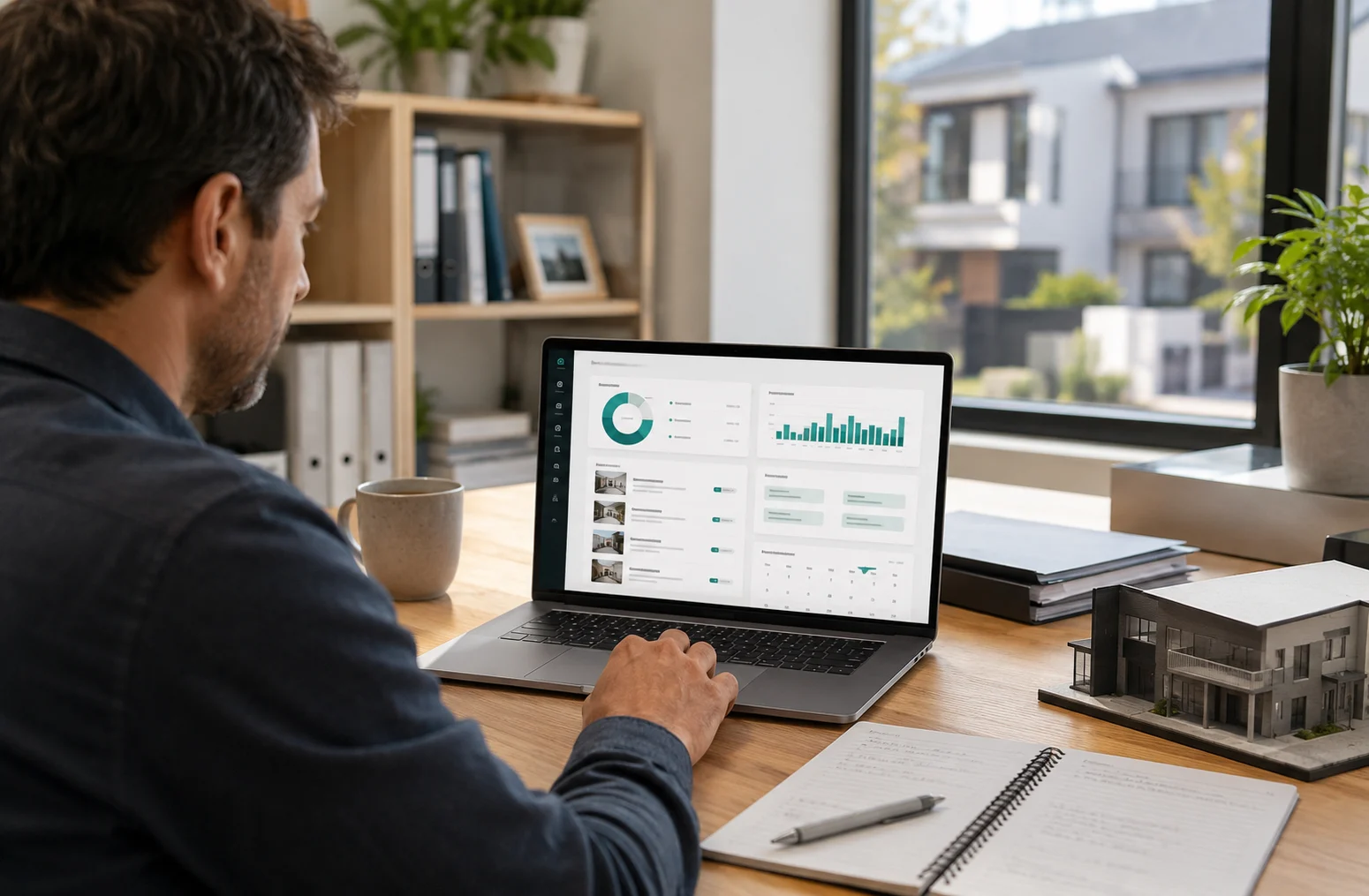
What should a PMS do for small-scale property managers?
The ideal PMS for a small-scale property manager (typically 10 to 500 units) should do ten things well: capture every rent payment automatically, log every maintenance ticket with photo evidence and vendor dispatch, hold every tenant lease and document in one searchable place, generate owner and investor statements in one click, run automated rent reminders and late-fee escalation, screen tenants with credit and eviction history, sync with the operator's accounting stack (QuickBooks, Xero), work on mobile so field checks and unit walks happen on a phone, integrate with a website for listing marketing and online applications, and produce broker-visible dashboards that let the manager see occupancy, delinquency, and cash flow at a glance. AppFolio Property Manager Core, Buildium, DoorLoop, Rentec Direct, and Hemlane are the platforms most adopted at this scale in 2026, at $1.40 to $4 per unit per month. This post covers what the ideal PMS should do, which platforms actually deliver it, and how to pick without overpaying.
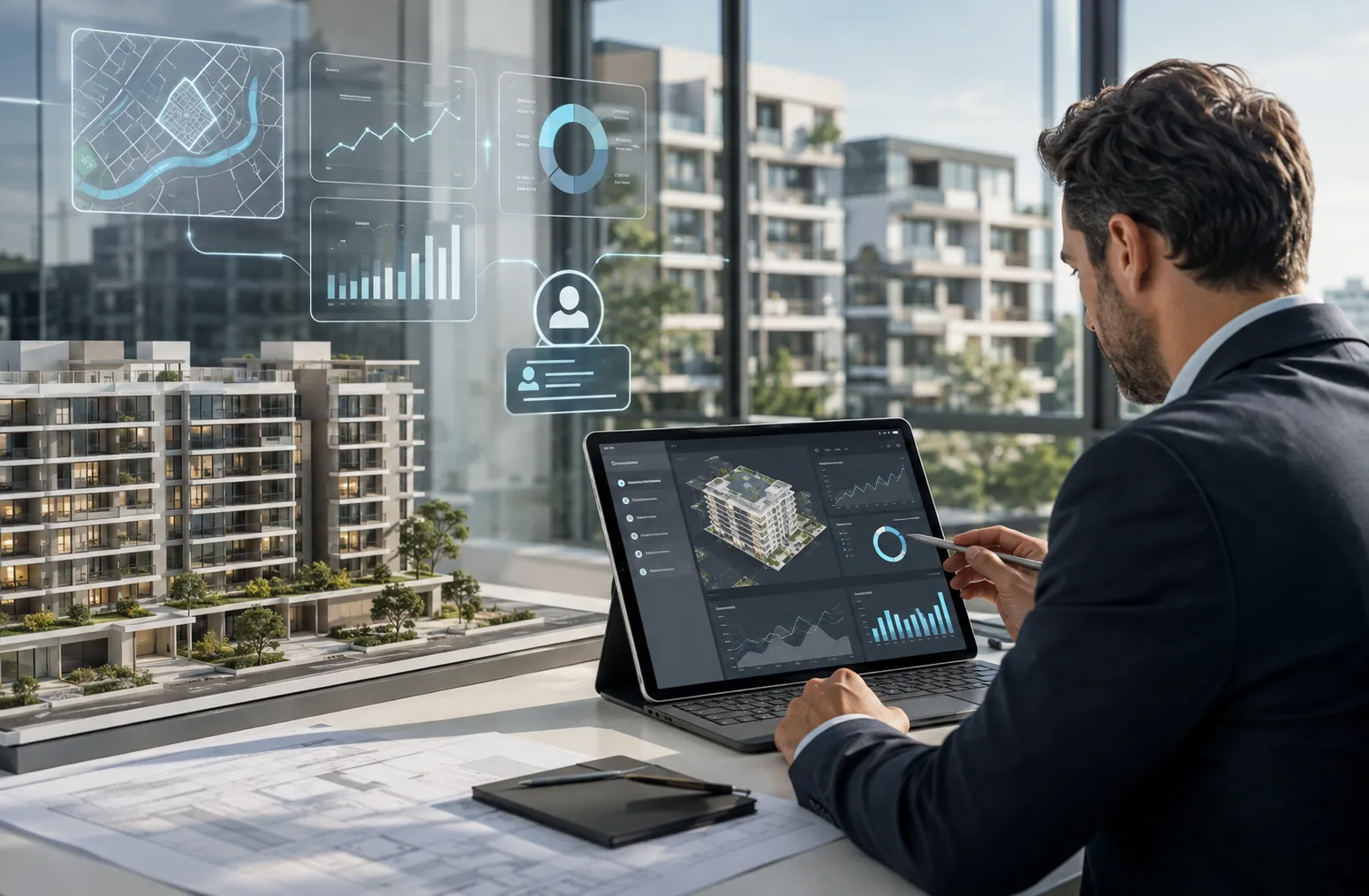
Which AI tools work best for real estate developers in 2026?
The best AI tools for real estate developers in 2026 fall into eight categories that map to the developer lifecycle: land sourcing and site selection (Cherre, Reonomy, HouseCanary, LandGate), feasibility and financial modelling (Northspyre, TestFit, custom Excel plus GPT), design and architectural planning (Autodesk Forma, Higharc, Cove.tool, Snaptrude), construction management and progress tracking (Procore AI, Autodesk Construction Cloud, Buildots, Doxel, OpenSpace), pre-launch marketing and renders (Restb.ai, MidJourney, Adobe Firefly), off-plan sales CRM (Salesforce, HubSpot, Follow Up Boss, Rechat), ESG and net-zero analytics (Measurabl, Enertiv, Aquicore), and handover to operations (BIM AI, tenant portal AI). Used well, they cut construction cost 10 to 20 percent, compress design cycles 30 to 50 percent, and lift off-plan sales conversion 20 to 40 percent. Used badly, they burn subscription budget and produce plans that do not build. This post walks through each category, which tools actually work, and how to sequence adoption.
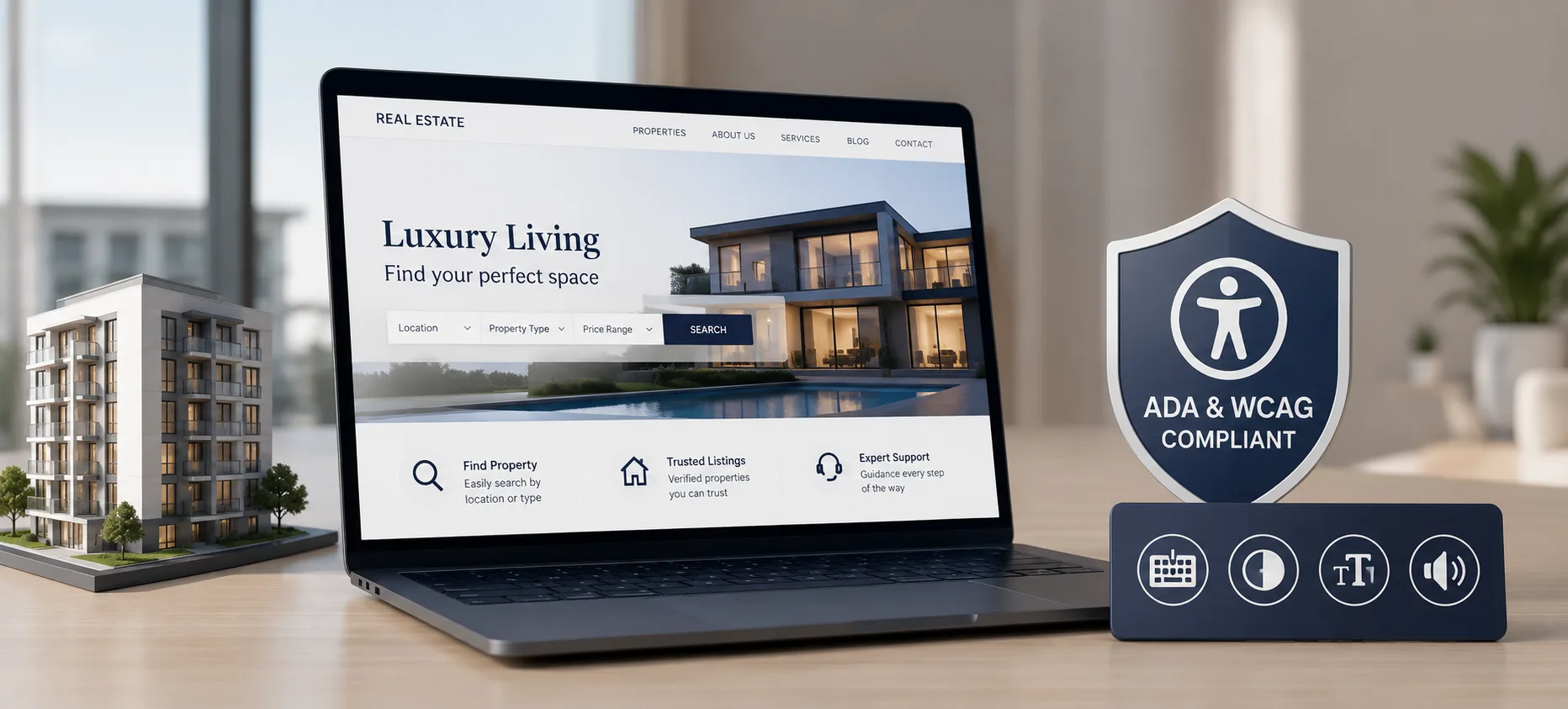
ADA & WCAG Accessibility Compliance for Real Estate Websites: What Operators Must Fix Before They Get Sued
This blog breaks down ADA and WCAG accessibility compliance for real estate websites, focused on what actually creates legal exposure. It explains why WCAG 2.1 Level AA has become the practical legal standard even without a formal Title III regulation for private businesses. It walks through the six accessibility failures responsible for 96% of all detected errors across the web, using real listing-page examples. It also warns against relying on accessibility overlay widgets, citing the FTC's 2025 action against accessiBe over deceptive compliance claims. The piece closes with a step-by-step audit process, an in-house versus compliance-partner comparison, and a 10-question FAQ section.
Have an AI performance question worth getting right?
Tell us about the AI you have in production, the metrics you currently track, or the value case you are being asked to defend. We respond within one business day with a clear point of view and, if there is a fit, a written scope.
No slides. No sales pitch. Just a focused strategy call.
Frequently asked questions
What does AI performance monitoring actually include?
The observability infrastructure, the metrics design, the alerting and drift detection layer, the dashboards, the review cadence, and the continuous improvement framework that keep production AI working as designed.
How is this different from the platform monitoring our engineers already run?
Engineering monitoring tracks whether the system is up, whether response times are healthy, and whether errors are within acceptable thresholds. AI performance monitoring goes further. It tracks whether the AI is making the right decisions, whether the model is drifting from the original distribution, whether the outputs still meet the business expectation, and whether the value case is still being delivered. Both are needed. They are not the same.
Which AI capabilities does this cover?
Custom agents for leasing, customer service, and operations. Generative AI used internally or externally. Pricing and valuation models. Recommendation systems. Document intelligence. Any production AI that is generating business outcomes and needs to be held accountable for them.
How long does the engagement run?
Framework design and instrumentation run four to eight weeks. Ongoing review and operating support run three to twelve months. Most clients begin with a one-week scoping conversation that sizes the rest.
What does it cost?
Fixed-price for framework design, agreed upfront. Ongoing review and support run on a time-and-materials basis. We share a typical range on the first call.