
AI and technology selection roadmap for real estate.
Independent of every vendor on your list.
If you have already shortlisted vendors and need a structured, independent decision, this is the work for you. We help real estate operators, developers, and investors choose the right AI agents, ERP, CRM, leasing, and property management platforms, then sequence the rollout so the business is not disrupted as the technology lands.
Selections delivered
Countries covered
Platforms evaluated
The wrong choice compounds for a decade.
The right one does the same in the opposite direction. AI and technology selectionexists to remove the conflicts that usually shape these decisions: the vendor's preferred answer, the partner's preferred integrator, the internal team's preferred familiar tool. The recommendation is built around your business, with the working visible at every step.
Trusted by 50+ operators, PropTech companies & digital-first brands


























Three questions this engagement is built to answer.
01
Which platforms should we actually choose?
If your team has shortlisted vendors but the decision is stuck between two or three credible options, this is where we step in. We build the evaluation framework, score every vendor against the criteria that matter to your business, run the proof-of-concept work where needed, and present a defensible recommendation.
A scored evaluation matrix across every shortlisted vendor
The evidence behind every score, sourced independently
A recommendation your leadership team can stand behind
02
In what sequence should the rollout happen?
If you have already chosen the platforms but the sequence is unclear, this is the work to commission. Rolling out an ERP, a CRM, a leasing system, and an AI agent layer in the wrong order can paralyse a business for months. We design the implementation sequence around revenue continuity, integration dependencies, and team capacity.
A phased rollout plan with the risk and value of each step named
Integration dependencies surfaced before they bite
A capacity plan so the team can absorb the change
03
How do we make sure the implementation actually lands?
If past technology projects have stalled in implementation, this is the work to commission alongside selection. We design the governance, the success metrics, the change programme, and the operating rituals that determine whether the platform is adopted or quietly worked around.
A governance model that holds vendors and integrators to account
Success metrics agreed before the contract is signed
A change programme that turns selection into adoption
A structured engagement, run in stages.
Four stages, each with a defined output and a senior advisor accountable for it. Typical engagement length is six to ten weeks for selection, with optional oversight through implementation.
- 01
ScopeWeek 1
We map the business processes that the new platforms will support, the integration points with existing systems, the data model the business needs to maintain, and the team's capacity to absorb change. The output is the evaluation framework the rest of the engagement will run against.
- 02
EvaluateWeeks 2 to 5
We run structured assessments of every shortlisted vendor against the framework. Demos are structured, not vendor-led. Reference calls are sourced independently. Proof-of-concept work is built around your actual workflows and your actual data, not a marketing dataset.
- 03
DecideWeeks 6 to 7
We present the scored matrix to leadership, walk through the trade-offs, and co-create the recommendation. Every choice is named with the prize, the risk, and the alternative. The output is a decision your leadership team can stand behind.
- 04
SequenceWeeks 8 to 10
We design the rollout plan: which platform first, which dependencies need to be resolved, which team capabilities need to be built, and which workflows need to be reshaped. The output is a sequenced implementation plan with risk and value attached to each step.
Where this practice adds the most value.
This work compounds fastest in six kinds of situation. If the platform decision in front of you fits any of these, the engagement is built for you.
- 01
Leadership teams stuck between two or three credible vendors
When the team has done the homework and the choice is no longer about features but about fit. Independent evaluation moves the decision forward.
- 02
Operators replacing legacy systems after years of workarounds
When the existing stack has become a constraint on growth and the next platform has to be chosen carefully because the cost of being wrong is now visible in the operating numbers.
- 03
PE-backed platforms running a technology-driven value case
When the investment thesis names specific platforms or capabilities and the implementation has to land inside the holding period.
- 04
Corporate teams selecting platforms across multiple geographies
When the same technology has to support different regulatory environments, different operating models, and different team cultures without being re-bought in every market.
- 05
Operators rebuilding after an aborted implementation
When the previous selection or rollout did not land and the next decision has to be made with the discipline and independence the first cycle lacked.
- 06
Newly formed platforms choosing the first stack
When the business is being built from scratch and the early platform choices will set the operating shape, the data model, and the cost base for years.
Why most real estate technology selections are decided in the demo, not the data.
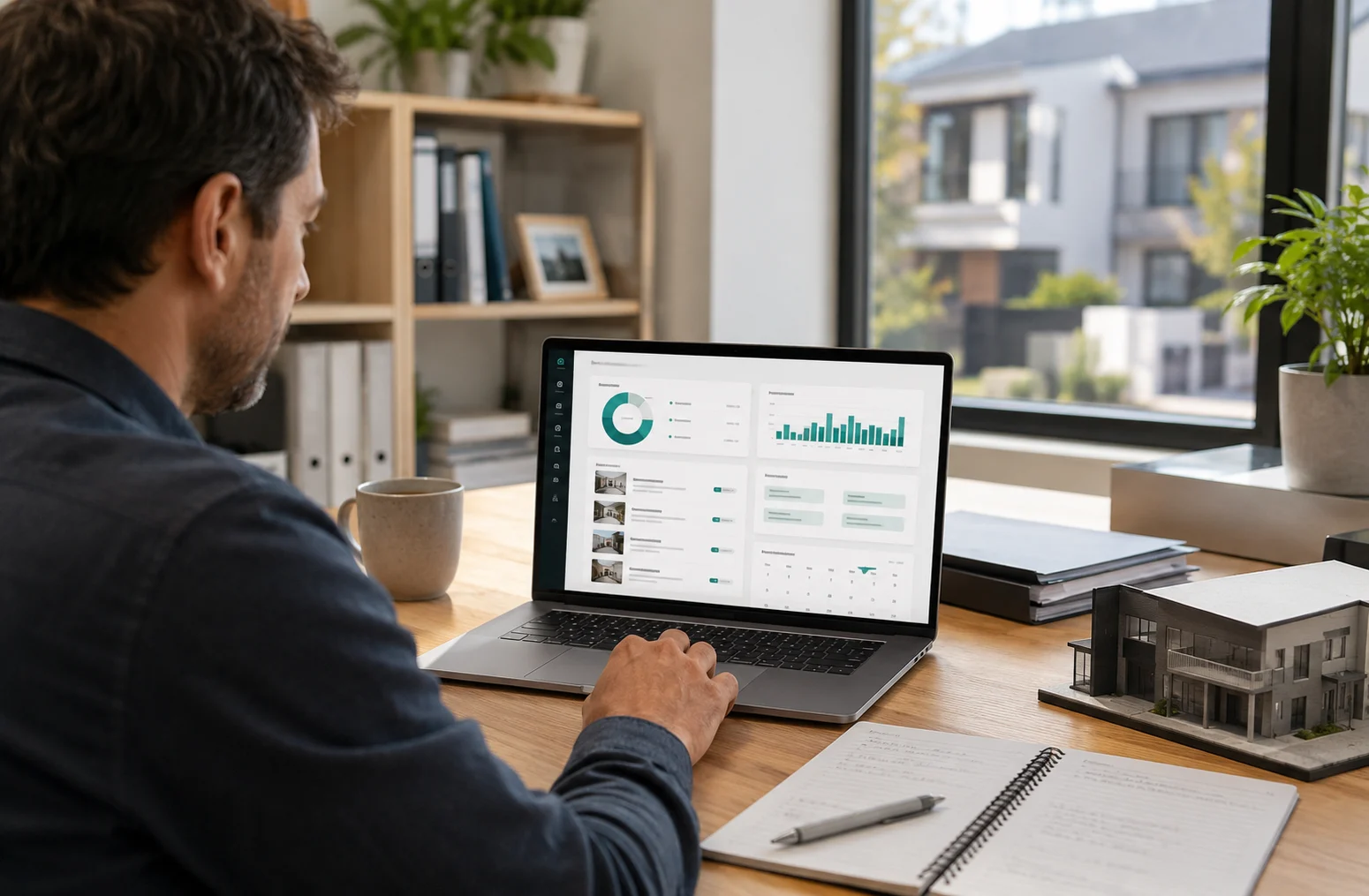
What should a PMS do for small-scale property managers?
The ideal PMS for a small-scale property manager (typically 10 to 500 units) should do ten things well: capture every rent payment automatically, log every maintenance ticket with photo evidence and vendor dispatch, hold every tenant lease and document in one searchable place, generate owner and investor statements in one click, run automated rent reminders and late-fee escalation, screen tenants with credit and eviction history, sync with the operator's accounting stack (QuickBooks, Xero), work on mobile so field checks and unit walks happen on a phone, integrate with a website for listing marketing and online applications, and produce broker-visible dashboards that let the manager see occupancy, delinquency, and cash flow at a glance. AppFolio Property Manager Core, Buildium, DoorLoop, Rentec Direct, and Hemlane are the platforms most adopted at this scale in 2026, at $1.40 to $4 per unit per month. This post covers what the ideal PMS should do, which platforms actually deliver it, and how to pick without overpaying.

Which AI tools work best for real estate developers in 2026?
The best AI tools for real estate developers in 2026 fall into eight categories that map to the developer lifecycle: land sourcing and site selection (Cherre, Reonomy, HouseCanary, LandGate), feasibility and financial modelling (Northspyre, TestFit, custom Excel plus GPT), design and architectural planning (Autodesk Forma, Higharc, Cove.tool, Snaptrude), construction management and progress tracking (Procore AI, Autodesk Construction Cloud, Buildots, Doxel, OpenSpace), pre-launch marketing and renders (Restb.ai, MidJourney, Adobe Firefly), off-plan sales CRM (Salesforce, HubSpot, Follow Up Boss, Rechat), ESG and net-zero analytics (Measurabl, Enertiv, Aquicore), and handover to operations (BIM AI, tenant portal AI). Used well, they cut construction cost 10 to 20 percent, compress design cycles 30 to 50 percent, and lift off-plan sales conversion 20 to 40 percent. Used badly, they burn subscription budget and produce plans that do not build. This post walks through each category, which tools actually work, and how to sequence adoption.
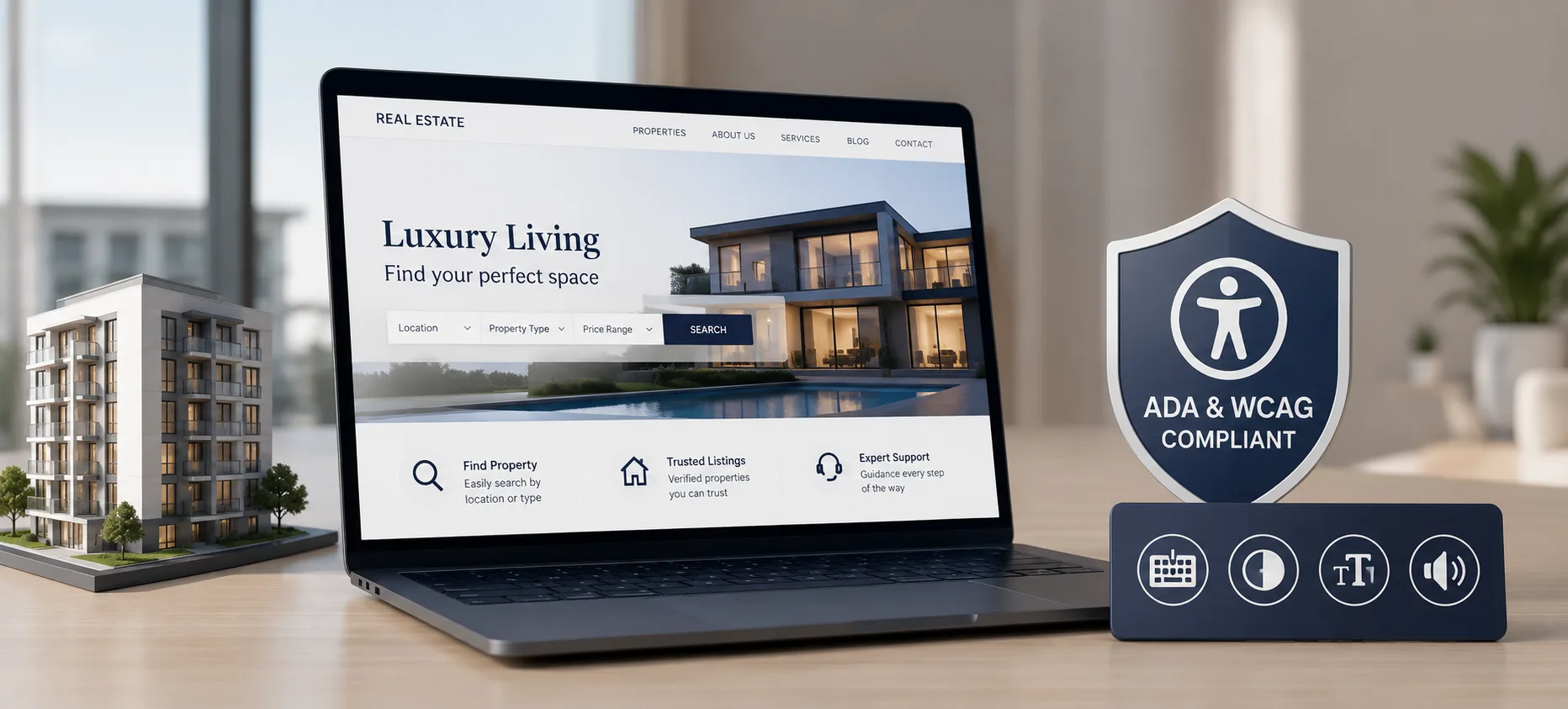
ADA & WCAG Accessibility Compliance for Real Estate Websites: What Operators Must Fix Before They Get Sued
This blog breaks down ADA and WCAG accessibility compliance for real estate websites, focused on what actually creates legal exposure. It explains why WCAG 2.1 Level AA has become the practical legal standard even without a formal Title III regulation for private businesses. It walks through the six accessibility failures responsible for 96% of all detected errors across the web, using real listing-page examples. It also warns against relying on accessibility overlay widgets, citing the FTC's 2025 action against accessiBe over deceptive compliance claims. The piece closes with a step-by-step audit process, an in-house versus compliance-partner comparison, and a 10-question FAQ section.
Have a technology selection question worth getting right?
Tell us about the platforms you are weighing, the workflows you need to support, or the decision your board is asking you to defend. We respond within one business day with a clear point of view and, if there is a fit, a written scope.
No slides. No sales pitch. Just a focused strategy call.
Frequently asked questions
What does the technology selection roadmap actually include?
A structured evaluation of every shortlisted vendor against criteria that matter to your business, a scored matrix with the evidence behind every score, a clear recommendation, and a sequenced implementation plan that names what happens first and what waits.
Are you affiliated with any of the platforms you evaluate?
No. We do not resell, receive commissions, or hold co-marketing arrangements with any of the platforms we evaluate. The conflict of interest that shapes most vendor advisory work is absent here, which is the only reason the recommendation can be trusted.
Which categories of technology do you cover?
AI agents and copilots, generative AI platforms, ERP and finance systems, CRM and leasing tools, property and facility management platforms, asset management software, and the integration layer that ties them together. Most engagements cover two or three categories at once.
How long does the engagement run?
Selection engagements run six to ten weeks. Sequenced rollout planning can be added inside the same engagement or run as a follow-on. Implementation oversight runs three to twelve months depending on the scope.
What does it cost?
Fixed-price for selection work, agreed upfront. Implementation oversight runs on a time-and-materials basis. We share a typical range on the first call so the buyer can decide before any commitment is made.