

Honey Saxena
Digital Marketing Expert
Cold calling vs inbound for real estate agents in 2026
Published June 13, 2026|11 min read
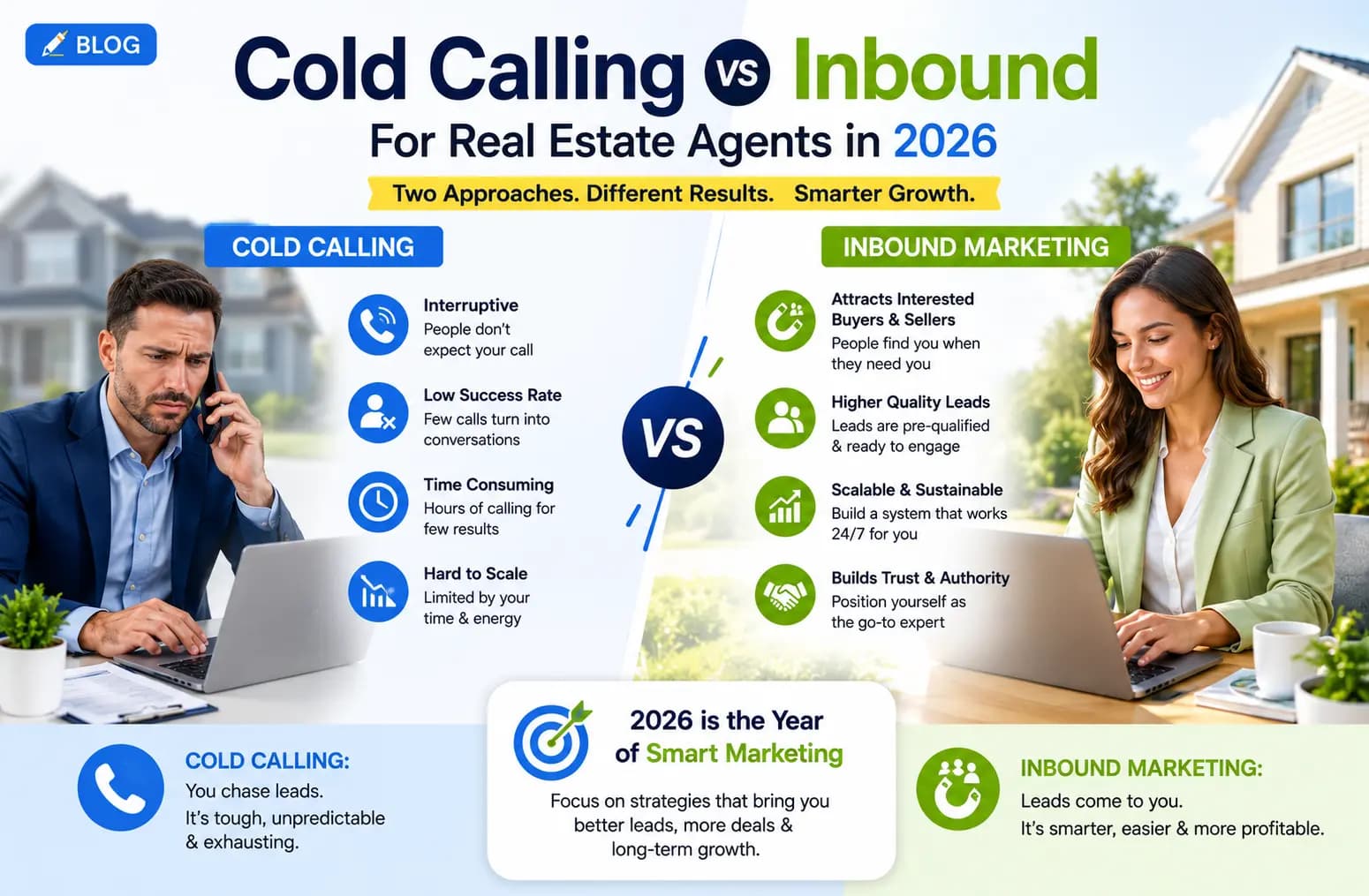
Cold calling is the practice of phoning property owners or prospects who have not raised their hand to talk to you. Inbound marketing is the practice of publishing content, running ads, and building an online presence so prospects raise their hand to talk to you first. In 2026, the strongest real estate agents do both, with roughly 30 percent cold calling and 70 percent inbound. Cold calling produces leads in minutes but converts at 1 to 2 percent, while inbound takes 90 to 180 days to build but converts at 5 to 12 percent and compounds for years.
What is cold calling in real estate?
Cold calling in real estate is the practice of phoning a list of property owners, expired listings, FSBOs (for sale by owner), or prospective buyers who have not asked to hear from you. The agent uses a script, works through a list of 50 to 200 calls a day, and tries to book a listing appointment or a buyer consultation at the end of each call.
Cold calling has been the default lead generation channel for real estate agents since the 1970s. It still works in 2026, but the rules have changed. Do-not-call lists are stricter. Caller ID makes screening easier. Younger buyers under 35 rarely answer unknown numbers. And the time cost per closed deal has climbed significantly over the past decade.
The advantage of cold calling is speed. An agent can produce a qualified lead in their first hour on the phone. The disadvantage is the quality of the lead and the time required to maintain the output day after day.
What is inbound marketing for real estate agents?
Inbound marketing for real estate agents is the practice of publishing content, running paid ads, optimising for search, and building a social media presence so prospects come to you. The agent never reaches out cold. The prospect raises their hand first, usually after watching a YouTube video, reading a neighbourhood guide, clicking a Google ad, or following an Instagram account for 2 to 4 weeks.
Inbound marketing covers seven main channels: SEO and AEO, paid Google Ads, paid Meta Ads, content marketing, social media, email and WhatsApp nurture, and referral systems. We cover the full discipline in our digital marketing service page.
The advantage of inbound is the quality of the lead. A prospect who watches your 12-minute neighbourhood video before calling you is already half-sold. The disadvantage is the ramp-up time. Inbound takes 90 to 180 days to start producing a meaningful pipeline.
How does cold calling compare to inbound marketing for real estate?
The honest comparison across the dimensions that actually matter for an agent's business:
Cold calling wins on immediacy. Inbound wins on every other dimension if you can afford the ramp-up time. The right answer for most agents is a blended approach where inbound carries the long-term pipeline and cold calling fills the gap in the first 6 to 12 months while inbound builds.
What are the conversion rates of cold calling vs inbound?
Cold calling industry benchmarks in 2026:
Connect rate: 8 to 15 percent of dials result in a real conversation
Conversation to qualified lead: 5 to 10 percent
Qualified lead to listing or buyer consultation: 10 to 20 percent
Consultation to close deal: 8 to 15 percent
Net: roughly 1 in every 200 to 400 dials produces a closed deal
Inbound marketing conversion benchmarks:
Click to lead: 2 to 6 percent on conversion-tuned landing pages
Lead to qualified lead: 35 to 55 percent
Qualified lead to consultation: 25 to 40 percent
Consultation to close deal: 12 to 25 percent
Net: roughly 1 in every 50 to 100 ad clicks produces a closed deal
The reason inbound converts higher is intent. A buyer searching "3 for a bhk apartment Bandra" already wants to buy. A property owner answering a cold call about selling did not wake up wanting to sell. The HBR research on lead response time confirms the pattern. According to Harvard Business Review's lead response study, inbound leads contacted within 5 minutes are 21 times more likely to qualify than leads contacted after 30 minutes. Cold calls do not benefit from that effect because the prospect did not raise their hand first.
What is the cost per lead for cold calling vs inbound?
Honest 2026 benchmarks based on Noseberry Digitals data across 100+ operator engagements, plus industry research from WordStream's Google Ads benchmarks:
Cold calling cost per qualified lead
Agent's hourly opportunity cost (USD 30 to USD 80 per hour at gross commission yield)
List acquisition (USD 0.20 to USD 1.50 per record for a quality property owner list)
CRM and dialer software (USD 50 to USD 200 per month)
Total: USD 80 to USD 180 per qualified lead in most markets
Inbound cost per qualified lead
Paid Google Ads: USD 18 to USD 55 in most markets
Paid Meta Ads: USD 14 to USD 32
LinkedIn for B2B real estate: USD 120 to USD 380
Organic SEO and content: USD 8 to USD 25 once mature (after 12 months)
Email and WhatsApp nurture (existing list): USD 2 to USD 8
Inbound is cheaper per qualified lead across every channel except LinkedIn. The trade-off is the time required to build the inbound engine versus the immediate output of a cold calling session. Both can work in the same business if budgeted correctly.
How much time does each approach require per week?
Cold calling. Active dialing time of 15 to 30 hours per week to maintain a meaningful pipeline. The number cannot scale up without burning out. Agents who try to dial 40 hours a week for more than 4 weeks consistently report quality decline and burnout. The hours are also rigid. The calls must happen between 9 am and 7 pm in the prospect's local time, which constrains scheduling.
Inbound marketing. Active production time of 6 to 12 hours per week once the system is set up. Most of that time goes into content creation (filming Reels, writing blog posts, designing carousels) and lead follow-up. The time is flexible. Content can be batched, scheduled, and posted at optimal times across days. We cover the time allocation framework in how digital marketing helps your real estate job.
A solo agent running both spends roughly 8 hours a week on cold calling (3 days a week, 2 to 3 hours per day on power dial sessions) plus 8 hours a week on inbound content and follow-up. Total 16 hours a week on lead generation, which is industry-standard for top producers.
Which works best in which market?
The honest answer depends on the agent's segment.
Cold calling works best for
New agents in their first 6 to 12 months. Inbound has not ramped yet. Cold calling fills the gap.
Mid-tier residential markets with strong owner-occupier turnover. Property owner lists in these markets are reliable,e and lead intent is reasonable.
Commercial real estate. CRE buyers and sellers respond to direct outreach more than residential buyers do.
Off-market specialists. Agents whose entire value proposition is finding properties not yet listed.
Specific niches like expired listings and FSBOs. Both segments have signalled intent (the property was listed or is for sale by owner), which makes the call warmer than pure cold.
Inbound marketing works best for
Established agents for the past 2 years. Content has had time to compound and rank.
Luxury and high-net-worth markets. Luxury buyers do not respond to cold calls. They Google.
PropTech founders and B2B real estate. LinkedIn-driven inbound dominates these segments.
Coliving, BTR, and student housing operators. Tenant audiences are younger and digital-native.
Markets with a high cost of customer acquisition through paid ads. Inbound compounds, paid does not.
For a complete view of which channels suit which audience, see our real estate performance marketing playbook.
Can you combine cold calling and inbound for real estate?
Yes, and the strongest agents in 2026 combine both. The right blend depends on the stage.
Year 1 (new agent or new market). 60 percent cold calling, 40 percent inbound. The cold calling fills the pipeline while the inbound engine ramps up. Most of the inbound time goes into content production that will compound later, not into immediate lead generation.
Year 2: 40 percent cold calling, 60 percent inbound. The inbound engine starts producing real leads. Cold calling shifts toward specific niches like expired listings and farm areas, not general prospecting.
Year 3 and beyond. 20 percent cold calling, 80 percent inbound. Cold calling becomes a tactical tool for specific opportunities (a hot expired listing, a referral handoff) rather than a daily activity. Inbound and referrals carry the business.
The CRM matters more than the tactic. Every cold call and every inbound lead must land in the same CRM with source attribution. Without that, the agent cannot prove which channel produces which closed deal, and the budget drifts toward what feels busy rather than what actually works. Our CRM implementation service builds this layer.
Common mistakes real estate agents make with both
Mistake 1: treating them as opposites. Cold calling and inbound are complementary, not competitive. Agents who insist on one or the other underperform agents who blend both.
Mistake 2, scaling cold calling beyond healthy limits. Beyond 30 hours of dialing per week, quality drops, burnout climbs, and the net pipeline often falls. Cold calling is not a volume game past a certain point.
Mistake 3: expecting inbound to deliver in 30 days. Inbound takes 90 to 180 days to start producing a meaningful organic pipeline. Agents who pull the plug at month 2 leave the compounding curve unrealised.
Mistake 4: No CRM source attribution. Without tracking which lead came from which channel, you cannot improve either approach. The infrastructure to make this work is covered in " How to Reduce Lead Leakage in Real Estate.
Mistake 5: slow follow-up on inbound. An inbound lead that takes 4 hours to get a response converts at less than 5 percent of the rate of a lead that gets a response within 5 minutes. The agent gets the lead but loses the deal.
Mistake 6, scripting cold calls without conversation. A script that is read robotically produces lower conversion than one that uses the same talking points but is delivered conversationally. Practice the script until it sounds spontaneous.
Mistake 7: Posting inbound content sporadically. Inbound depends on cadence. Posting 12 pieces in 2 weeks and then nothing for 6 weeks performs worse than posting 2 pieces a week for 8 weeks straight. The full social cadence playbook is in social media marketing for real estate agents.
Ready to build a lead engine that does not depend on the phone?
Share your current lead mix, your closing ratio, and your target deal volume. A 30-minute audit covering inbound channel mix, CRM attribution, and the right balance of cold and inbound for your stage comes back within 5 business days. No commitment, no slides, just a clear view of where the leverage is and what to ship first.
- Cold calling produces faster results in week one. Inbound takes longer to start but produces a much higher quality lead and compounds over time.
- Cold calling cost per qualified lead in 2026 sits at USD 80 to USD 180. Inbound cost per qualified lead sits at USD 18 to USD 55 once the funnel is mature.
- Conversion rates favour inbound. Cold call leads convert at 1 to 2 percent. Inbound leads convert at 5 to 12 percent, depending on channel and follow-up speed.
- Cold calling works best for new agents, small markets, and operators with deep property data lists. Inbound works best for established agents, luxury, commercial, and PropTech founders.
- The agents winning in 2026 combine both. Inbound builds the long-term pipeline. Cold calling fills the gap while the inbound engine ramps up.
Why trust Noseberry
Our content is written by practicing real-estate and PropTech professionals, fact-checked by a dedicated editorial team, and reviewed against the latest industry data before publication.
- 10+ years of industry expertise
- All facts independently verified
- No sponsored rankings in guides
- Updated when the industry changes
Frequently asked questions
Is cold calling dead for real estate agents in 2026?
No, but it is no longer the only game. Cold calling still produces leads in markets with strong owner-occupier turnover and for specific niches like expired listings, FSBOs, and commercial real estate. It is no longer the default lead generation channel for residential agents in metros.
What is a good cold calling conversion rate for real estate?
1 to 2 percent of qualified leads to closed deals is the industry standard. Strong agents hit 2 to 4 percent. Anything above 5 percent is exceptional and usually requires deep market expertise plus a clean script.
How long before inbound marketing starts producing leads for a real estate agent?
Paid ads produce leads in 24 to 72 hours. Organic content (SEO, YouTube, social) takes 90 to 180 days to start producing a meaningful pipeline. The compounding kicks in around month 12 to 18.
Is cold calling more cost effective than digital marketing for real estate?
No. Cost per qualified lead is 3 to 5 times higher for cold calling than for inbound in most markets when the agent's time is included. The exception is markets where digital ad costs are unusually high or where the agent already has a strong property owner list.
Should new real estate agents start with cold calling or inbound?
Both, in a 60/40 split favouring cold calling in year one. Cold calling produces immediate pipeline while the inbound engine takes 90 to 180 days to ramp. By year two, the balance shifts toward inbound.
Can I outsource cold calling for real estate?
Yes, through ISA (inside sales agent) services. Quality varies significantly. Expect to pay USD 8 to USD 15 per hour for offshore ISA services, or USD 25 to USD 50 per hour for domestic. The output quality depends entirely on the script, training, and CRM setup behind the ISA.
What is better for luxury real estate, cold calling or inbound?
Inbound, by a significant margin. Luxury buyers do not respond to cold calls. They research extensively online before making contact. Luxury real estate agents who invest in YouTube walkthroughs, Instagram cinematography, and LinkedIn presence consistently outperform luxury agents who rely on cold outreach.
Related insights
 Real Estate
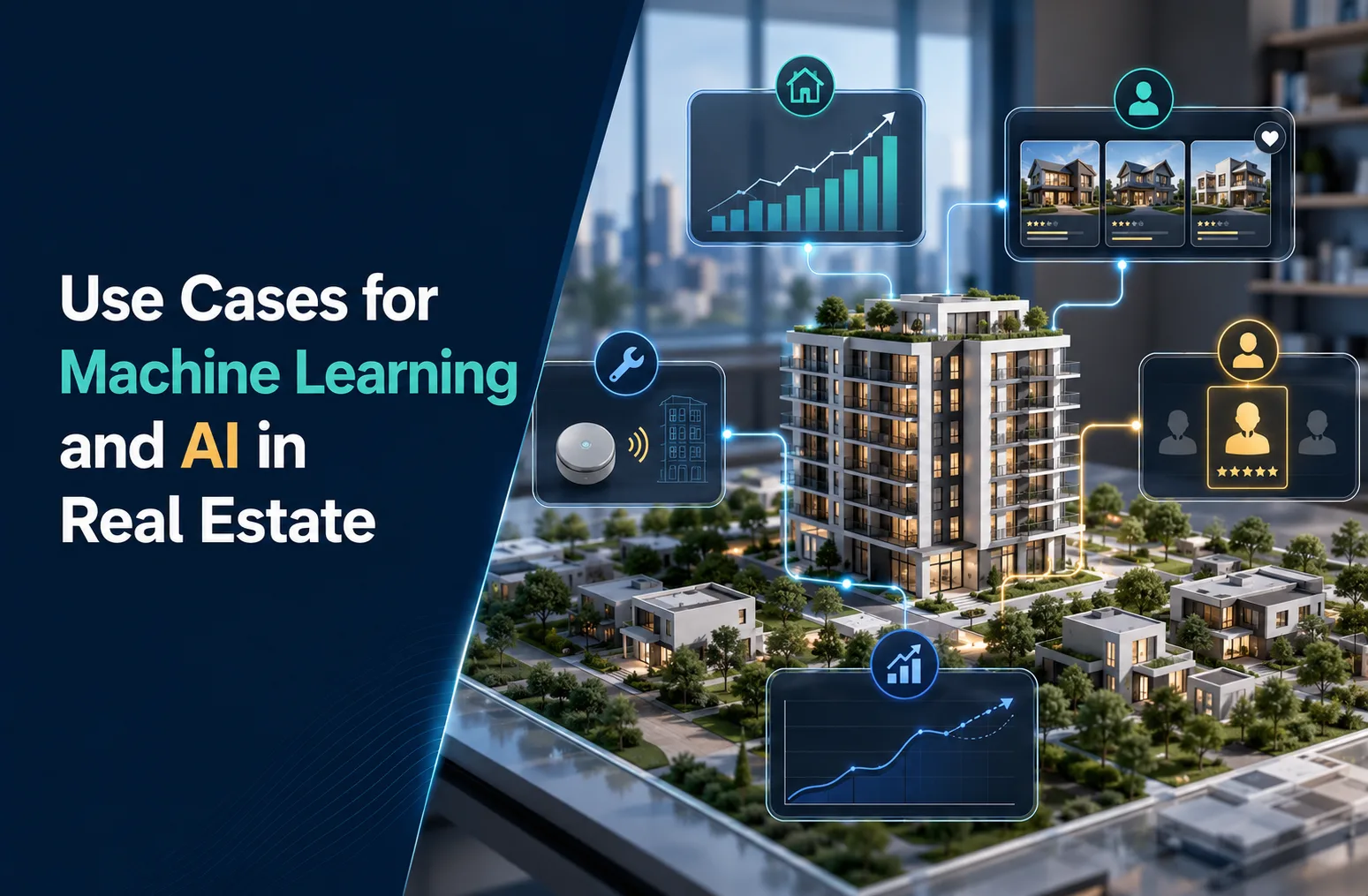
What are use cases for machine learning and AI in real estate?
Machine learning and AI in real estate have ten proven use cases in 2026: automated valuation models (AVMs), lead scoring and prioritisation, generative listing content, image and virtual-tour enhancement, predictive maintenance for property management, tenant and buyer screening (with fair-housing caveats), demand forecasting, chatbots and conversational agents, document and contract review, and portfolio-level investment analytics. Together they cover the full stack from marketing to leasing to operations to capital markets. Not every use case delivers equal ROI. AVMs, lead scoring, generative listings, and predictive maintenance produce the fastest returns; screening and forecasting carry more risk and need more oversight. This post walks through what each use case does, what it is worth, and where the returns are already showing up.
July 28, 2026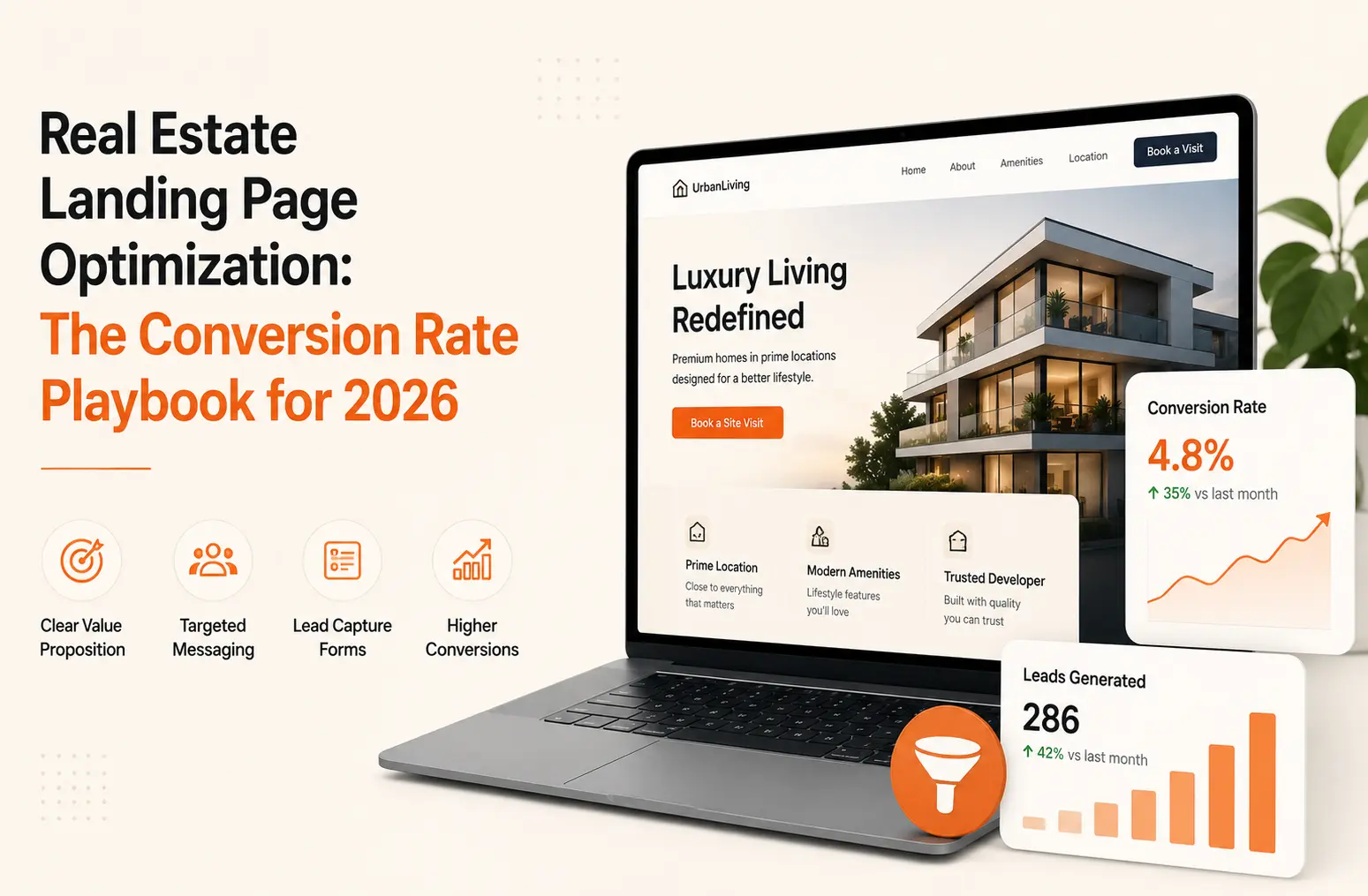 Real Estate
Real Estate Landing Page Optimization: The Conversion Rate Playbook for 2026
Most real estate landing pages convert at 2.7% while the top 25% convert at 11.45% or higher, and the gap has nothing to do with budget or design talent. This playbook breaks down exactly how to close that gap in 2026 through the nine structural elements every high-converting property landing page shares, a 15-point CRO audit you can run today, and a traffic source-specific optimization strategy that treats Google Search visitors, Meta cold audiences, and email traffic as the completely different conversion challenges they are. You'll also get the post-click architecture blueprint that connects your landing page to your CRM, automated response, and lead scoring system so conversions become pipeline, not just form fills sitting in a spreadsheet. Every section is built around measurable outcomes with specific benchmarks you can test against. If you're spending money driving traffic to a landing page that isn't hitting 5% or above, this is the playbook that fixes it.
July 28, 2026 Real Estate
Where is AI making a surprising impact on real estate support services?
AI is quietly reshaping the back-office of real estate, not just the front-office. The most surprising impact in 2026 is in support services that most operators still treat as manual: transaction coordination, escrow and title, property-management admin, compliance document review, vendor coordination, tenant communications, and bookkeeping. These functions absorb 30 to 40 percent of an operator's staff hours, and AI tools built for them now cut that load by 40 to 70 percent per workflow. Unlike front-office AI (listing generation, pricing, agent-side content) where the risk and disclosure burden is heavy, back-office AI has clearer economics, lower client-trust exposure, and faster payback. This is where operators are quietly capturing most of their real AI value in 2026, while everyone else is still debating whether ChatGPT should write listing descriptions.
July 28, 2026
Ready to book a 30-minute strategy call?
We'll map the right digital moves for your real estate business, no pitch deck, no commitment.