
Noseberry Digitals
Tenant Onboarding Done Right: A Step-by-Step Guide for Property Managers
Published March 31, 2026|7 min read

The first few weeks of a new tenancy tell the tenant everything they need to know about how the next year or more is going to feel. A smooth, organised, responsive onboarding process signals that the property management team is professional and that the tenant made a good choice. A disorganised one, with missing documents, […]
The first few weeks of a new tenancy tell the tenant everything they need to know about how the next year or more is going to feel. A smooth, organised, responsive onboarding process signals that the property management team is professional and that the tenant made a good choice. A disorganised one, with missing documents, unclear instructions, and unanswered questions, sets an expectation that is hard to reverse. This guide covers the tenant onboarding process from offer acceptance to the point where the tenant is settled, connected, and engaged. Every stage matters.
Why Onboarding Sets the Tone for Everything
Tenant satisfaction research consistently shows that the onboarding period has a disproportionate effect on long-term satisfaction and renewal intention. A tenant who has a positive onboarding experience starts the tenancy with goodwill toward the property management team. A tenant who has a frustrating one starts with a grievance.
This matters operationally because the onboarding period is also when tenants form their habits. A tenant who learns at the start of the tenancy that maintenance requests go through the app, that rent is paid by direct debit, and that the property manager communicates through the platform's messaging system, builds those habits from day one. A tenant who onboards without this guidance defaults to calling, emailing, and paying by bank transfer, creating support overhead that persists for the life of the tenancy. This dynamic is especially important for Build-to-Rent operators, where the tenant experience is a core part of the product proposition from day one.
The Stages of a Tenant Onboarding Process
A complete onboarding process covers five stages: offer acceptance, referencing and qualification, lease execution, move-in, and the early tenancy check-in. Each stage has specific tasks, responsible parties, and outputs. A well-designed onboarding workflow assigns these tasks to the relevant party, sets deadlines, and tracks completion so that nothing falls through the gap between stages. Offer acceptance is the point at which the tenancy terms are agreed in principle. At this stage, the tenant receives a formal offer letter or agreement in principle, the holding deposit is collected where applicable, and the referencing process is initiated. Referencing and qualification covers the verification of the tenant’s identity, income, rental history, and any required guarantor arrangements. Digital referencing tools have significantly reduced the time this stage takes compared to manual processes. Lease execution covers the preparation of the tenancy agreement, the collection of signatures from all parties, the collection of the security deposit, and the setup of the rent payment arrangement. Move-in covers the handover of keys, the completion of the move-in inspection and condition report, the handover of utility account information, and the introduction of the tenant to the property management team and tools. Early tenancy check-in covers a proactive outreach from the property management team two to four weeks after move-in to confirm the tenant is settled, address any early issues, and reinforce the preferred channels for ongoing communication.
Document Collection and Verification
The document collection phase of onboarding is where most delays occur. Tenants who do not understand what is required, or who find the submission process cumbersome, delay the process. Property managers chasing documents manually lose time that could be directed elsewhere. A structured document collection process addresses both problems. Tenants receive a clear list of required documents with specific formatting requirements and submission instructions. A digital submission portal allows them to upload documents from their phone rather than scanning and emailing. Automated reminders follow up on missing documents without requiring manual chasing by the property team. Document verification should be structured and recorded. The person verifying each document, the date of verification, and the outcome should be logged against the tenancy record. This creates an auditable trail that protects the business in the event of a later dispute about the qualification process. Automating this within a property management platform removes the risk of records being incomplete or stored inconsistently across email inboxes and shared drives.
Move-In Inspections and Condition Reports
The move-in inspection is the most legally significant document in most tenancy types. It establishes the condition of the property at the start of the tenancy and is the primary reference point for any deposit dispute at the end. A thorough move-in inspection covers every room and outdoor area of the property, with written descriptions and photographs of every item of note: the condition of walls, flooring, fixtures, appliances, and any pre-existing damage. The report should be signed by both the property manager and the tenant before or immediately after the move-in date. Digital inspection tools that allow the property manager to complete the report on a tablet or phone, attach photos at the point of capture, and generate a signed PDF that is automatically stored against the tenancy record, are significantly more reliable than paper-based processes. The photos are time-stamped, the report is complete, and the signed version is immediately accessible to both parties. Providing the tenant with a copy of the signed report immediately after move-in establishes transparency and reduces the likelihood of a dispute about what was pre-existing at the end of the tenancy.
Setting Up Tenant Access to Self-Service Tools
If your business uses a tenant portal or app for maintenance requests, rent payment, and communication, the move-in period is the critical window for establishing adoption. Tenants who are introduced to the self-service tools on move-in day, receive a clear explanation of what each tool does and why it is the preferred channel, and complete their first action in the tool during the onboarding session, are significantly more likely to use it consistently. Tenants who receive login credentials by email after the fact, without a guided introduction, are significantly less likely to adopt the tool. By the time they receive the welcome email, they have already sent their first maintenance request by WhatsApp and paid their first month's rent by bank transfer. The habits have formed.
Onboarding is the moment to set those habits intentionally. Our App Development service includes onboarding flow design as a core part of every tenant portal build, ensuring adoption is built into the product from the first session rather than retrofitted later.
Common Onboarding Mistakes and How to Avoid Them
Sending too much information at once. A move-in pack that contains forty pages of documentation, utility provider details, house rules, and contact information overwhelms new tenants. Prioritise what they need in the first 48 hours, and deliver the rest progressively over the first few weeks.
No clear single point of contact. Tenants who receive communications from multiple people in the property management team during onboarding do not know who to contact with a question. Assign one contact for the onboarding period, even if management responsibilities are shared later.
Delaying the early check-in. A proactive check-in two to four weeks after move-in is one of the highest-return activities in tenant management. It catches early issues before they become grievances, reinforces the communication channels, and signals to the tenant that the property management team is paying attention.
Not collecting the signed condition report before handing over keys. The condition report is most effective when it is completed and signed before the tenant takes possession. Once the tenant has moved in, getting a signed report becomes harder and the legal weight of the document is weaker.
Our Tenant and Resident Management Software page covers how we build onboarding workflow tools that automate document collection, inspection reporting, and tenant self-service setup.
Conclusion
Tenant onboarding is not an administrative process that ends when the keys are handed over. It is the foundation of the tenant relationship, and the habits, expectations, and goodwill established in the first few weeks persist throughout the tenancy. A well-run onboarding process does three things consistently: it moves efficiently through each stage without the delays that frustrate tenants before they have even settled in; it establishes the communication channels and self-service tools that reduce ongoing support overhead; and it signals to the tenant, clearly and early, that the property management team is organised, responsive, and paying attention. None of this requires significant additional resource. It requires a clear process, defined responsibilities at each stage, and the right tools to automate the parts that do not need human judgment. The return is a tenant who starts the tenancy with goodwill rather than grievance, and who is significantly more likely to still be in the property at renewal time.
Why trust Noseberry
Our content is written by practicing real-estate and PropTech professionals, fact-checked by a dedicated editorial team, and reviewed against the latest industry data before publication.
- 10+ years of industry expertise
- All facts independently verified
- No sponsored rankings in guides
- Updated when the industry changes
Related insights
 Real Estate
What Role Does SEO Play in Lead Generation for Real Estate Agents?
Most real estate agents either ignore SEO entirely or treat it as a branding exercise with no connection to their actual pipeline. This guide breaks down exactly what role SEO plays in lead generation for real estate agents, from the moment a buyer types a search query to the moment they book a call with you. You'll get the specific hacks that move map pack rankings, a clear comparison of SEO versus paid ads, and an explanation of AEO and GEO, the new lead sources that most agents haven't discovered yet. Every tactic is mapped to a sales outcome, not just a traffic metric. If you want an organic pipeline that keeps producing leads whether or not you're running ads, this is where you start.
July 3, 2026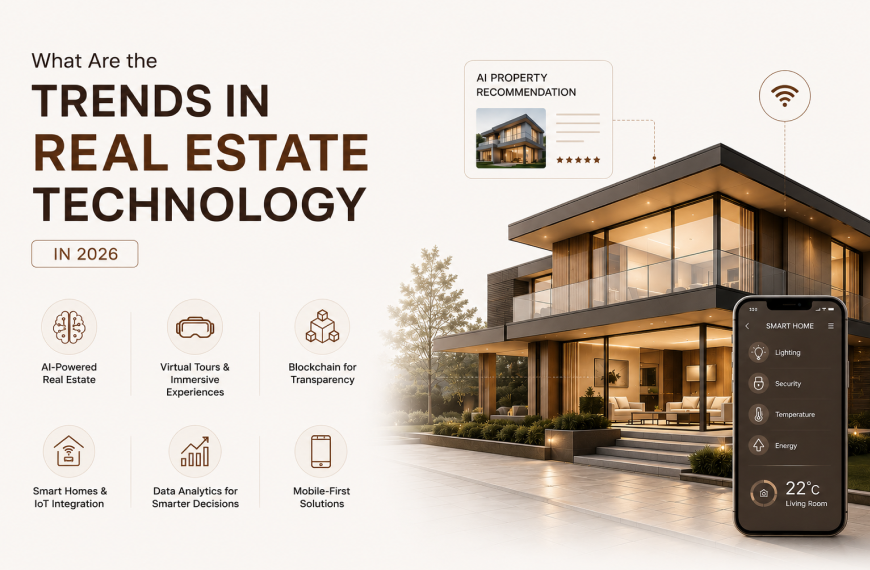 Real Estate
What Are the Trends in Real Estate Technology in 2026
Real estate technology isn't evolving gradually anymore, it's accelerating fast, and most property businesses are already behind. This guide breaks down the trends actually moving the needle in 2026: agentic AI, predictive seller analytics, digital twins, drone data collection, and AI-enhanced CRMs. You'll see real adoption numbers, documented sales impact, and a clear framework for deciding which trend to act on first. Instead of a generic trend list, this post connects each innovation to a specific business outcome. If you want to know what's actually worth your attention this year, start here.
July 3, 2026 Real Estate
What Are the Key Features of Real Estate Website Development?
This guide breaks down the key features of real estate website development: IDX/MLS property search, lead capture tools, mobile-first design, immersive visuals, SEO, and CRM integration. It explains why IDX drives roughly four times the traffic, how multi-step forms convert better, and why over 75% mobile traffic makes speed essential. Backed by data from Luxury Presence, iHomefinder, and Placester, it shows how the features work together as a lead funnel. The takeaway: build the funnel first, since a website's real job is to generate and convert leads.
July 2, 2026
Ready to book a 30-minute strategy call?
We'll map the right digital moves for your real estate business, no pitch deck, no commitment.