
Vijay
Solution Engineer
What Are the Key Features of Real Estate Website Development?
Published July 2, 2026|9 min read
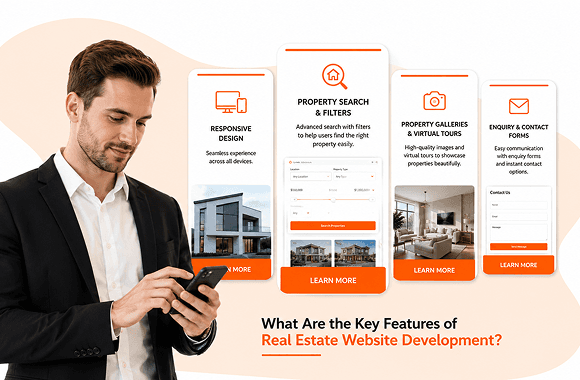
This guide breaks down the key features of real estate website development: IDX/MLS property search, lead capture tools, mobile-first design, immersive visuals, SEO, and CRM integration. It explains why IDX drives roughly four times the traffic, how multi-step forms convert better, and why over 75% mobile traffic makes speed essential. Backed by data from Luxury Presence, iHomefinder, and Placester, it shows how the features work together as a lead funnel. The takeaway: build the funnel first, since a website's real job is to generate and convert leads.
The key features of real estate website development are IDX/MLS property search, strong lead capture, mobile-first design, immersive visuals, SEO optimization, and CRM integration. IDX is the single most important feature, since websites with it receive roughly four times more traffic than those without. Together these features turn a static brochure site into a working lead-generation engine that competes with the big portals.
A real estate website is not just an online business card. It is where 43% of buyers start their home search before ever contacting an agent. If your site cannot let them search live listings, capture their details, and load fast on a phone, you lose them to Zillow. I have seen agents pour money into beautiful sites that generate nothing, because they skipped the features that actually drive leads. This guide breaks down the features that matter, why each one counts, and how to prioritize them.
What are the key features of real estate website development?
The key features are IDX/MLS search, lead capture tools, mobile-first responsive design, immersive property visuals, SEO optimization, and CRM integration. Each one serves a job: attract visitors, let them search, convert them to leads, and follow up. A real estate website works only when these features connect into one funnel, not when they exist as scattered parts.
Think of the site as a pipeline. SEO and content bring visitors, IDX search keeps them browsing, lead capture converts them, and CRM integration follows up. Miss any stage and the funnel leaks. The features below are the ones that keep it sealed, and they pair closely with how a real estate website template reflects your brand.
Why is IDX/MLS integration the most important feature?
IDX/MLS integration is the most important feature because it puts live listings on your own domain, which is what keeps buyers on your site instead of a portal. IDX connects your website to the Multiple Listing Service so listings update automatically as they are added, changed, or sold. Without live search, your site simply cannot compete for buyer engagement.
The impact is measurable. Websites with IDX tools receive roughly four times the traffic of those without, making it one of the highest-impact decisions in real estate web development. In 2026, most MLS organizations deliver data through the RESO Web API, so listings flow in automatically and stay accurate. A site with a front-and-center search bar meets buyers exactly where they start, which is why IDX anchors any serious real estate technology stack.
What features capture leads on a real estate website?
The features that capture leads are web forms, saved searches, property alerts, market reports, and gated home valuation tools. These give visitors a reason to share their contact details in exchange for value. Lead capture is where a website earns its keep, turning anonymous browsers into contacts you can nurture.
Here are the lead-capture features that work:
Web forms: contact, consultation, and listing-alert sign-ups, with spam protection.
Saved searches: let buyers save criteria and return, capturing registration.
Property alerts: automatic emails when matching listings appear.
Home valuation tools: gated "what's my home worth" forms for sellers.
Market reports: local data offered in exchange for an email.
Form design matters more than people think. Multi-step forms can convert up to 86% higher than a single long form, because they feel easier to start. Every captured lead should flow into a CRM for follow-up, the kind covered in our best CRM for real estate agents guide.
Real estate website features: purpose and impact
This table maps the key features to what they do and why they matter.
Feature | Purpose | Why it matters |
IDX/MLS search | Live listings on your domain | ~4x more traffic |
Lead capture forms | Convert browsers to contacts | Multi-step forms convert 86% higher |
Mobile-first design | Serve mobile users | 75%+ of traffic is mobile |
Immersive visuals | Showcase properties | Buyers want photos and floor plans |
SEO optimization | Attract organic traffic | Neighborhood pages build authority |
CRM integration | Follow up automatically | Leads go cold without it |
The pattern is clear. Each feature handles one stage of the funnel, and together they turn a website into a lead engine rather than a digital pamphlet.
Why do mobile-first design and speed matter?
Mobile-first design and speed matter because more than 75% of real estate website traffic comes from mobile devices. If your site is slow or hard to use on a phone, you lose most of your visitors before they search. A fast, responsive mobile experience is not optional; it is where the majority of your audience actually lives.
Speed is also an SEO ranking factor, so a slow site loses twice: visitors leave and search engines rank it lower. Pages should load quickly and adapt cleanly to any screen. Given that buyers cite detailed property information and floor plans as the most useful features, those must display perfectly on mobile. This is the same discipline that makes social media and web work together for reach.
What SEO features should a real estate website have?
A real estate website should have on-page SEO, hyper-local neighborhood pages, a keyword-targeted blog, fast load speed, mobile-first design, and schema markup. These help the site rank in search and attract organic buyers and sellers. SEO is what brings free, ongoing traffic, so it belongs in the build from day one, not as an afterthought.
Neighborhood pages are the standout. Hyper-local content builds SEO authority and positions you as the local expert, capturing searches the big portals overlook. Pair that with a blog targeting long-tail keywords, clean title tags and meta descriptions, and schema markup so search engines understand your content. Native IDX integration supports SEO too, since fresh listing content signals an active, relevant site, reinforcing your broader proptech and marketing strategy.
What design and trust features matter?
Design and trust features include conversion-focused layout, strategic calls to action, agent bios, testimonials, and reviews. These build the credibility that turns interest into contact. In a trust-driven business like real estate, social proof and clear branding directly affect whether a visitor reaches out.
Strong branding ties it together. Consistent visuals, a professional logo, and a clear value proposition signal competence, while testimonials and reviews provide proof. AI chatbots add 24/7 responsiveness, answering questions the moment a visitor has them. A site that looks credible and responds instantly converts far better, which is why design and branding, like the best real estate logos, are features, not decoration.
How do you prioritize real estate website features?
Prioritize by building the lead funnel first: IDX search, lead capture, mobile speed, and CRM integration, then layer on SEO, visuals, and branding. Start with the features that directly generate and convert leads, since those drive revenue. A beautiful site with no IDX or lead capture looks good and earns nothing.
Follow these steps to prioritize:
Add IDX/MLS search so buyers can browse live listings.
Build lead capture: forms, saved searches, and valuation tools.
Ensure mobile-first design and fast load speed.
Connect a CRM so every lead gets followed up.
Layer on SEO, neighborhood pages, immersive visuals, and branding.
Skip the urge to perfect the visuals before the funnel works. Looks attract, but the funnel converts. Build the engine first, then make it beautiful, the same way a sound marketing strategy pairs substance with style.
The bottom line on real estate website development features
The key takeaway is that the essential features of real estate website development are IDX/MLS search, lead capture, mobile-first speed, immersive visuals, SEO, and CRM integration, working together as one lead-generation funnel. IDX is the anchor, since it drives roughly four times the traffic and keeps buyers on your domain.
Your next step is to audit your current site against this list: does it have live search, working lead capture, fast mobile performance, and CRM follow-up? Wherever it falls short, that is where leads are leaking.
A real estate website should do one thing above all: generate and convert leads. The features that matter are the ones that build that funnel, not just the ones that look impressive. Start with IDX search and lead capture, make it fast on mobile, connect your CRM, then add the SEO and visuals that bring and impress visitors. Do that and your website becomes a genuine source of business. Ready to build a site that converts? Explore our real estate web and marketing services and book a strategy call.
- The key features of real estate website development form one lead-generation funnel.
- IDX/MLS search is the most important feature, driving roughly 4x more traffic.
- Lead capture tools like multi-step forms can convert up to 86% higher.
- Over 75% of real estate website traffic is mobile, so mobile-first design is essential.
- SEO features like neighborhood pages and schema bring organic traffic.
- CRM integration ensures captured leads get followed up before going cold.
- Immersive visuals and trust signals like reviews improve conversion.
- Build the lead funnel first, then layer on SEO, visuals, and branding.
Why trust Noseberry
Our content is written by practicing real-estate and PropTech professionals, fact-checked by a dedicated editorial team, and reviewed against the latest industry data before publication.
- 10+ years of industry expertise
- All facts independently verified
- No sponsored rankings in guides
- Updated when the industry changes
Frequently Asked Questions
What are the key features of real estate website development?
The key features are IDX/MLS property search, lead capture tools, mobile-first responsive design, immersive visuals, SEO optimization, and CRM integration. Each handles one stage of the lead funnel, from attracting visitors to converting and following up. IDX is the most important, since websites with it receive roughly four times more traffic than those without it.
Why is IDX integration important for a real estate website?
IDX integration is important because it puts live MLS listings on your own domain, keeping buyers on your site instead of a portal. Listings update automatically as they change. Websites with IDX receive roughly four times the traffic of those without, making it the single highest-impact feature. Without live search, your site cannot compete for buyer engagement.
What lead capture features should a real estate website have?
A real estate website should have web forms for contact and consultation, saved searches, property alerts, market reports, and gated home valuation tools. These exchange value for contact details. Multi-step forms can convert up to 86% higher than a single long form. Every captured lead should flow into a CRM for automatic, timely follow-up.
How important is mobile design for real estate websites?
Mobile design is essential, since more than 75% of real estate website traffic comes from mobile devices. A slow or clunky mobile site loses most visitors before they search. Fast, responsive mobile pages also help SEO rankings. Detailed property information and floor plans, which buyers value most, must display perfectly on phones for the site to convert.
What SEO features does a real estate website need?
A real estate website needs on-page SEO with strong title tags and meta descriptions, hyper-local neighborhood pages, a blog targeting long-tail keywords, fast load speed, mobile-first design, and schema markup. Neighborhood pages build local authority and capture searches portals overlook. Native IDX integration supports SEO by keeping fresh listing content on your site.
Does a real estate website need a CRM integration?
Yes, a real estate website needs CRM integration so captured leads flow automatically into a follow-up system. Without it, leads sit in an inbox and go cold. CRM integration connects lead capture to nurturing, ensuring every inquiry gets timely attention. It is the final stage of the website funnel and is essential for converting traffic into closings.
What makes a real estate website convert visitors into leads?
A real estate website converts through IDX search that keeps buyers browsing, lead capture forms that exchange value for contact details, fast mobile performance, and credibility signals like testimonials and reviews. Strategic calls to action and CRM follow-up complete the funnel. With 43% of buyers starting their search on a website, the site must capture them before they leave.
How much do immersive visuals matter on a real estate website?
Immersive visuals matter a great deal, since buyers cite detailed property information, photos, and floor plans as the most useful website features. Professional photography, video walkthroughs, 3D tours, and drone footage help buyers experience a property before visiting. Strong visuals increase engagement and inquiries, especially on mobile, where most real estate website traffic now happens.
What is the most important feature of a real estate website?
IDX/MLS integration is the most important feature of a real estate website. It places live, automatically updated listings on your own domain, which keeps buyers engaged on your site rather than a portal. Websites with IDX receive roughly four times the traffic of those without, making it the highest-impact decision in real estate website development.
How do I prioritize features when building a real estate website?
Prioritize the lead funnel first: add IDX/MLS search, build lead capture tools, ensure fast mobile performance, and connect a CRM. Then layer on SEO, neighborhood pages, immersive visuals, and branding. Start with features that directly generate and convert leads, since those drive revenue. A beautiful site without IDX or lead capture looks good but earns nothing.
Related insights
 Real Estate
What should a PMS do for small-scale property managers?
The ideal PMS for a small-scale property manager (typically 10 to 500 units) should do ten things well: capture every rent payment automatically, log every maintenance ticket with photo evidence and vendor dispatch, hold every tenant lease and document in one searchable place, generate owner and investor statements in one click, run automated rent reminders and late-fee escalation, screen tenants with credit and eviction history, sync with the operator's accounting stack (QuickBooks, Xero), work on mobile so field checks and unit walks happen on a phone, integrate with a website for listing marketing and online applications, and produce broker-visible dashboards that let the manager see occupancy, delinquency, and cash flow at a glance. AppFolio Property Manager Core, Buildium, DoorLoop, Rentec Direct, and Hemlane are the platforms most adopted at this scale in 2026, at $1.40 to $4 per unit per month. This post covers what the ideal PMS should do, which platforms actually deliver it, and how to pick without overpaying.
August 22, 2026 Real Estate
Which AI tools work best for real estate developers in 2026?
The best AI tools for real estate developers in 2026 fall into eight categories that map to the developer lifecycle: land sourcing and site selection (Cherre, Reonomy, HouseCanary, LandGate), feasibility and financial modelling (Northspyre, TestFit, custom Excel plus GPT), design and architectural planning (Autodesk Forma, Higharc, Cove.tool, Snaptrude), construction management and progress tracking (Procore AI, Autodesk Construction Cloud, Buildots, Doxel, OpenSpace), pre-launch marketing and renders (Restb.ai, MidJourney, Adobe Firefly), off-plan sales CRM (Salesforce, HubSpot, Follow Up Boss, Rechat), ESG and net-zero analytics (Measurabl, Enertiv, Aquicore), and handover to operations (BIM AI, tenant portal AI). Used well, they cut construction cost 10 to 20 percent, compress design cycles 30 to 50 percent, and lift off-plan sales conversion 20 to 40 percent. Used badly, they burn subscription budget and produce plans that do not build. This post walks through each category, which tools actually work, and how to sequence adoption.
August 22, 2026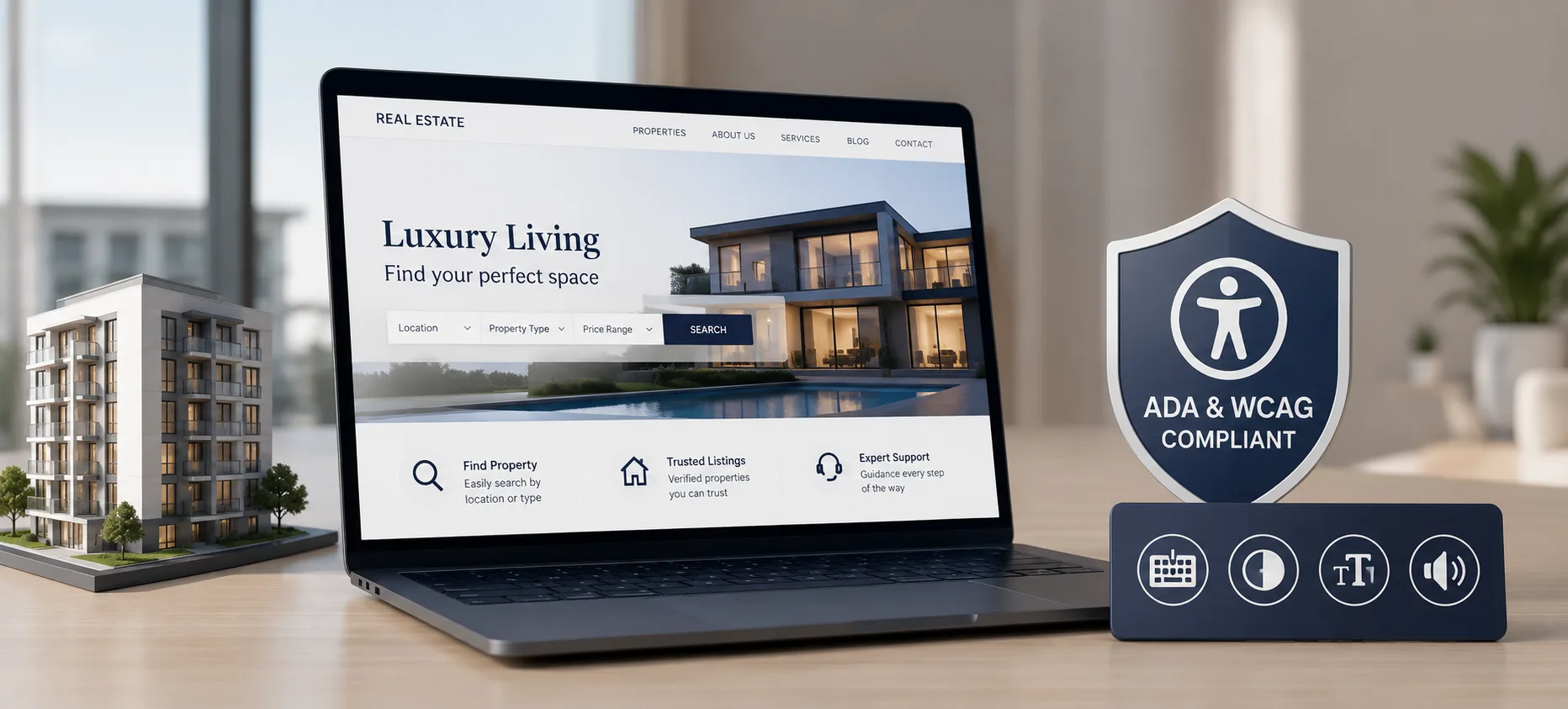 Real Estate
ADA & WCAG Accessibility Compliance for Real Estate Websites: What Operators Must Fix Before They Get Sued
This blog breaks down ADA and WCAG accessibility compliance for real estate websites, focused on what actually creates legal exposure. It explains why WCAG 2.1 Level AA has become the practical legal standard even without a formal Title III regulation for private businesses. It walks through the six accessibility failures responsible for 96% of all detected errors across the web, using real listing-page examples. It also warns against relying on accessibility overlay widgets, citing the FTC's 2025 action against accessiBe over deceptive compliance claims. The piece closes with a step-by-step audit process, an in-house versus compliance-partner comparison, and a 10-question FAQ section.
August 20, 2026
Ready to book a 30-minute strategy call?
We'll map the right digital moves for your real estate business, no pitch deck, no commitment.