
Noseberry Digitals
Why Property Portal Leads Fail Without a CRM to Catch Them
Published March 31, 2026|5 min read
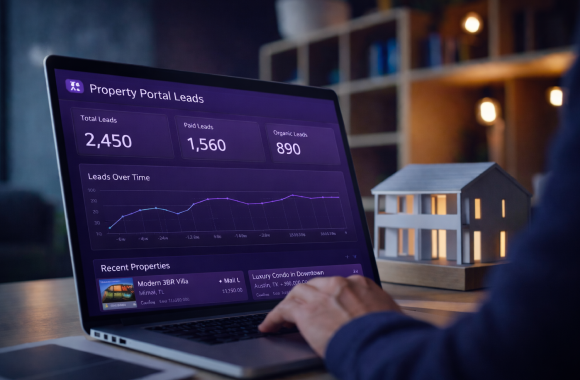
Without automation, the average gap between a portal lead arriving and agent contact is two to six hours. By that point, the buyer has usually already spoken to a competitor. Manual data entry introduces transcription errors that degrade pipeline quality across thousands of leads per year. Portal leads behave differently from direct website leads and […]
Without automation, the average gap between a portal lead arriving and agent contact is two to six hours. By that point, the buyer has usually already spoken to a competitor. Manual data entry introduces transcription errors that degrade pipeline quality across thousands of leads per year. Portal leads behave differently from direct website leads and should be routed and scored differently. The same buyer enquiring on three listings creates three duplicate records that inflate metrics and create a chaotic experience. Direct API integration between portals and CRM eliminates all of these problems at the source.
Property portals are one of the most effective ways to reach active buyers. They are also one of the most expensive ways to generate leads that go nowhere. For most property businesses spending significant budget on portal listings, the conversion problem is not the portal. It is what happens the moment a lead lands. This post explains the specific ways portal leads are lost after arrival and what a properly configured CRM does to prevent each one.
The Gap Between a Lead Arriving and an Agent Acting
When a buyer submits an enquiry through a property portal, what happens next determines whether that enquiry converts to a viewing or disappears. In most businesses without automated lead capture, the lead arrives in an email inbox. Someone checks that inbox, recognises it as a lead, copies the details into a system, decides which agent should handle it, and notifies that agent. At each step there is a delay and a possibility the lead gets lost, mis-categorised, or assigned to the wrong person. The average time from portal lead arrival to first agent contact without automation is between two and six hours. By that point, the buyer has typically received responses from two or three other agents and made their first decision about who to trust. The portal did its job. The business failed to catch the lead it paid for.
Manual Entry Creates Errors at the Most Important Moment
Beyond the delay, manual data entry introduces errors that compound over time. A name spelled incorrectly, a phone number transposed, a property type miscategorised. Each error reduces follow-up quality and, in aggregate, degrades the reliability of pipeline reporting. When portal leads are automatically captured into a CRM, the contact record is created from the portal’s structured data. Name, number, email, and enquiry details are populated exactly as the buyer submitted them. Duplicates are detected and merged automatically. The agent sees clean, complete information from the first interaction. Over thousands of leads per year, that is the difference between a reliable pipeline and a collection of imperfect records that nobody fully trusts.
Portal Leads Need Different Handling Than Website Leads
A buyer who enquires directly through your website has already visited your brand and chosen to contact you specifically. They are typically warmer and more familiar with who you are. A portal lead has searched by criteria, seen your listing among several others, and submitted a form. They are active and interested but probably talking to multiple agents simultaneously. The commercial context is different and the response approach should reflect that. A CRM that understands lead source can route portal leads to your fastest-responding agents, apply appropriate scoring based on enquiry content, and trigger a different follow-up sequence from what you would send a direct website enquiry. Without that logic, every lead gets the same treatment regardless of context.
Duplicate Leads Are Costing You More Than You Think
The same buyer enquires on three listings. Three agents receive three separate leads. Three agents call the same person in the same hour. From the buyer’s perspective, that experience is chaotic. From the business’s perspective, three agents are spending time on one person who was only ever one lead. And in the pipeline report it appears as three leads, inflating volume metrics and distorting conversion data. A CRM with duplicate detection identifies when the same contact has appeared before, merges the records, and routes follow-up to the agent who already has the relationship. The buyer gets one coherent conversation. The business gets accurate data. For real estate brokerages dealing with this at scale, our digital marketing services also help align lead generation strategies with CRM capacity so volume and quality stay balanced.
What Good Portal Lead Integration Looks Like
The standard for portal lead integration in a modern property CRM is a direct API connection between the portal and the CRM. Leads flow in automatically within seconds of submission. No email parsing, no manual copy-paste, no human step in the chain.
On arrival, the CRM creates or updates the contact record, checks for duplicates, applies lead scoring, and routes to the appropriate agent using pre-configured rules. The agent receives a notification with the lead details and suggested next action. The portal remains a lead generation channel. The CRM owns the relationship from that point forward. Learn how direct portal lead integration is built at our real estate CRM implementation page.
Conclusion
Portal listings generate intent. What the business does in the seconds and minutes after a lead arrives determines whether that intent converts to a conversation or drifts to a competitor who responded first. The problems described in this article are not difficult to solve. Slow response times, manual entry errors, undifferentiated routing, and duplicate records are all structural failures that a properly configured CRM eliminates at the source. The integration work is a one-time investment. The improvement in lead conversion compounds with every enquiry that follows. Property businesses that continue handling portal leads manually are not just losing individual buyers. They are paying for leads they are systematically failing to catch. The portal budget stays the same. The conversion rate stays low. And the gap between the cost of listings and the return from them widens each quarter. The fix starts at the point where the lead arrives. Everything that happens before that moment is already working.
Why trust Noseberry
Our content is written by practicing real-estate and PropTech professionals, fact-checked by a dedicated editorial team, and reviewed against the latest industry data before publication.
- 10+ years of industry expertise
- All facts independently verified
- No sponsored rankings in guides
- Updated when the industry changes
Related insights
 Real Estate
What Role Does SEO Play in Lead Generation for Real Estate Agents?
Most real estate agents either ignore SEO entirely or treat it as a branding exercise with no connection to their actual pipeline. This guide breaks down exactly what role SEO plays in lead generation for real estate agents, from the moment a buyer types a search query to the moment they book a call with you. You'll get the specific hacks that move map pack rankings, a clear comparison of SEO versus paid ads, and an explanation of AEO and GEO, the new lead sources that most agents haven't discovered yet. Every tactic is mapped to a sales outcome, not just a traffic metric. If you want an organic pipeline that keeps producing leads whether or not you're running ads, this is where you start.
July 3, 2026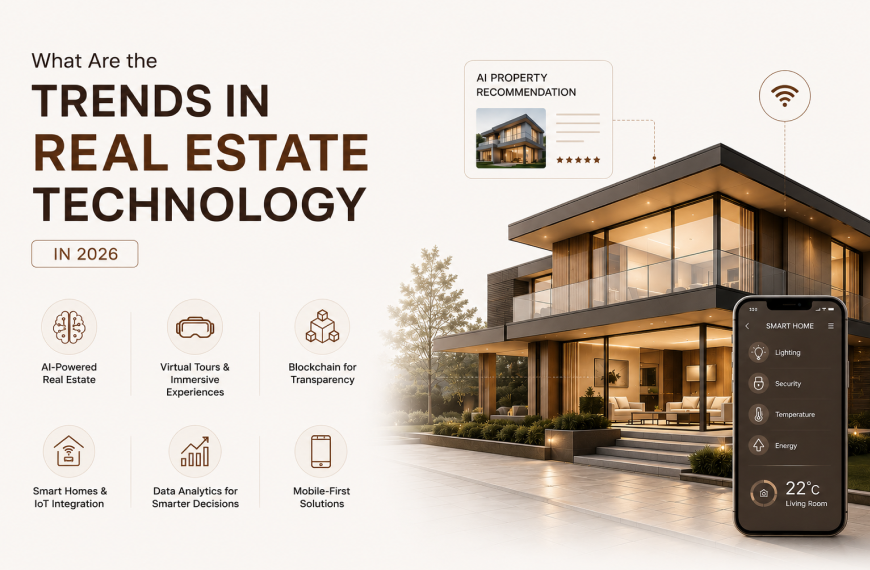 Real Estate
What Are the Trends in Real Estate Technology in 2026
Real estate technology isn't evolving gradually anymore, it's accelerating fast, and most property businesses are already behind. This guide breaks down the trends actually moving the needle in 2026: agentic AI, predictive seller analytics, digital twins, drone data collection, and AI-enhanced CRMs. You'll see real adoption numbers, documented sales impact, and a clear framework for deciding which trend to act on first. Instead of a generic trend list, this post connects each innovation to a specific business outcome. If you want to know what's actually worth your attention this year, start here.
July 3, 2026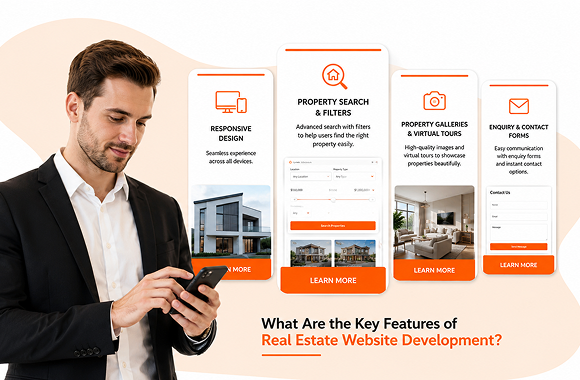 Real Estate
What Are the Key Features of Real Estate Website Development?
This guide breaks down the key features of real estate website development: IDX/MLS property search, lead capture tools, mobile-first design, immersive visuals, SEO, and CRM integration. It explains why IDX drives roughly four times the traffic, how multi-step forms convert better, and why over 75% mobile traffic makes speed essential. Backed by data from Luxury Presence, iHomefinder, and Placester, it shows how the features work together as a lead funnel. The takeaway: build the funnel first, since a website's real job is to generate and convert leads.
July 2, 2026
Ready to book a 30-minute strategy call?
We'll map the right digital moves for your real estate business, no pitch deck, no commitment.