

Mayank Pokharna
Real estate & PropTech specialist
Why Is Build-to-Rent So Good?
Published July 2, 2026|6 min read
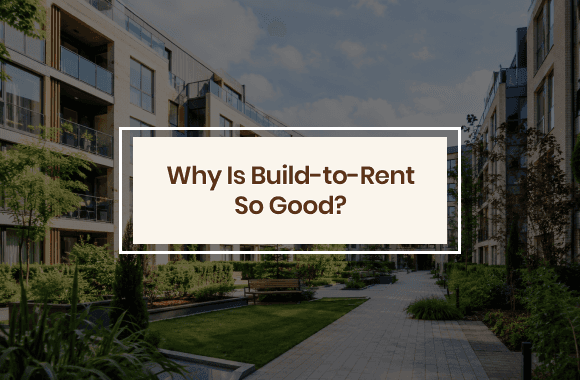
This guide explains why build-to-rent is so good in 2026: durable demand, high occupancy near 92% to 96%, recurring income, and efficient community-scale operations. It covers the structural demand drivers, what makes BTR a strong income-oriented investment, and a clear-eyed look at the risks, including cooling rent growth and market-by-market divergence. Backed by data from the National Apartment Association, Arbor, and Crowd Street, it stresses that location and disciplined underwriting decide returns. The takeaway: the fundamentals favor build-to-rent, but execution turns them into results.
Build-to-rent is so good because it pairs strong, structural demand with stable occupancy, recurring income, and efficient operations. It gives renters the space and feel of a house without the cost of buying, and it gives investors a steady, income-oriented asset managed as one community rather than scattered homes. In 2026, occupancy sits near 92% to 96%, single-family rental completions hit a record 113,000 units in 2024, and a shrinking construction pipeline points to firmer performance ahead.
The appeal is simple once you see the demand behind it. Millions of people want a home with a yard and a neighborhood, but cannot or do not want to buy. Build-to-rent meets them exactly there. I have watched this niche grow into a core institutional strategy, and the reasons are structural, not faddish. This guide explains why build-to-rent works so well, the data behind it, and the risks worth weighing before you treat it as a sure thing.
Why is build-to-rent so good?
Build-to-rent is so good because it sits on durable demand and delivers stable, recurring income. Renters get the privacy, space, and neighborhood feel of a single-family home without needing a down payment, and investors get high occupancy, strong retention, and the efficiency of managing a purpose-built community. That combination of reliable demand and operational efficiency is what makes the model so attractive.
The structural case is the heart of it. Homeownership stays out of reach for many even where buying looks cheaper, because the 20% down payment is a barrier most renters cannot clear. So demand for quality rental homes holds firm across economic cycles. This durability is why build-to-rent has shifted from a niche play to a core strategy, and why operators are layering in technology, as covered in our AI in build-to-rent guide.
What is build-to-rent?
Build-to-rent, or BTR, is housing purpose-built to be rented rather than sold, typically single-family homes, townhomes, or cottages grouped into a managed community. It matters because it professionalizes single-family rental, replacing scattered individual landlords with institutional-quality operations. BTR is the bridge between apartment living and homeownership, offering house-style living on a rental basis.
Think of it as a neighborhood of rental homes run like an apartment community. Residents get yards, privacy, and space, while operators get the efficiency of centralized leasing, maintenance, and management. Townhomes are projected to make up the largest share of BTR completions, followed by cottages, as developers balance density and affordability.
What drives build-to-rent demand?
Build-to-rent demand is driven by demographics, affordability barriers, and lifestyle preferences. People want space and a neighborhood without the cost and commitment of buying, and high mortgage rates keep would-be buyers renting longer. These drivers are structural, which is why demand stays elevated even when the broader economy cools.
Here are the core demand drivers:
Affordability barriers: the 20% down payment blocks many would-be buyers.
High mortgage rates: low-6% rates make buying cost-prohibitive, keeping renters renting.
Lifestyle preference: renters want space, privacy, and a yard without ownership duties.
Demographic growth: household formation keeps adding renters.
Flexibility: renting suits mobile workers and life-stage transitions.
These forces compound. Renter demand has stayed elevated despite slower job growth, because the math of buying remains out of reach for many. That resilience is exactly what makes the demand side so dependable for operators and the property management systems behind them.
What makes build-to-rent a strong investment?
Build-to-rent is a strong investment because it generates recurring income with high occupancy and strong tenant retention. Occupancy sits near 92% to 96%, residents tend to stay longer than in many apartment formats, and purpose-built communities are far more efficient to run than scattered single homes. It is an income-oriented, long-term play rather than a short-term growth bet.
The operational advantage is real. Managing one community beats managing dozens of scattered-site rentals, with centralized leasing, maintenance, and the same rent collection software across every door. Single-family homes built as rentals accounted for 16% of all new rental units in 2024, a record, showing how seriously institutional capital now takes the model. Returns in 2026 depend on location, operating efficiency, and conservative underwriting, not aggressive rent-growth assumptions.
Build-to-rent vs scattered rentals: a quick comparison
The model's edge is clearest against traditional scattered-site rentals. This table shows why.
Factor | Scattered-site rentals | Build-to-rent community |
Management | Fragmented, property by property | Centralized, one community |
Maintenance | Dispatched across locations | On-site and efficient |
Occupancy | Variable | Stable, near 92-96% |
Retention | Mixed | Strong, house-style living |
Operating cost | Higher per unit | Lower through scale |
The pattern is clear. BTR turns the messy economics of scattered landlording into an efficient, institutional operation, which is much of why it performs so well, especially when paired with AI for real estate operators.
What does the 2026 build-to-rent market look like?
The 2026 BTR market shows stable demand meeting a shrinking supply pipeline, which supports future performance. After record deliveries in 2024 and 2025, units under construction fell from over 122,000 in early 2024 to about 63,000 by early 2026, a nearly 50% drop. Fewer new homes against steady demand tends to firm up occupancy and rents over time.
The picture is not uniform, and honesty matters here. Rent growth has cooled, slowing from 5.5% in early 2023 to roughly flat by early 2026, with average rent easing from $2,227 to $2,207. Performance also varies sharply by market: secondary metros like Buffalo, Pittsburgh, and Reno posted around 10% rent growth, while overbuilt Sunbelt markets like Austin and Phoenix saw construction pull back hard. BTR is good, but location and discipline decide outcomes.
What are the risks of build-to-rent?
The main risks are cooling rent growth, oversupply in some markets, and regulatory uncertainty. BTR is not a guaranteed win; returns hinge on buying in the right market at the right basis and operating efficiently. Treating it as a sure thing, with aggressive rent assumptions, is the most common way investors get burned.
Be clear-eyed about the specifics. Rent growth has turned roughly flat nationally, some Sunbelt markets are oversupplied, and federal and state regulatory questions are slowing completions. To weigh a BTR opportunity sensibly, work through these steps:
Study the specific market's supply pipeline and rent trend.
Underwrite with conservative, not aggressive, rent assumptions.
Confirm you are buying at a sensible basis for that market.
Assess the operating efficiency a purpose-built community offers.
Do your own due diligence, since this is not financial advice.
The model is strong, but success depends on discipline, not just on the sector's tailwinds. Sound technology and operations help protect margins when rents are flat.
The bottom line on why build-to-rent is so good
The key takeaway is that build-to-rent is so good because durable demand, high occupancy, recurring income, and efficient community-scale operations combine into a resilient, income-oriented asset, even as rent growth cools and outcomes vary by market. The structural case is strong; the execution and location still decide returns.
Your next step, if BTR interests you, is to study the specific market and basis, model conservative rent assumptions, and weigh the operational efficiency a purpose-built community offers. The fundamentals favor the model, but discipline turns those fundamentals into results.
Build-to-rent earns its reputation by meeting a real, lasting need: quality rental homes for people priced out of buying. That demand is not going away, occupancy stays high, and shrinking supply supports performance ahead. The catch is that this is a long-term, income-oriented play that rewards the right market and tight operations, not aggressive bets. Approach it with discipline and the model genuinely delivers. Want to operate BTR efficiently? Explore our real estate operations services and book a strategy call.
- Build-to-rent pairs durable demand with stable, recurring income.
- Renters get house-style living without a down payment barrier.
- Occupancy sits near 92% to 96%, with strong tenant retention.
- Single-family rentals were 16% of all new rental units in 2024, a record.
- Centralized community management beats scattered-site rentals on efficiency.
- The construction pipeline fell nearly 50%, supporting future performance.
- Rent growth has cooled to roughly flat, and outcomes vary by market.
- BTR is an income-oriented, long-term play that rewards discipline, not aggressive bets.
Why trust Noseberry
Our content is written by practicing real-estate and PropTech professionals, fact-checked by a dedicated editorial team, and reviewed against the latest industry data before publication.
- 10+ years of industry expertise
- All facts independently verified
- No sponsored rankings in guides
- Updated when the industry changes
Frequently Asked Questions
Why is build-to-rent so good?
Build-to-rent is so good because it pairs durable demand with stable income. Renters get the space and feel of a house without a down payment, while investors get high occupancy near 92% to 96%, strong retention, and efficient community-scale operations. That mix of reliable demand and operational efficiency makes BTR a resilient, income-oriented asset across economic cycles.
What is build-to-rent?
Build-to-rent, or BTR, is housing purpose-built to be rented rather than sold, usually single-family homes, townhomes, or cottages grouped into a managed community. It professionalizes single-family rental, replacing scattered individual landlords with institutional-quality operations. BTR bridges apartment living and homeownership, giving residents house-style living, like yards and privacy, on a rental basis.
What drives demand for build-to-rent?
Build-to-rent demand is driven by affordability barriers, high mortgage rates, lifestyle preferences, and demographic growth. The 20% down payment blocks many would-be buyers, and low-6% mortgage rates keep them renting longer. Renters increasingly want space and a neighborhood without ownership duties. These structural drivers keep BTR demand elevated even when the broader economy and job growth slow.
Related insights
 Real Estate
What should a PMS do for small-scale property managers?
The ideal PMS for a small-scale property manager (typically 10 to 500 units) should do ten things well: capture every rent payment automatically, log every maintenance ticket with photo evidence and vendor dispatch, hold every tenant lease and document in one searchable place, generate owner and investor statements in one click, run automated rent reminders and late-fee escalation, screen tenants with credit and eviction history, sync with the operator's accounting stack (QuickBooks, Xero), work on mobile so field checks and unit walks happen on a phone, integrate with a website for listing marketing and online applications, and produce broker-visible dashboards that let the manager see occupancy, delinquency, and cash flow at a glance. AppFolio Property Manager Core, Buildium, DoorLoop, Rentec Direct, and Hemlane are the platforms most adopted at this scale in 2026, at $1.40 to $4 per unit per month. This post covers what the ideal PMS should do, which platforms actually deliver it, and how to pick without overpaying.
August 22, 2026 Real Estate
Which AI tools work best for real estate developers in 2026?
The best AI tools for real estate developers in 2026 fall into eight categories that map to the developer lifecycle: land sourcing and site selection (Cherre, Reonomy, HouseCanary, LandGate), feasibility and financial modelling (Northspyre, TestFit, custom Excel plus GPT), design and architectural planning (Autodesk Forma, Higharc, Cove.tool, Snaptrude), construction management and progress tracking (Procore AI, Autodesk Construction Cloud, Buildots, Doxel, OpenSpace), pre-launch marketing and renders (Restb.ai, MidJourney, Adobe Firefly), off-plan sales CRM (Salesforce, HubSpot, Follow Up Boss, Rechat), ESG and net-zero analytics (Measurabl, Enertiv, Aquicore), and handover to operations (BIM AI, tenant portal AI). Used well, they cut construction cost 10 to 20 percent, compress design cycles 30 to 50 percent, and lift off-plan sales conversion 20 to 40 percent. Used badly, they burn subscription budget and produce plans that do not build. This post walks through each category, which tools actually work, and how to sequence adoption.
August 22, 2026 Real Estate
ADA & WCAG Accessibility Compliance for Real Estate Websites: What Operators Must Fix Before They Get Sued
This blog breaks down ADA and WCAG accessibility compliance for real estate websites, focused on what actually creates legal exposure. It explains why WCAG 2.1 Level AA has become the practical legal standard even without a formal Title III regulation for private businesses. It walks through the six accessibility failures responsible for 96% of all detected errors across the web, using real listing-page examples. It also warns against relying on accessibility overlay widgets, citing the FTC's 2025 action against accessiBe over deceptive compliance claims. The piece closes with a step-by-step audit process, an in-house versus compliance-partner comparison, and a 10-question FAQ section.
August 20, 2026
Ready to book a 30-minute strategy call?
We'll map the right digital moves for your real estate business, no pitch deck, no commitment.