

Honey Saxena
Digital Marketing Expert
What Is Property Management Software? What Does It Do?
Published July 2, 2026|9 min read
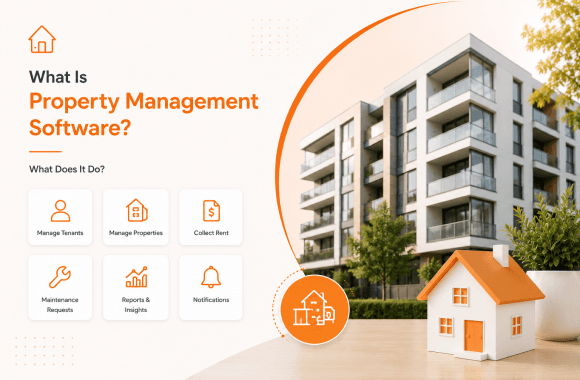
This guide explains what property management software is and what it does, in plain English. It defines the software as a centralized platform that automates rent collection, leasing, maintenance, accounting, and tenant communication, then breaks down its features, who uses it, the benefits, and what it costs. Backed by data from Mordor Intelligence, Grand View Research, and the National Apartment Association, it shows how the software saves 8 to 15 hours a week. The takeaway: property management software turns manual landlording into an efficient, organized operation for portfolios of any size.
Property management software is a centralized platform that landlords and property managers use to handle leasing, rent collection, accounting, maintenance, and tenant communication across one or more properties. It replaces spreadsheets, paper leases, and chasing checks with one automated system. In short, it runs the day-to-day operations of rental properties so you do not have to do them by hand. Most users recover 8 to 15 hours a week by automating these tasks.
If you have ever managed a rental, you know the work hides in the details: collecting rent, logging repairs, tracking expenses, renewing leases, and answering tenant questions. Property management software pulls all of that into one place. It is why over 72% of property management firms worldwide now use digital tools. This guide explains exactly what property management software is, what it does, who uses it, and what it costs, in plain English.
What is property management software?
Property management software is a digital platform that automates and centralizes the tasks involved in managing rental property, from leasing and rent collection to accounting and maintenance. It matters because managing rentals manually is slow and error-prone, while software handles the repetitive work automatically and keeps every record in one place.
Think of it as the operating system for a rental business. Instead of juggling a bank account, a spreadsheet, a filing cabinet, and your phone, you run everything through one dashboard. The software remembers due dates, applies late fees, tracks repairs, and files every transaction, so nothing slips through the cracks.
What does property management software do?
Property management software automates the core tasks of running rentals: collecting rent, managing leases, tracking maintenance, handling accounting, and communicating with tenants. It does this through a connected system where each function feeds the others, so a rent payment, an expense, and a lease all stay linked to the right property automatically.
Here is what it does across the rental cycle:
Collects rent: online ACH and card payments with automatic reminders and late fees.
Manages leases: digital lease creation, e-signing, and renewals.
Tracks maintenance: tenant requests, work orders, and vendor assignments.
Handles accounting: income and expense tracking, often synced to QuickBooks.
Screens tenants: credit and background checks during applications.
Communicates: tenant and owner portals plus automated messaging.
Reports: owner statements and performance dashboards.
The payoff is automation. Routine communication, reporting, and rent collection happen on their own, which is exactly where the time savings come from, and where tools like those in our rent collection and maintenance software guide shine.
What features does property management software include?
Property management software includes rent collection, lease management, maintenance tracking, accounting, tenant screening, and reporting as standard. In 2026, leading platforms add AI features like chatbots, lease abstraction, and predictive maintenance, plus open integrations and a tenant mobile app. These features turn separate chores into one connected workflow.
The core feature set covers the whole rental lifecycle. Integrated payments handle rent, automated late fees remove manual chasing, and maintenance workflows route repairs from request to resolution. Accounting automatically sorts transactions by category and ties them to each property, which makes tax time far easier. The newest differentiator is AI: chatbots answer tenant questions, lease abstraction pulls key terms from documents, and predictive maintenance flags issues early, capabilities explored in our AI in property management use cases guide.
Manual management vs property management software
The value is clearest side by side. This table shows how software changes each core task.
Task | Manual management | With software |
Rent collection | Checks and reminders by hand | Automated online payments |
Late fees | Tracked manually | Applied by rule |
Maintenance | Logged on paper or texts | Tracked from request to fix |
Accounting | Spreadsheets | Auto-sorted by property |
Tenant communication | Phone and email | Portal and automated messages |
Reporting | Built by hand | Generated on demand |
The pattern is consistent. Software replaces manual, scattered effort with one automated system, which is why most users recover 8 to 15 hours a week.
Who uses property management software?
Property management software is used by landlords, property managers, and real estate firms of all sizes, from individual owners with a few units to companies managing thousands. Adoption is now mainstream: over 72% of property management firms worldwide use digital tools, and more than 75% of large residential and commercial managers use integrated platforms.
The user base spans the whole market. A single landlord might use a free app for a handful of units, while a professional management company runs an enterprise platform across a large portfolio. A 2023 National Apartment Association survey found 68% of North American property managers already using some form of property management software, and that share keeps climbing as the tools get easier and more capable. Whatever the scale, the goal is the same: run rentals efficiently, a principle that also drives broader AI for real estate operators adoption.
What are the benefits of property management software?
The main benefit is time savings through automation, with most landlords and managers recovering 8 to 15 hours a week. Beyond time, the software speeds rent collection, reduces vacancy, improves maintenance efficiency, and cuts errors. It turns hours of manual admin into automated background tasks, freeing you to focus on growth.
The financial impact is concrete. Industry estimates put typical returns at tens of thousands in saved labor, plus thousands more from faster rent collection, lower vacancy, and tighter maintenance. The software also reduces costly mistakes, like missed renewals or misfiled expenses, and keeps you organized for tax time. For growing portfolios, those gains compound, much like the operational wins from predictive maintenance and automation at scale.
How much does property management software cost?
Property management software ranges from free to enterprise pricing. Free apps like Innago and TurboTenant suit small landlords, mid-range tools run roughly $50 to $150 monthly, and enterprise platforms like AppFolio cost $250 to $1,500 or more. Most modern software is cloud-based, which now makes up about 64% of deployments. The right price depends on your portfolio size and feature needs.
Match the tool to your scale. A landlord with a few units may need nothing more than a free app, while a management company needs deeper accounting and reporting. Watch for payment processing fees and per-unit pricing, which affect the real cost. Our best free rental PMS apps guide covers the no-cost options, and the technology selection guide helps you weigh the full stack.
How do you choose property management software?
Choose by matching the software to your portfolio size, must-have features, and budget, then testing it on your real workflow. Fit and ease of use matter more than feature counts, since clunky software simply will not get used. Work through these steps:
Count your units and set your budget honestly.
List your must-have features, like rent collection and maintenance.
Shortlist two platforms in your tier, from free to enterprise.
Check processing fees and whether pricing is per-unit or flat.
Trial each on a real rent payment and maintenance request.
Skip the urge to buy the most powerful platform before you need it. A small landlord rarely needs enterprise accounting, and an overbuilt tool wastes money and time. Start at your scale, prioritize automated rent collection and maintenance tracking, and confirm the software protects tenant data securely, a point we stress in our PropTech security guide. The best choice is the one you will actually use every day.
The bottom line on property management software
The key takeaway is that property management software is a centralized platform that automates rent collection, leasing, maintenance, accounting, and tenant communication, saving most users 8 to 15 hours a week and cutting costly errors. It is now mainstream, with over 72% of property firms using digital tools, because it turns manual landlording into an efficient, organized operation.
Your next step is to identify your biggest time drain, whether that is rent collection, maintenance, or accounting, and trial one platform that automates it. That hands-on test shows you the value fast.
Property management software is no longer optional for anyone serious about running rentals well. It replaces spreadsheets and chasing checks with one system that handles the daily work automatically. Match the tool to your scale, prioritize the tasks that cost you the most time, and you will reclaim hours every week. Ready to automate your rentals? Explore our property management technology services and book a strategy call.
- Property management software centralizes leasing, rent, accounting, maintenance, and communication.
- It automates routine tasks, saving most users 8 to 15 hours per week.
- Core features include rent collection, lease management, maintenance tracking, and accounting.
- In 2026, AI features like chatbots and predictive maintenance are key differentiators.
- Over 72% of property management firms worldwide use digital tools.
- Pricing ranges from free apps to enterprise platforms costing $250-$1,500+ monthly.
- About 64% of deployments are cloud-based.
- Match the software to your portfolio size rather than overbuying.
Why trust Noseberry
Our content is written by practicing real-estate and PropTech professionals, fact-checked by a dedicated editorial team, and reviewed against the latest industry data before publication.
- 10+ years of industry expertise
- All facts independently verified
- No sponsored rankings in guides
- Updated when the industry changes
Frequently Asked Questions
What is property management software?
Property management software is a centralized digital platform that landlords and property managers use to automate leasing, rent collection, accounting, maintenance, and tenant communication across one or more properties. It replaces spreadsheets, paper leases, and manual rent chasing with one connected system. Over 72% of property management firms worldwide now use these digital tools to run their operations efficiently.
What does property management software do?
Property management software collects rent online, manages leases, tracks maintenance requests, handles accounting, screens tenants, and powers tenant and owner communication. Each function connects to the others, so payments, expenses, and leases stay linked to the right property automatically. The result is that routine admin happens on its own, saving most users 8 to 15 hours per week.
What features does property management software include?
Property management software includes rent collection, lease management, maintenance tracking, accounting, tenant screening, and reporting as standard. In 2026, leading platforms add AI features like chatbots, lease abstraction, and predictive maintenance, plus open integrations and a tenant mobile app. Together these features turn separate, manual chores into one connected, automated workflow across the rental lifecycle.
Who uses property management software?
Landlords, property managers, and real estate firms of all sizes use property management software, from individual owners with a few units to companies managing thousands. Adoption is mainstream: a 2023 National Apartment Association survey found 68% of North American property managers using it, and more than 75% of large residential and commercial managers run integrated platforms.
What are the benefits of property management software?
The main benefit is time savings, with most landlords and managers recovering 8 to 15 hours per week through automation. It also speeds rent collection, reduces vacancy, improves maintenance efficiency, and cuts costly errors like missed renewals. Industry estimates put returns in the tens of thousands in saved labor, plus thousands more from faster collection and lower vacancy.
How much does property management software cost?
Property management software ranges from free apps like Innago and TurboTenant for small landlords, to mid-range tools at roughly $50 to $150 monthly, to enterprise platforms like AppFolio at $250 to $1,500 or more. Most software is cloud-based. The right price depends on your portfolio size and feature needs, so match the tool to your scale rather than overbuying.
Is property management software worth it?
Property management software is worth it for most landlords and managers, since it saves 8 to 15 hours a week and reduces costly errors. Even free apps deliver strong value for small portfolios. The return comes from automated rent collection, lower vacancy, and tighter maintenance. The key is matching the tool to your scale so you pay only for what you need.
What is the difference between free and paid property management software?
Free property management software, like Innago and TurboTenant, covers core tasks such as rent collection, screening, and maintenance for small landlords, often earning money through tenant-paid fees. Paid software adds deeper accounting, advanced maintenance workflows, owner reporting, and support for larger portfolios. Upgrade to paid when your portfolio grows past what free tools handle well, usually beyond 50 units.
Does property management software include accounting?
Yes, most property management software includes accounting features that track income and expenses, sort transactions by category, and tie them to specific properties. Many platforms also sync with QuickBooks. This automated accounting makes tax time far easier and reduces errors compared to manual spreadsheets, which is one of the most valuable features for landlords and managers alike.
Is property management software cloud-based?
Most property management software is now cloud-based, representing about 64% of deployments. Cloud platforms let you manage rentals from any device, keep data backed up automatically, and receive updates without manual installation. This is why landlords and managers can collect rent, approve maintenance, and check reports from a phone, anywhere, which is a core advantage of modern software.
Related insights
 Real Estate
What should a PMS do for small-scale property managers?
The ideal PMS for a small-scale property manager (typically 10 to 500 units) should do ten things well: capture every rent payment automatically, log every maintenance ticket with photo evidence and vendor dispatch, hold every tenant lease and document in one searchable place, generate owner and investor statements in one click, run automated rent reminders and late-fee escalation, screen tenants with credit and eviction history, sync with the operator's accounting stack (QuickBooks, Xero), work on mobile so field checks and unit walks happen on a phone, integrate with a website for listing marketing and online applications, and produce broker-visible dashboards that let the manager see occupancy, delinquency, and cash flow at a glance. AppFolio Property Manager Core, Buildium, DoorLoop, Rentec Direct, and Hemlane are the platforms most adopted at this scale in 2026, at $1.40 to $4 per unit per month. This post covers what the ideal PMS should do, which platforms actually deliver it, and how to pick without overpaying.
August 22, 2026 Real Estate
Which AI tools work best for real estate developers in 2026?
The best AI tools for real estate developers in 2026 fall into eight categories that map to the developer lifecycle: land sourcing and site selection (Cherre, Reonomy, HouseCanary, LandGate), feasibility and financial modelling (Northspyre, TestFit, custom Excel plus GPT), design and architectural planning (Autodesk Forma, Higharc, Cove.tool, Snaptrude), construction management and progress tracking (Procore AI, Autodesk Construction Cloud, Buildots, Doxel, OpenSpace), pre-launch marketing and renders (Restb.ai, MidJourney, Adobe Firefly), off-plan sales CRM (Salesforce, HubSpot, Follow Up Boss, Rechat), ESG and net-zero analytics (Measurabl, Enertiv, Aquicore), and handover to operations (BIM AI, tenant portal AI). Used well, they cut construction cost 10 to 20 percent, compress design cycles 30 to 50 percent, and lift off-plan sales conversion 20 to 40 percent. Used badly, they burn subscription budget and produce plans that do not build. This post walks through each category, which tools actually work, and how to sequence adoption.
August 22, 2026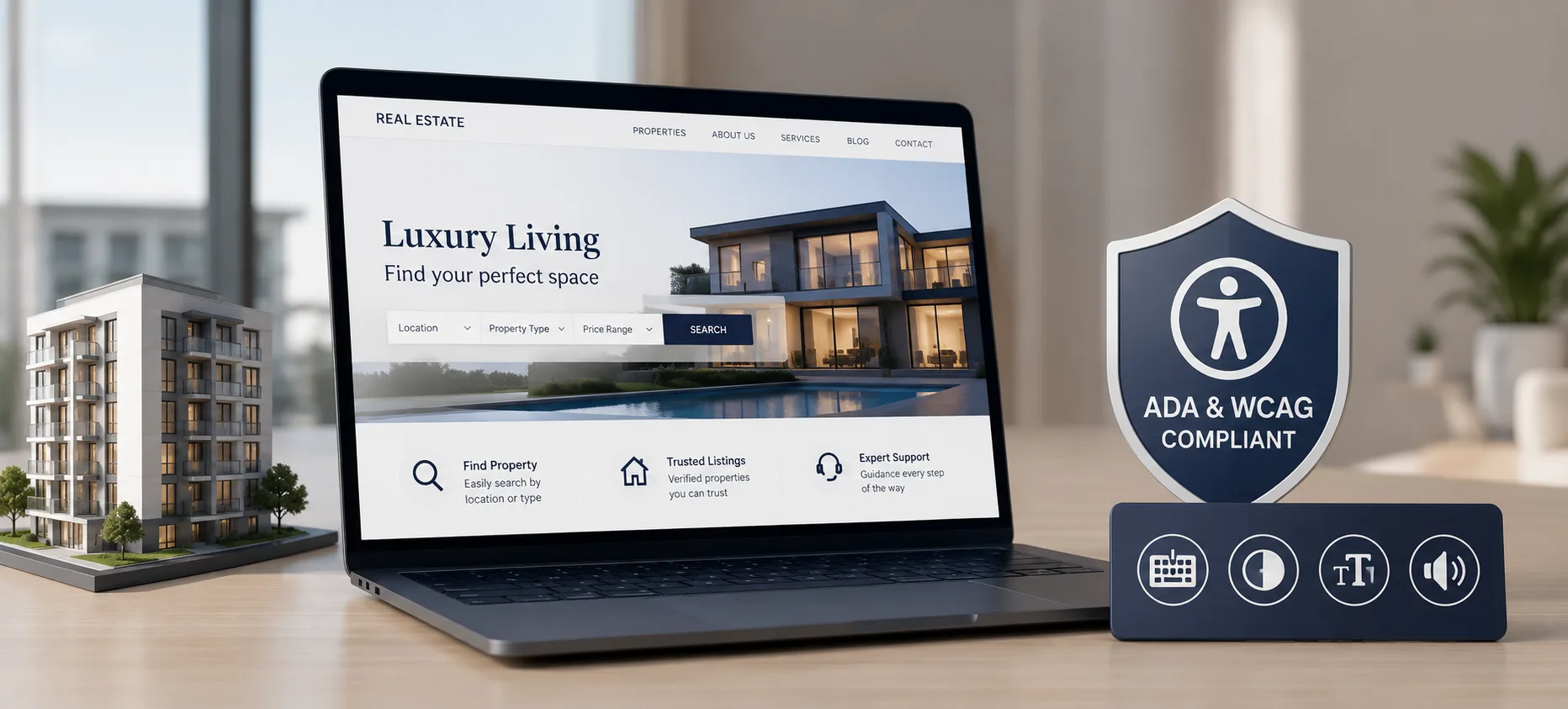 Real Estate
ADA & WCAG Accessibility Compliance for Real Estate Websites: What Operators Must Fix Before They Get Sued
This blog breaks down ADA and WCAG accessibility compliance for real estate websites, focused on what actually creates legal exposure. It explains why WCAG 2.1 Level AA has become the practical legal standard even without a formal Title III regulation for private businesses. It walks through the six accessibility failures responsible for 96% of all detected errors across the web, using real listing-page examples. It also warns against relying on accessibility overlay widgets, citing the FTC's 2025 action against accessiBe over deceptive compliance claims. The piece closes with a step-by-step audit process, an in-house versus compliance-partner comparison, and a 10-question FAQ section.
August 20, 2026
Ready to book a 30-minute strategy call?
We'll map the right digital moves for your real estate business, no pitch deck, no commitment.