

Mayank Pokharna
Real estate & PropTech specialist
Does Social Media Work for High-End Real Estate Marketing?
Published June 30, 2026|12 min read
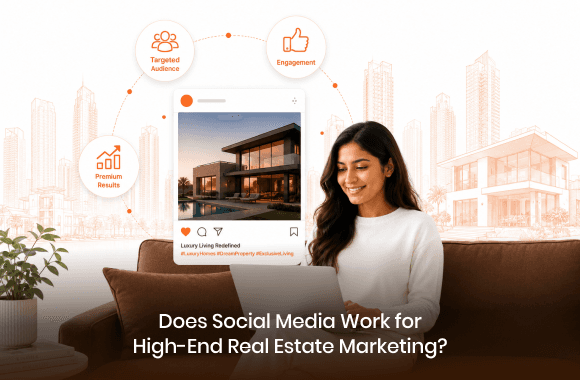
This guide answers whether social media works for high-end real estate marketing, and the answer is yes, with the right approach. It presents the data behind luxury social media, from 18 billion annual views to video's 403% inquiry boost, compares the best platforms, and explains which content performs. It also marks the limit: social media builds the pipeline, but private, relationship-driven service closes luxury deals. Backed by NAR data and real creator results, the takeaway is to lead with video, run the right platforms, and connect every lead to personal follow-up.
Yes, social media works for high-end real estate marketing, and the data is hard to ignore. Luxury housing content now passes 18 billion social views a year, agents who use social media earn about four times more than those who do not, and listings with video receive 403% more inquiries. The catch is that social media works for luxury only when you use the right platforms, lead with lifestyle and video, and treat it as the top of the funnel, not the close.
Here is the nuance most articles miss. Social media does not sell a $10 million estate by itself. It builds the audience, the brand, and the inbound interest that a private, relationship-driven sales process then converts. I have seen agents pour effort into the wrong platform and conclude social media "does not work" for luxury, when the real issue was strategy. This guide covers whether it works, which platforms win, what content performs, and where social media stops and relationships take over.
Does social media work for high-end real estate marketing?
Yes, social media works for high-end real estate, but as a brand and lead-generation engine, not a direct closing tool. It reaches and warms up high-net-worth audiences at scale, then hands qualified interest to a private sales process. It works because luxury buyers research and dream online before they ever call, and great content meets them there.
The proof is in the numbers and the names. Tatiana Londono's brokerage exceeded $250 million in annual transaction volume fueled by TikTok videos drawing 50 million-plus views that convert into inbound leads. Social media built the pipeline; the team closed it. That is the model: attract online, convert offline, and capture those leads in a system like one of the platforms in our best CRM for growing agents guide.
Why does social media work for luxury real estate?
Social media works for luxury because it combines massive reach with the visual, aspirational content that high-end property sells on. Video listings get 403% more inquiries than photo-only ones, and video earns 1,200% more shares than text and images combined. Luxury is a visual, lifestyle purchase, and social platforms are built for exactly that.
The reach is staggering for the category. Luxury housing content surpasses 18 billion annual views worldwide, and high-performing property videos on Instagram and TikTok regularly pass 20 million views. Beyond reach, social media is where international and relocating buyers discover properties, often relying on drone footage and 3D tours before traveling. It is the modern shop window for a global, mobile, wealthy audience, and a core part of any real estate lead generation strategy.
Which social media platforms work best for high-end real estate?
The best platforms for high-end real estate are Instagram, YouTube, TikTok, and LinkedIn, each serving a different role. Instagram is the visual hub, YouTube hosts immersive tours, TikTok drives viral reach, and LinkedIn reaches affluent professionals. The right mix depends on your market and audience, but a multi-platform presence outperforms any single channel.
Here is how the leading platforms compare for luxury:
Instagram: the biggest influencer platform, ideal for lifestyle imagery and reels.
YouTube: long-form home tours that feel like mini-documentaries.
TikTok: viral reach that converts into inbound leads, even in luxury.
LinkedIn: often more effective than Facebook for high-net-worth outreach.
Facebook: still widely used at 90% of agents, strong for broad reach and ads.
YouTube deserves special mention. Creators like Erik Conover built audiences with cinematic luxury home tours of penthouses and mega-mansions, now partnering with developers to showcase multimillion-dollar listings. That immersive, documentary style is uniquely suited to high-end property.
Luxury real estate platform comparison
This table summarizes each platform's strength and best content type for high-end marketing.
Platform | Strength | Best content |
Visual brand and reach | Reels, lifestyle photography | |
YouTube | Immersive depth | Cinematic home tours |
TikTok | Viral discovery | Short, dynamic property clips |
Affluent professionals | Market insight, relocation | |
Broad reach and ads | Targeted listing campaigns |
The pattern is clear. No single platform owns luxury. The strongest agents run a coordinated presence, repurposing one shoot into content across several channels.
What content works best for high-end real estate?
Lifestyle-focused, video-first content works best for high-end real estate. Drone footage, cinematic tours, and lifestyle photography outperform plain listing photos, because luxury buyers purchase a lifestyle, not just square footage. Content that sells the experience of the home converts better than content that simply lists features.
The formats that perform in luxury are specific. Waterfront drone footage paired with interior closeups creates the dynamic, aspirational feel that resonates with affluent clients. International buyers lean heavily on 3D tours and drone content, since they often cannot visit in person first. The goal is to make a viewer feel the home before they ever step inside, which is the same emotional logic behind strong content marketing in any premium category.
What can social media not do for luxury real estate?
Social media cannot close a luxury deal on its own. High-end transactions still hinge on trust, discretion, and relationships, and private showings convert better than public open houses in luxury. Social media fills the top of the funnel; the sale happens through personal, high-touch service. Treating it as a closing channel is the most common luxury marketing mistake.
This is why social media should connect to a disciplined follow-up system. The inbound interest it creates is wasted if leads are not nurtured personally and promptly. Many wealthy buyers also value privacy, so not every listing belongs on a viral feed. The art is balancing public brand-building with discreet, relationship-driven selling, and capturing every lead in a tool like those in our best CRM for real estate agents guide.
How do you build a luxury real estate social media strategy?
Build a luxury social strategy by leading with video, running multiple platforms, and connecting every lead to personal follow-up. Define your audience, invest in high-quality visual content, and pick the platforms where your buyers actually spend time. The strategy works when great content feeds a disciplined sales process.
Follow these steps to build yours:
Define your target buyer and the platforms they use.
Invest in professional video, drone, and lifestyle photography.
Run a coordinated presence across Instagram, YouTube, and TikTok.
Use LinkedIn for affluent professional and relocation outreach.
Capture and nurture every inbound lead in a CRM.
Keep the close personal, private, and relationship-driven.
Skip the urge to be everywhere with mediocre content. In luxury, production quality signals property quality. One stunning, well-distributed video beats ten rushed posts, and it pairs well with the automation in a strong AI lead nurturing setup.
The bottom line on social media for high-end real estate
The key takeaway is that social media absolutely works for high-end real estate marketing as a brand and lead-generation engine, with video and lifestyle content on Instagram, YouTube, TikTok, and LinkedIn driving billions of views and real inbound leads, as long as you keep the actual close personal and private. It is the top of the funnel, not the whole funnel.
Your next step is to pick the one platform where your ideal buyers spend the most time, commit to high-quality video content there, and connect every lead to a personal follow-up system. Master one channel before expanding.
Social media is not a gimmick for luxury real estate. It is how a global, wealthy audience discovers, dreams about, and shortlists properties today. The agents winning at the high end pair cinematic content with discreet, relationship-driven service. Lead with video, run the right platforms, and never let an inbound lead go cold. Do that and social media becomes a genuine engine for high-end sales. Ready to build your strategy? Explore our real estate marketing services and book a strategy call.
- Social media works for high-end real estate as a brand and lead engine, not a closing tool.
- Luxury housing content passes 18 billion annual social views worldwide.
- Agents who use social media earn about four times more than those who do not.
- Video listings get 403% more inquiries; video earns 1,200% more shares.
- Instagram, YouTube, TikTok, and LinkedIn each serve a distinct luxury role.
- Lifestyle, drone, and 3D-tour content outperforms plain listing photos.
- Private showings still convert better than public open houses in luxury.
- Capture every inbound lead in a CRM and keep the close personal.
Why trust Noseberry
Our content is written by practicing real-estate and PropTech professionals, fact-checked by a dedicated editorial team, and reviewed against the latest industry data before publication.
- 10+ years of industry expertise
- All facts independently verified
- No sponsored rankings in guides
- Updated when the industry changes
Frequently Asked Questions
Does social media work for high-end real estate marketing?
Yes, social media works for high-end real estate as a brand and lead-generation engine. Luxury housing content passes 18 billion annual views, and agents using social media earn about four times more than those who do not. It reaches and warms high-net-worth audiences online, then hands qualified interest to a private, relationship-driven sales process that closes the deal.
Which social media platform is best for luxury real estate?
The best platforms for luxury real estate are Instagram, YouTube, TikTok, and LinkedIn. Instagram is the visual hub, YouTube hosts cinematic home tours, TikTok drives viral discovery, and LinkedIn reaches affluent professionals and relocation buyers. No single platform wins alone, so a coordinated multi-platform presence outperforms relying on just one channel for high-end marketing.
Is Instagram or YouTube better for luxury real estate?
Both serve different roles. Instagram is the biggest platform for visual brand-building, lifestyle imagery, and reels, ideal for quick reach. YouTube excels at immersive, documentary-style home tours that let buyers experience a property in depth. The strongest luxury agents use both, leading on Instagram for reach and YouTube for the cinematic tours that showcase multimillion-dollar listings.
What kind of content works best for high-end real estate?
Lifestyle-focused, video-first content works best for high-end real estate. Drone footage, cinematic tours, and lifestyle photography outperform plain listing photos, because luxury buyers purchase a lifestyle, not just square footage. International buyers especially rely on 3D tours and drone content when they cannot visit in person. The goal is making viewers feel the home before stepping inside.
How much more effective is video in real estate marketing?
Video is dramatically more effective. Real estate listings shared with video receive 403% more inquiries than those with photos only, and video generates 1,200% more shares than text and image content combined. For luxury especially, cinematic tours and drone footage drive the views and inbound interest that photo-only listings cannot match, making video essential for high-end marketing.
Can social media actually sell luxury homes?
Social media rarely closes a luxury home by itself, but it powers the pipeline that does. It builds brand awareness and generates inbound leads at scale, while the actual sale happens through trust, discretion, and private showings, which convert better than public open houses in luxury. Treat social media as the top of the funnel, not the close.
Do high-net-worth buyers use social media to find homes?
Yes, high-net-worth buyers increasingly use social media to discover and shortlist properties, often before contacting an agent. Many international and relocating buyers rely on drone footage and 3D tours to evaluate homes remotely. Luxury housing content drawing billions of views shows that affluent audiences research and dream online, making social media a key discovery channel for high-end real estate.
Is LinkedIn good for luxury real estate marketing?
Yes, LinkedIn is often more effective than Facebook for luxury outreach because it reaches affluent professionals and decision-makers directly. It works well for market insight, relocation content, and building credibility with high-net-worth audiences. While it lacks the visual reach of Instagram or TikTok, LinkedIn is valuable for professional networking and reaching wealthy buyers in a business context.
How do I turn social media followers into luxury leads?
Turn followers into leads by leading with high-quality video, including clear calls to action, and capturing every inbound inquiry in a CRM for personal follow-up. Social media builds interest, but a disciplined nurture process converts it. Keep the close private and relationship-driven, since luxury buyers value discretion. The key is connecting public content to high-touch, personal service.
What is the biggest mistake in luxury real estate social media?
The biggest mistake is treating social media as a closing channel instead of a top-of-funnel engine. Luxury deals close through trust and private showings, not feeds. Other mistakes include posting low-quality content, since production quality signals property quality, spreading too thin across platforms, and failing to capture and nurture the leads that great content generates.
Related insights
 Real Estate
What should a PMS do for small-scale property managers?
The ideal PMS for a small-scale property manager (typically 10 to 500 units) should do ten things well: capture every rent payment automatically, log every maintenance ticket with photo evidence and vendor dispatch, hold every tenant lease and document in one searchable place, generate owner and investor statements in one click, run automated rent reminders and late-fee escalation, screen tenants with credit and eviction history, sync with the operator's accounting stack (QuickBooks, Xero), work on mobile so field checks and unit walks happen on a phone, integrate with a website for listing marketing and online applications, and produce broker-visible dashboards that let the manager see occupancy, delinquency, and cash flow at a glance. AppFolio Property Manager Core, Buildium, DoorLoop, Rentec Direct, and Hemlane are the platforms most adopted at this scale in 2026, at $1.40 to $4 per unit per month. This post covers what the ideal PMS should do, which platforms actually deliver it, and how to pick without overpaying.
August 22, 2026 Real Estate
Which AI tools work best for real estate developers in 2026?
The best AI tools for real estate developers in 2026 fall into eight categories that map to the developer lifecycle: land sourcing and site selection (Cherre, Reonomy, HouseCanary, LandGate), feasibility and financial modelling (Northspyre, TestFit, custom Excel plus GPT), design and architectural planning (Autodesk Forma, Higharc, Cove.tool, Snaptrude), construction management and progress tracking (Procore AI, Autodesk Construction Cloud, Buildots, Doxel, OpenSpace), pre-launch marketing and renders (Restb.ai, MidJourney, Adobe Firefly), off-plan sales CRM (Salesforce, HubSpot, Follow Up Boss, Rechat), ESG and net-zero analytics (Measurabl, Enertiv, Aquicore), and handover to operations (BIM AI, tenant portal AI). Used well, they cut construction cost 10 to 20 percent, compress design cycles 30 to 50 percent, and lift off-plan sales conversion 20 to 40 percent. Used badly, they burn subscription budget and produce plans that do not build. This post walks through each category, which tools actually work, and how to sequence adoption.
August 22, 2026 Real Estate
ADA & WCAG Accessibility Compliance for Real Estate Websites: What Operators Must Fix Before They Get Sued
This blog breaks down ADA and WCAG accessibility compliance for real estate websites, focused on what actually creates legal exposure. It explains why WCAG 2.1 Level AA has become the practical legal standard even without a formal Title III regulation for private businesses. It walks through the six accessibility failures responsible for 96% of all detected errors across the web, using real listing-page examples. It also warns against relying on accessibility overlay widgets, citing the FTC's 2025 action against accessiBe over deceptive compliance claims. The piece closes with a step-by-step audit process, an in-house versus compliance-partner comparison, and a 10-question FAQ section.
August 20, 2026
Ready to book a 30-minute strategy call?
We'll map the right digital moves for your real estate business, no pitch deck, no commitment.