

Mayank Pokharna
Real estate & PropTech specialist
How Can Real Estate Website Templates Reflect Brand Identity?
Published July 2, 2026|11 min read
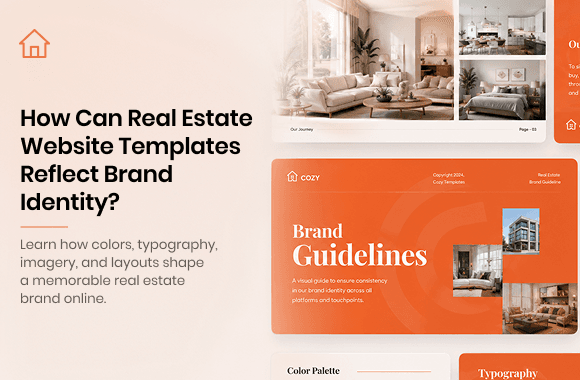
This guide explains how real estate website templates can reflect brand identity through deliberate customization of colors, typography, imagery, and voice. It covers why brand identity matters for first impressions and conversion, which elements to customize, and how to avoid the generic trap. Backed by data from NAR, First Page Sage, and Luxury Presence, it compares templates with custom builds and lists the design elements that build trust. The takeaway: a template is a canvas, and your brand is the art that turns it into a site that looks custom and converts.
Real estate website templates reflect brand identity when you customize their colors, typography, imagery, and voice to match who you are, not when you use them straight out of the box. A template is a flexible starting point. Your brand is the layer you add on top: your palette, your fonts, your photography style, and your messaging. Done well, a customized template looks bespoke and builds instant trust, which matters because 94% of users form their first impression of a business from its website design.
Here is the mistake most agents make: they pick a template, drop in their logo, and leave everything else generic. The result looks like a thousand other sites. A template is meant to be a canvas, not a finished painting. I have seen agents transform the same base template into something unmistakably theirs through smart customization. This guide shows exactly how website templates can reflect your brand, which elements to change, and how to avoid the generic trap.
How can real estate website templates reflect brand identity?
Real estate website templates reflect brand identity through deliberate customization of their visual and verbal elements. You apply your brand colors, swap in your typography, use your own photography style, and write copy in your brand voice. The template provides structure; your brand provides the personality. A template reflects your brand only when you treat it as a foundation to build on, not a finished product.
The goal is for a visitor to feel your brand the moment the page loads. Flexible templates allow complete brand customization, so the same base can look corporate, luxurious, or approachable depending on how you style it. That customization is what separates a forgettable site from one that feels custom-built, much like the difference between a generic mark and the best real estate logos designed by an agency.
Why does brand identity matter on a real estate website?
Brand identity matters because your website is your first impression, and it forms fast. Users take just 0.05 seconds to form an opinion, and 75% judge a business's credibility based on its design. A consistent, professional brand identity signals trust, while a generic or sloppy one signals the opposite. In real estate, where trust drives the sale, that first impression is decisive.
The stakes show up in conversion. The visitor-to-lead benchmark for real estate sites is about 2.2%, while outdated or poorly structured sites often convert below 0.5%. Strong UX can drive up to four times more conversion actions. Given that 81% of sellers work with the first agent they contact, a branded site that builds instant trust directly affects whether you get that call, and whether the leads you capture in your CRM ever arrive.
What brand elements should a template reflect?
A template should reflect every visual and verbal element of your brand identity. These are the building blocks that make a site feel unmistakably yours rather than generic. Customize each one deliberately.
Here are the brand elements to apply to any template:
Color palette: your brand colors, used consistently throughout.
Typography: fonts that match your brand's tone and personality.
Imagery style: consistent, professional photography and video.
Logo and marks: placed prominently and consistently.
Brand voice: copy that sounds like you, not the template's filler.
Layout personality: spacing and structure that reflect your positioning.
Color choice carries real weight. Blues and navy tones signal trust, stability, and professionalism, which is why established brokerages favor them, while gold or coral can signal luxury or energy. Document these choices in a style guide so your brand stays consistent as your team and your marketing grow.
How do you customize a template to reflect your brand?
Customize a template by building your brand first, then applying it systematically to the template's colors, fonts, imagery, and copy. Define your brand before you touch the design, since your mission, values, palette, and logo are the North Star for every decision. A template customized from a clear brand foundation looks intentional; one customized at random looks chaotic.
Follow these steps to make a template your own:
Define your brand: mission, values, audience, and positioning.
Replace the template's colors with your full brand palette.
Swap in your brand typography for headlines and body text.
Use your own professional photography and video, not stock filler.
Rewrite all copy in your brand voice.
Document everything in a style guide for consistency.
Skip the urge to launch with default colors and stock photos. Those are the tells of a generic site. Customization is the brand, and it is where a template earns its keep, the same way a strong proptech strategy turns standard tools into a real advantage.
Template vs custom: how branded can a template really be?
A well-customized template can look nearly as branded as a custom build, at a fraction of the cost. The trade-off is between flexibility and budget. This table compares the two approaches.
Factor | Customized template | Fully custom build |
Cost | Lower | Higher |
Speed to launch | Fast | Slower |
Brand flexibility | High with effort | Complete |
Best for | Most agents and teams | Large brands, unique needs |
For most agents and teams, a flexible template customized thoroughly delivers the best balance of cost, speed, and brand fit. A hybrid approach, using IDX for search plus custom listing and neighborhood pages, often gives the strongest mix of usability and branding without a full custom price tag.
What design elements build trust and reflect the brand?
The design elements that build trust are professional imagery, mobile responsiveness, fast load times, and consistent branding. These signal competence and care, which translate into credibility. A site that loads fast, looks great on a phone, and stays visually consistent earns the trust that drives leads.
The data is clear on what matters. With 72% of homebuyers searching on mobile, your brand must translate cleanly to small screens. Pages should load in under three seconds, since 88% of users will not return after a poor experience. Professional photos help listings sell 32% faster, and buyers specifically want photos, detailed property info, and floor plans. Immersive media like drone video and 360-degree tours keep visitors engaged, which supports the same lead capture goals as your social media presence.
What mistakes should you avoid when branding a template?
The biggest mistake is using a template straight out of the box with default colors, stock photos, and filler copy. Other errors include inconsistent branding across pages, ignoring mobile, slow load times, and skipping a style guide. Each one makes your site feel generic and erodes the trust your brand needs to build.
Avoid these traps with a few rules: customize every brand element, use your own photography, test on mobile first, optimize for speed under three seconds, and document your brand in a style guide. The agents who struggle treat the template as finished; the ones who win treat it as a foundation. Consistency across your site, your logo, and your marketing is what makes a brand memorable.
The bottom line on reflecting brand identity in website templates
The key takeaway is that real estate website templates reflect brand identity through deliberate customization of colors, typography, imagery, and voice, turning a flexible foundation into a site that feels unmistakably yours. The template is the canvas; your brand is the art, and the difference shows in trust and conversion.
Your next step is to define your brand clearly, then audit your current site against it: do the colors, fonts, photos, and copy all express who you are? Where they default to the template, customize them.
A website template is not a shortcut around branding. It is a smart, affordable foundation that becomes powerful only when you layer your identity onto it. With 94% of visitors judging you on design in a fraction of a second, that branding is not optional. Build your brand first, apply it everywhere, and keep it consistent. Do that and a template becomes a site that looks custom and converts like one. Ready to build a branded site that performs? Explore our real estate marketing services and book a strategy call.
- Templates reflect brand identity only through deliberate customization, not out of the box.
- Customize colors, typography, imagery, logo, voice, and layout to match your brand.
- 94% of users form a first impression from website design, in 0.05 seconds.
- 75% judge credibility on design; strong UX can drive 4x more conversions.
- Blues and navy signal trust; choose a limited, consistent palette.
- 72% of homebuyers search on mobile, so design mobile-first and load under 3 seconds.
- A well-customized template can rival a custom build at lower cost.
- Build your brand first, then apply it everywhere and document it in a style guide.
Why trust Noseberry
Our content is written by practicing real-estate and PropTech professionals, fact-checked by a dedicated editorial team, and reviewed against the latest industry data before publication.
- 10+ years of industry expertise
- All facts independently verified
- No sponsored rankings in guides
- Updated when the industry changes
Frequently Asked Questions
How can real estate website templates reflect brand identity?
Real estate website templates reflect brand identity through deliberate customization of colors, typography, imagery, and voice. The template provides structure, while your brand provides personality. Apply your palette, fonts, photography style, and messaging consistently. A template reflects your brand only when you treat it as a foundation to build on, not a finished product to use as-is.
Why does brand identity matter on a real estate website?
Brand identity matters because your website forms a first impression in 0.05 seconds, and 75% of users judge credibility on design. In real estate, trust drives the sale, so a consistent, professional brand signals reliability. With 81% of sellers working with the first agent they contact, a branded site that builds instant trust directly affects whether you win the business.
What brand elements should a website template reflect?
A template should reflect your color palette, typography, imagery style, logo, brand voice, and layout personality. Each element should be customized deliberately, not left at the template's defaults. Color carries weight: blues and navy signal trust and professionalism. Documenting these choices in a style guide keeps your brand consistent across pages and as your team grows.
Are website templates as good as custom-built real estate sites?
A well-customized template can look nearly as branded as a custom build at a fraction of the cost. The trade-off is budget versus complete flexibility. For most agents and teams, a thoroughly customized template delivers the best balance of cost, speed, and brand fit. A hybrid approach with IDX search plus custom pages often works best.
How do I customize a real estate template to match my brand?
Customize a template by defining your brand first, then applying it to the template's colors, fonts, imagery, and copy. Replace default colors with your full palette, swap in your typography, use your own professional photos, and rewrite all copy in your voice. Document everything in a style guide. A clear brand foundation makes customization look intentional rather than random.
What colors should a real estate website use?
A real estate website should use colors that match your brand positioning. Blues and navy tones signal trust, stability, and professionalism, which is why many established brokerages use them. Gold can signal luxury, while coral or orange signal energy and approachability. Choose a limited, consistent palette and apply it throughout the site to reinforce recognition and trust.
Related insights
 Real Estate
What should a PMS do for small-scale property managers?
The ideal PMS for a small-scale property manager (typically 10 to 500 units) should do ten things well: capture every rent payment automatically, log every maintenance ticket with photo evidence and vendor dispatch, hold every tenant lease and document in one searchable place, generate owner and investor statements in one click, run automated rent reminders and late-fee escalation, screen tenants with credit and eviction history, sync with the operator's accounting stack (QuickBooks, Xero), work on mobile so field checks and unit walks happen on a phone, integrate with a website for listing marketing and online applications, and produce broker-visible dashboards that let the manager see occupancy, delinquency, and cash flow at a glance. AppFolio Property Manager Core, Buildium, DoorLoop, Rentec Direct, and Hemlane are the platforms most adopted at this scale in 2026, at $1.40 to $4 per unit per month. This post covers what the ideal PMS should do, which platforms actually deliver it, and how to pick without overpaying.
August 22, 2026 Real Estate
Which AI tools work best for real estate developers in 2026?
The best AI tools for real estate developers in 2026 fall into eight categories that map to the developer lifecycle: land sourcing and site selection (Cherre, Reonomy, HouseCanary, LandGate), feasibility and financial modelling (Northspyre, TestFit, custom Excel plus GPT), design and architectural planning (Autodesk Forma, Higharc, Cove.tool, Snaptrude), construction management and progress tracking (Procore AI, Autodesk Construction Cloud, Buildots, Doxel, OpenSpace), pre-launch marketing and renders (Restb.ai, MidJourney, Adobe Firefly), off-plan sales CRM (Salesforce, HubSpot, Follow Up Boss, Rechat), ESG and net-zero analytics (Measurabl, Enertiv, Aquicore), and handover to operations (BIM AI, tenant portal AI). Used well, they cut construction cost 10 to 20 percent, compress design cycles 30 to 50 percent, and lift off-plan sales conversion 20 to 40 percent. Used badly, they burn subscription budget and produce plans that do not build. This post walks through each category, which tools actually work, and how to sequence adoption.
August 22, 2026 Real Estate
ADA & WCAG Accessibility Compliance for Real Estate Websites: What Operators Must Fix Before They Get Sued
This blog breaks down ADA and WCAG accessibility compliance for real estate websites, focused on what actually creates legal exposure. It explains why WCAG 2.1 Level AA has become the practical legal standard even without a formal Title III regulation for private businesses. It walks through the six accessibility failures responsible for 96% of all detected errors across the web, using real listing-page examples. It also warns against relying on accessibility overlay widgets, citing the FTC's 2025 action against accessiBe over deceptive compliance claims. The piece closes with a step-by-step audit process, an in-house versus compliance-partner comparison, and a 10-question FAQ section.
August 20, 2026
Ready to book a 30-minute strategy call?
We'll map the right digital moves for your real estate business, no pitch deck, no commitment.