

Honey Saxena
Digital Marketing Expert
The importance of video marketing in real estate
Published August 5, 2026|10 min read
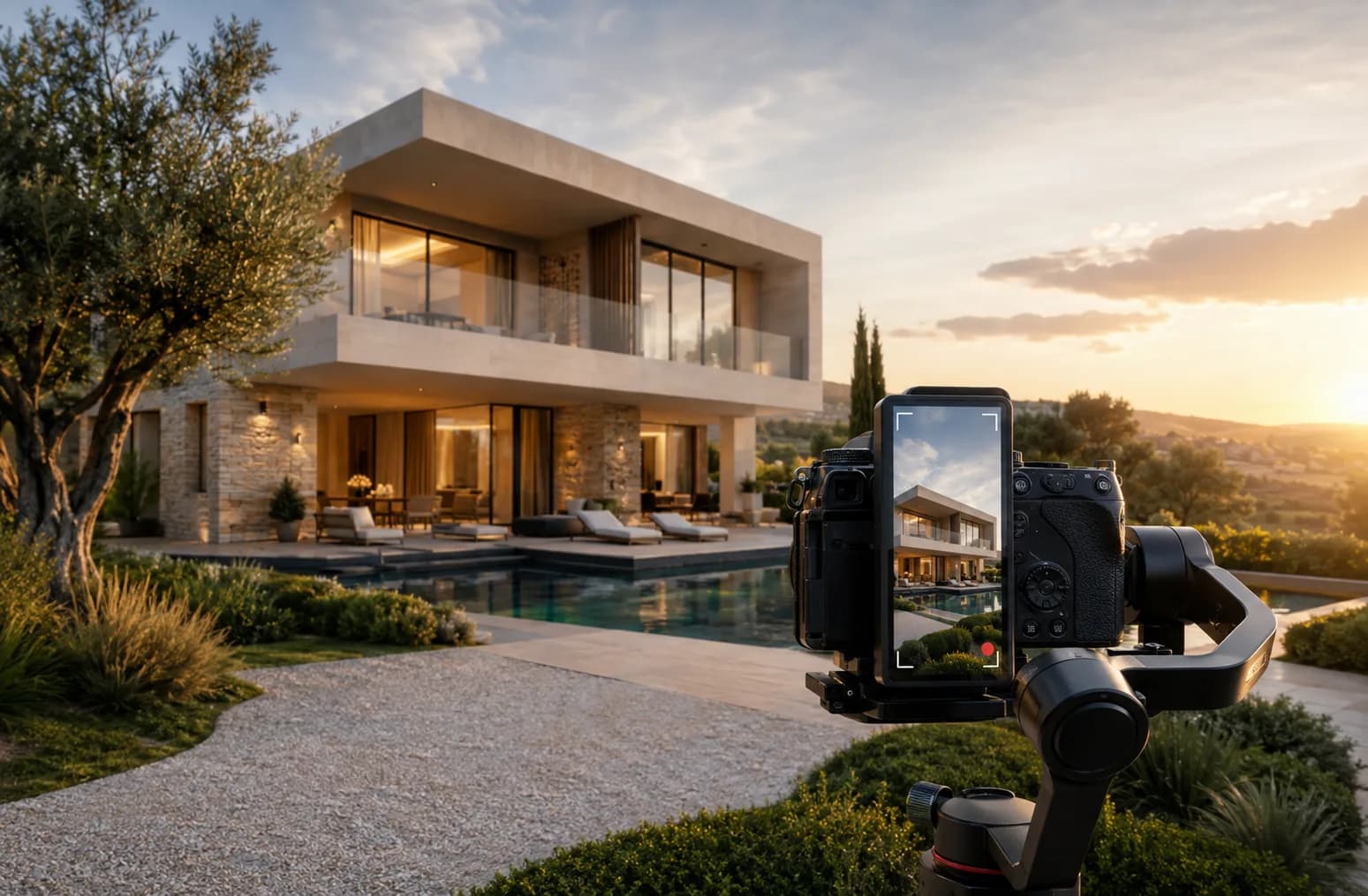
Video marketing is the highest-leverage marketing channel for real estate agents, brokers, and developers in 2026 because it reaches five to ten times more people than static content, closes higher, and builds the personal trust buyers and sellers now demand before they call any agent. Short-form vertical video (Reels, TikTok, YouTube Shorts) drives discovery. Long-form YouTube walkthroughs drive research. Testimonials and client stories drive conversion. Live video builds authenticity. Every real estate operator running a modern lead engine in 2026 uses video across all four formats, tied to a CRM that captures every enquiry the content produces. Skipping video is not a stylistic choice anymore. It is a decision to compete for shrinking attention on channels the platforms actively demote.
What is real estate video marketing in 2026?
Real estate video marketing in 2026 is the systematic use of video across four formats to attract, qualify, and convert buyers, sellers, tenants, and investors. Short-form vertical video (30 to 90 seconds) on Instagram Reels, TikTok, and YouTube Shorts drives top-of-funnel discovery. Long-form YouTube walkthroughs (5 to 15 minutes) drive research and evergreen search traffic. Testimonial and client-story videos drive middle-of-funnel conversion. Live streams and stories drive relationship and authenticity.
The 2026 shift is that video is no longer an optional add-on to a listing photo package. It is the primary content format the platforms distribute and the primary format buyers expect. Instagram, TikTok, YouTube, and increasingly LinkedIn all prioritise video content in their algorithms. Real estate operators who ignore this are choosing to compete on formats the platforms are quietly demoting.
For the broader social media context, see our blog on how social media marketing helps real estate agents and the social media marketing service.
Why does video outperform every other content format?
Three reasons compound. First, the platforms actively push video. Instagram Reels reach 25 to 50 percent more accounts than static feed posts, per Instagram's own creator data. TikTok is video-only by definition. YouTube is the second-largest search engine in the world after Google. LinkedIn now boosts video posts 3 to 5 times more than text posts. Every distribution channel a real estate operator uses in 2026 rewards video with more reach.
Second, buyers and sellers behave differently on video than on static content. NAR and Google research shows 86 percent of home buyers watch video during their property search. Buyers watch 30 to 90 seconds of a walkthrough or neighbourhood tour and then feel like they know both the property and the agent. Static photos give buyers information; video gives them relationship.
Third, video makes personal branding possible in a category where personal trust is the actual product. Static photos of an agent look like a headshot. Ninety seconds of the same agent walking a listing, speaking directly to camera about the neighbourhood, and answering the first question a buyer would ask builds trust static content cannot approach.
What types of video actually generate real estate leads?
Not all real estate video produces leads. Eight formats produce measurable pipeline in 2026.
Neighbourhood tours. Short vertical videos walking buyers through the streets, coffee shops, parks, and schools of a specific area. Highest reach; strong for local SEO and buyer education.
Live listing walkthroughs. Agent on camera walking a property, calling out three or four key features, framing the price honestly. Higher conversion than a slideshow of photos.
Before-and-after transformations. Staging, renovation, or market-value transformations shown in a 60-to-90-second edit. High save-and-share rates; strongest content for compounding organic reach.
Buyer education videos. Ninety-second answers to the questions buyers actually Google. How much deposit do I need? What does closing cost? How does the mortgage pre-approval process work?
Seller education videos. Same format on the seller side. How is pricing set for the current market? What does staging return? What happens on offer day?
Weekly market updates. Short local video (60 to 90 seconds) covering last week's activity in a specific market. Positions the agent as the local expert without needing new listings.
Client testimonials. 30-to-60-second video of a past client describing the problem they had and how it was solved. Highest-converting content for high-price-band campaigns.
Behind-the-scenes agent-life clips. Humanising content that shows the agent between showings, at closings, or after a deal. Turns a follower into a caller.
How does video shape buyer trust before the first agent call?
Modern real estate buyers spend six to twelve weeks researching before they contact any agent. Every video the agent posts during that window is a small trust deposit. By the time the buyer submits an enquiry, they have already watched 30 to 60 minutes of the agent's content, seen how the agent talks about the market, and formed a view about whether this is a professional they want to work with.
The listing appointment is largely won before the meeting starts. Sellers scrolling three agents on Instagram before their valuation call decide who they trust based on the video they see. An agent whose account is a graveyard of stock quotes and pretty listings loses the appointment to an agent whose account shows a specific person with a specific point of view in a specific market.
The economic result is that video-active agents typically report 40 to 70 percent shorter sales cycles and materially higher listing win rates than static-only agents in the same markets. The buyer or seller who arrives at the discovery call has already qualified themselves through the content.
What is the ROI of video versus static content?
Video costs more to produce but produces more pipeline per hour of effort. The rough economics for a solo agent in 2026.
Static posts cost 15 to 30 minutes to produce and reach the account's followers minus algorithm dampening. Typical conversion to enquiry: negligible.
Short-form vertical video costs 45 to 90 minutes to produce (filming plus editing) and reaches 5 to 10 times more of the account's audience plus discovery-based non-followers. Typical conversion to enquiry: 10 to 30 leads per month on a disciplined weekly cadence.
Long-form YouTube video costs 4 to 8 hours to produce and takes 3 to 6 months to start ranking, but produces evergreen search traffic that keeps generating leads for years. A neighbourhood walkthrough shot in 2023 can still be the top-of-Google result for that neighbourhood in 2026.
The blended calculation: an agent spending 6 to 10 hours a week on video (batched into one weekly shoot day) will materially outperform an agent spending the same hours on static posts and generic content. The compounding return is why every top-producing agent in 2026 credits video as their single biggest marketing lever.
How much does real estate video marketing cost?
Video marketing costs in 2026 fall into four tiers.
DIY on a phone. $0 to $500 in equipment (tripod, wireless microphone). The agent films and edits everything themselves. 4 to 8 hours per week. Best for solo agents in year one.
Freelance editor plus agent-on-camera. $500 to $3,000 per month for a video editor. The agent films weekly; the editor cuts, captions, and schedules. 2 to 4 hours per week for the agent. Best for producing agents at year two onwards.
Hybrid with a specialist partner. $3,000 to $10,000 per month covering monthly shoot days, editing, paid social amplification, and analytics. Best for boutique brokerages and mid-size teams.
Full-service video marketing agency. $10,000 to $30,000+ per month covering strategy, production, distribution, paid amplification, and attribution. Best for developers running launches, REITs, and PropTech founders shipping video as a core marketing channel.
The starter kit for DIY is small: a decent smartphone, a $30 to $50 tripod, a $100 to $200 wireless microphone (DJI Mic Mini or Rode Wireless GO II), natural light, and CapCut or InShot for editing. Bad audio is the number-one reason viewers scroll away, so the microphone is the one non-negotiable upgrade.
For the broader digital marketing context, see our digital marketing for real estate service.
What are the mistakes that make real estate video fail?
Seven mistakes explain most video marketing that produces likes but no pipeline.
Inconsistent posting. Two videos one week, none for three weeks. The algorithm treats the account as inactive; reach never compounds.
Hiding behind stock content and slideshows. Videos without the agent on camera reach materially less than videos with the agent on camera. Real estate is a relationship business.
No capture flow. Video generates attention; without a landing page, lead magnet, CRM, and booking link, attention does not become pipeline.
Ignoring DMs. Half of the enquiries from video content arrive as Instagram or Facebook DMs. Agents who leave DMs unanswered for days lose the leakiest leads of all. See our blog on lead leakage in real estate.
Refusing to be on camera. The single biggest excuse for weak real estate video. First fifty clips are rough for everyone; the compounding return justifies the discomfort.
Optimising for likes instead of conversions. A five-thousand-follower account producing twenty booked calls a month is worth materially more than a fifty-thousand-follower account producing two.
Sending paid traffic to a social profile. Paid video ads should route to a landing page the operator owns. Sending traffic to Instagram means the platform keeps the audience.
How do we measure video marketing performance honestly?
Vanity metrics are the biggest trap in video marketing. Likes, views, and follower count feel good but tell an agent nothing about pipeline. Six metrics tell the truth.
DMs received per week. Booking-link clicks. Email opt-ins from video-linked lead magnets. Discovery calls booked. Listings won attributed to video as first-touch. Closed deals in the last 12 months attributed to video-sourced leads.
Track these six numbers in a spreadsheet or CRM dashboard every month for six months. The pattern becomes clear. The videos, formats, and cadences that produce the top three or four numbers are the ones to double down on. The formats producing views but no downstream action are the ones to cut.
For CRM setup and attribution work, see our CRM implementation service.
Ready to build a video marketing engine that produces closed deals, not just likes?
Book a working session with the Noseberry Digitals team. We will audit your current video presence (or the blank page if you are starting), map the four formats most likely to produce pipeline for your ICP, and hand you a 90-day content plan covering production, distribution, and CRM-linked capture.
- Video outperforms static content five to ten times on reach. Short vertical video reaches five to ten times more of a real estate account's audience than static posts on the same platforms, per Sprout Social benchmarks.
- 86 percent of home buyers watch video during their property search, per NAR and Google research. Skipping video means being invisible during the research window.
- 52 percent of home buyers found their home online, per NAR. Combined with 76 percent starting on mobile, video-first discovery is now the default buyer journey.
- Consumers actively want more video from brands. 89 percent of consumers say they want more video content from brands they follow, per Wyzowl's State of Video Marketing.
- The controls are known. Consistent cadence, on-camera authenticity, CRM-linked capture flows, and honest measurement separate video that produces closed deals from video that produces likes.
Why trust Noseberry
Our content is written by practicing real-estate and PropTech professionals, fact-checked by a dedicated editorial team, and reviewed against the latest industry data before publication.
- 10+ years of industry expertise
- All facts independently verified
- No sponsored rankings in guides
- Updated when the industry changes
Frequently Asked Question
Why is video important for real estate marketing in 2026?
Video is the primary content format that platforms distribute in 2026, and 86 percent of home buyers watch video during their property search, per research from NAR and Google. Real estate is a relationship business, and video is the only content format that builds relationships at scale. Agents without a video presence lose listing appointments to those who do.
Which video types work best for real estate agents?
Eight formats produce a measurable pipeline: neighbourhood tours, live listing walkthroughs, before-and-after transformations, buyer education, seller education, weekly market updates, client testimonials, and behind-the-scenes agent-life clips. Static listing photos and stock quotes do not.
Do I need professional equipment to shoot real estate video?
No. A modern smartphone, a $30 to $50 tripod, a $100 to $200 wireless microphone, natural light, and CapCut or InShot for editing are enough for the first year. Bad audio kills videos faster than any other quality issue, so the microphone is the one non-negotiable upgrade. DSLR cameras and studios can come later if the pipeline justifies them.
How much does video marketing cost for a real estate agent?
DIY on a phone runs $0 to $500 in one-time equipment costs, plus 4 to 8 hours a week of the agent's time. Freelance editor plus agent-on-camera runs $500 to $3,000 per month. Hybrid with a specialist partner runs $3,000 to $10,000 per month. Full-service agencies run $10,000 to $30,000+ per month, best for developers, REITs, and PropTech founders.
How do I measure whether real estate video is actually working?
Track six metrics monthly: DMs received, booking-link clicks, email opt-ins, discovery calls booked, listings won attributed to video, and closed deals in the last 12 months attributed to video-sourced leads. Ignore likes, views, and follower count. If the six numbers are trending correctly by month three, the strategy is working; if they are flat, the content, capture flow, or both need to be reworked.
Related insights
 Real Estate
What should a PMS do for small-scale property managers?
The ideal PMS for a small-scale property manager (typically 10 to 500 units) should do ten things well: capture every rent payment automatically, log every maintenance ticket with photo evidence and vendor dispatch, hold every tenant lease and document in one searchable place, generate owner and investor statements in one click, run automated rent reminders and late-fee escalation, screen tenants with credit and eviction history, sync with the operator's accounting stack (QuickBooks, Xero), work on mobile so field checks and unit walks happen on a phone, integrate with a website for listing marketing and online applications, and produce broker-visible dashboards that let the manager see occupancy, delinquency, and cash flow at a glance. AppFolio Property Manager Core, Buildium, DoorLoop, Rentec Direct, and Hemlane are the platforms most adopted at this scale in 2026, at $1.40 to $4 per unit per month. This post covers what the ideal PMS should do, which platforms actually deliver it, and how to pick without overpaying.
August 22, 2026 Real Estate
Which AI tools work best for real estate developers in 2026?
The best AI tools for real estate developers in 2026 fall into eight categories that map to the developer lifecycle: land sourcing and site selection (Cherre, Reonomy, HouseCanary, LandGate), feasibility and financial modelling (Northspyre, TestFit, custom Excel plus GPT), design and architectural planning (Autodesk Forma, Higharc, Cove.tool, Snaptrude), construction management and progress tracking (Procore AI, Autodesk Construction Cloud, Buildots, Doxel, OpenSpace), pre-launch marketing and renders (Restb.ai, MidJourney, Adobe Firefly), off-plan sales CRM (Salesforce, HubSpot, Follow Up Boss, Rechat), ESG and net-zero analytics (Measurabl, Enertiv, Aquicore), and handover to operations (BIM AI, tenant portal AI). Used well, they cut construction cost 10 to 20 percent, compress design cycles 30 to 50 percent, and lift off-plan sales conversion 20 to 40 percent. Used badly, they burn subscription budget and produce plans that do not build. This post walks through each category, which tools actually work, and how to sequence adoption.
August 22, 2026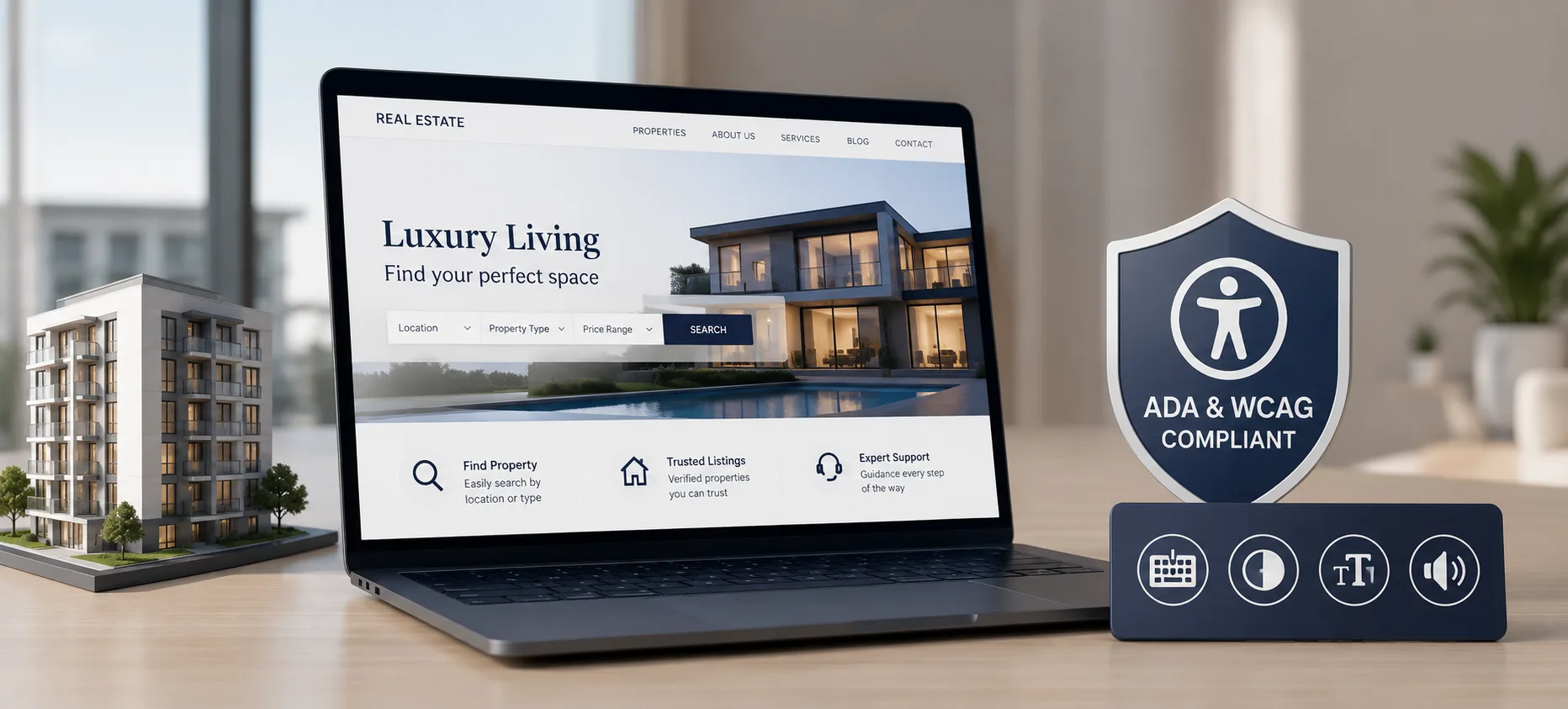 Real Estate
ADA & WCAG Accessibility Compliance for Real Estate Websites: What Operators Must Fix Before They Get Sued
This blog breaks down ADA and WCAG accessibility compliance for real estate websites, focused on what actually creates legal exposure. It explains why WCAG 2.1 Level AA has become the practical legal standard even without a formal Title III regulation for private businesses. It walks through the six accessibility failures responsible for 96% of all detected errors across the web, using real listing-page examples. It also warns against relying on accessibility overlay widgets, citing the FTC's 2025 action against accessiBe over deceptive compliance claims. The piece closes with a step-by-step audit process, an in-house versus compliance-partner comparison, and a 10-question FAQ section.
August 20, 2026
Ready to book a 30-minute strategy call?
We'll map the right digital moves for your real estate business, no pitch deck, no commitment.