
Noseberry Digitals
How to Reduce Lead Response Time in a Property Sales Team
Published March 31, 2026|5 min read

Research across sales industries consistently shows that the first business to respond to a lead wins it the majority of the time. In property sales, where a buyer is typically enquiring on multiple listings across multiple platforms simultaneously, the gap between first response and second response is often the difference between a viewing and a […]
Research across sales industries consistently shows that the first business to respond to a lead wins it the majority of the time. In property sales, where a buyer is typically enquiring on multiple listings across multiple platforms simultaneously, the gap between first response and second response is often the difference between a viewing and a dead lead. Most property teams know this. Most still have average lead response times measured in hours, not minutes. This guide explains why that happens and what actually fixes it.
Why Lead Response Time Is So High in Most Property Businesses
The average lead response time across property businesses without automated routing is between two and six hours. In some organisations it is longer. The reasons are almost always structural rather than motivational. Leads land in different places. A buyer enquires on your website, another via a property portal, a third through a paid ad. Each lands in a different inbox or system. Someone has to notice it, decide who should handle it, and pass it on. That process alone consumes thirty to ninety minutes in most teams. Agents are busy with other tasks. A lead that arrives while an agent is on a viewing or at lunch gets picked up when they return. There is no system pushing urgency. Assignment is manual. A manager decides which agent gets each lead based on whoever is available. That decision takes time and is often made without full information about agent capacity. Leads are not scored. Every enquiry gets treated the same regardless of how serious the buyer is. An agent spending time on a window-shopper misses a high-intent buyer who moves on to a competitor.
What a Fast Lead Response Process Actually Looks Like
The fastest-responding property teams share a common structural pattern. It is not about working harder. It is about removing the manual steps between a lead arriving and an agent making contact. A buyer enquires through any channel. The enquiry is captured automatically and entered into the CRM within seconds. The CRM scores the lead based on property preference, enquiry source, and engagement history. A routing rule assigns it to the right agent instantly based on geography, specialisation, or tier. The agent receives a phone notification with one-tap action to call or message. If the agent does not act within a defined window, the lead escalates automatically. Under this model, average first response time drops to under twenty minutes without any change in headcount.
The Role of Automated Lead Routing
Manual lead distribution is the single biggest controllable factor in slow response times. When a coordinator reads an enquiry, decides who should handle it, and forwards it, that process introduces delays that compound across every lead that comes in. Automated routing removes the human decision entirely for standard assignment logic. Leads from a specific area go to the covering agent. Off-plan enquiries go to the off-plan team. High-score leads go to senior agents. The logic runs instantly. The secondary benefit is fairness and accountability. Every agent receives leads on a documented basis. Distribution is visible to management. If a lead is not followed up within the threshold, the system flags it automatically.
Lead Scoring and Why It Changes Agent Behaviour
One of the less obvious drivers of slow response is that agents do not know which leads deserve priority. When everything looks equally important, the default is to work through the queue in order of arrival. Lead scoring assigns a priority signal based on observable behaviour. A buyer who has viewed three listings, requested a floor plan, and sent a detailed enquiry message scores higher than someone who clicked from an ad and submitted a generic form. When agents see which leads are high-priority, they call those first. Response time to serious buyers drops because the system makes it obvious who to call next.
WhatsApp Integration and Why It Matters
In most markets, WhatsApp is the primary communication channel between buyers and agents. A lead who submits a form and then messages on WhatsApp is not creating two leads. They are one buyer using two channels, and a CRM that does not understand that creates duplicate records, missed context, and delayed responses. WhatsApp Business API integration logs every message against the contact record automatically. Agents see the full conversation history regardless of channel. A lead who messages at 9pm gets an automated acknowledgement immediately and a human follow-up first thing the following morning.
Measuring and Improving Response Time Over Time
The teams that maintain fast response times are the ones that measure it. Without a metric, response time is an impression that drifts. Track average time from lead arrival to first contact, percentage of leads contacted within your target window, leads exceeding your threshold and the reason why, and response time by agent and source. With those numbers visible in a CRM dashboard, management can identify bottlenecks, support underperforming agents, and verify whether routing rules are working as intended. See how routing, scoring, and WhatsApp integration are built as standard at our real estate CRM software development page.
Conclusion
Slow lead response time is not a motivation problem. It is a structural one. The teams that respond fastest are not working harder than the ones that respond slowly. They have removed the manual steps that introduce delay between a lead arriving and an agent making contact. The fix is not complicated. Centralise lead capture, automate routing, score leads so agents know what to prioritise, and measure response time so the improvement is visible and the regression is caught early. Each of these changes is achievable without additional headcount. The cost of not making them is concrete. Every lead that goes cold because a competitor responded first is a conversion that was lost to a process failure, not a market failure. In a business where every viewings conversation and every deal starts with that first contact, the time between enquiry and response is one of the highest-leverage metrics available. Measure it. Fix the structure. The rest follows.
Why trust Noseberry
Our content is written by practicing real-estate and PropTech professionals, fact-checked by a dedicated editorial team, and reviewed against the latest industry data before publication.
- 10+ years of industry expertise
- All facts independently verified
- No sponsored rankings in guides
- Updated when the industry changes
Related insights
 Real Estate
What Role Does SEO Play in Lead Generation for Real Estate Agents?
Most real estate agents either ignore SEO entirely or treat it as a branding exercise with no connection to their actual pipeline. This guide breaks down exactly what role SEO plays in lead generation for real estate agents, from the moment a buyer types a search query to the moment they book a call with you. You'll get the specific hacks that move map pack rankings, a clear comparison of SEO versus paid ads, and an explanation of AEO and GEO, the new lead sources that most agents haven't discovered yet. Every tactic is mapped to a sales outcome, not just a traffic metric. If you want an organic pipeline that keeps producing leads whether or not you're running ads, this is where you start.
July 3, 2026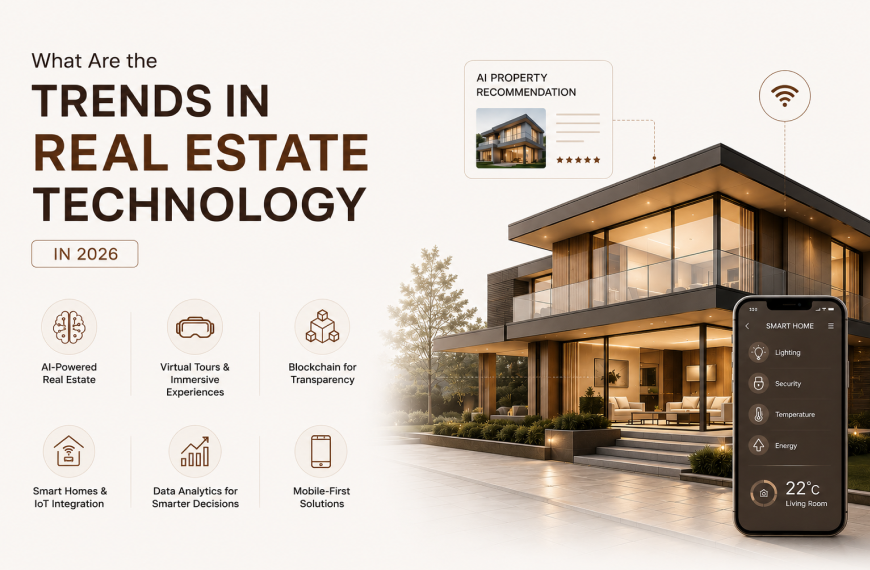 Real Estate
What Are the Trends in Real Estate Technology in 2026
Real estate technology isn't evolving gradually anymore, it's accelerating fast, and most property businesses are already behind. This guide breaks down the trends actually moving the needle in 2026: agentic AI, predictive seller analytics, digital twins, drone data collection, and AI-enhanced CRMs. You'll see real adoption numbers, documented sales impact, and a clear framework for deciding which trend to act on first. Instead of a generic trend list, this post connects each innovation to a specific business outcome. If you want to know what's actually worth your attention this year, start here.
July 3, 2026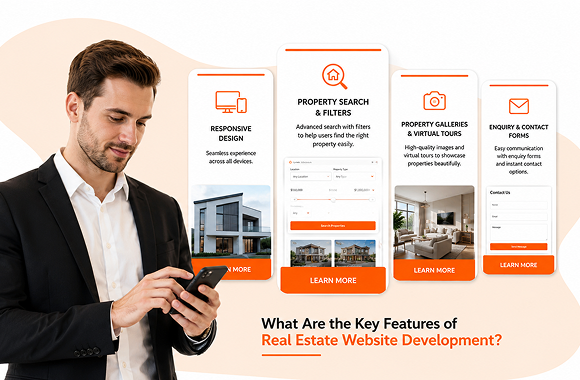 Real Estate
What Are the Key Features of Real Estate Website Development?
This guide breaks down the key features of real estate website development: IDX/MLS property search, lead capture tools, mobile-first design, immersive visuals, SEO, and CRM integration. It explains why IDX drives roughly four times the traffic, how multi-step forms convert better, and why over 75% mobile traffic makes speed essential. Backed by data from Luxury Presence, iHomefinder, and Placester, it shows how the features work together as a lead funnel. The takeaway: build the funnel first, since a website's real job is to generate and convert leads.
July 2, 2026
Ready to book a 30-minute strategy call?
We'll map the right digital moves for your real estate business, no pitch deck, no commitment.