

Atul Kumar
Real estate & PropTech specialist
What Are the Best Free Rental PMS Apps?
Published July 2, 2026|9 min read
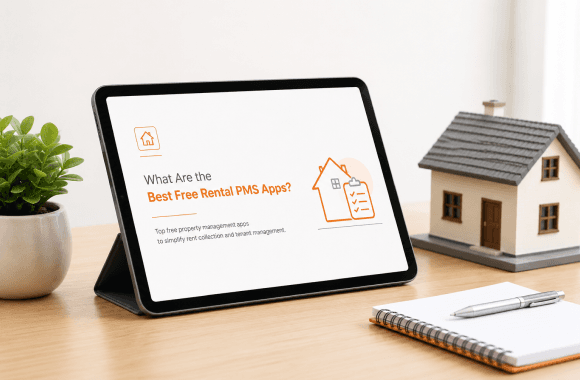
This guide compares the best free rental PMS apps for 2026, including Innago, TurboTenant, Avail, Baselane, and Zillow Rental Manager. It explains what a complete free app should include, reviews each platform's strength, and reveals how "free" apps actually make money through tenant-paid fees or banking. Backed by data from Avail, Capterra, and Stessa, it shows how to choose based on your priorities and when to upgrade to paid software.
The best free rental property management apps in 2026 are Innago, TurboTenant, Avail, Baselane, and Zillow Rental Manager. Innago is the most genuinely free, charging landlords nothing regardless of unit count. TurboTenant has the strongest tenant screening, Avail is a solid all-in-one for small portfolios, Baselane shines on financial tracking, and Zillow suits one to three units. The best pick depends on whether you value zero cost, screening, or banking features most.
Free property management software has come a long way, and for small landlords it now handles the whole rental cycle without a subscription. The catch is that "free" usually means the platform earns money somewhere else, often through tenant-paid fees or banking. That is fine, as long as you know where the money comes from. I have helped landlords pick these tools, and the right one saves hours without costing a dime. This guide compares the best free rental PMS apps, what each does well, and where the limits hide.
What are the best free rental PMS apps?
The best free rental PMS apps are Innago for truly zero-cost management, TurboTenant for tenant screening, Avail for an all-in-one free tier, Baselane for financial tracking, and Zillow Rental Manager for a few units. Each covers the core rental cycle, from listing to rent collection, at no monthly cost. The best choice depends on your portfolio size and which features matter most.
These apps suit small to mid-size landlords, generally under 50 units. They handle listings, screening, leases, rent collection, and maintenance requests without a subscription. For larger portfolios or heavier needs, a paid platform like those in our rent collection and maintenance software guide makes more sense.
What should a free rental PMS app include?
A free rental PMS app should cover the full rental lifecycle without a subscription. The essentials are listing and application management, tenant screening, digital lease creation and signing, online rent collection, and maintenance request tracking. A good free app handles day-to-day landlording end to end, not just one piece.
Here are the features to expect from a strong free app:
Listings and applications: post vacancies and collect applications online.
Tenant screening: credit and background checks, usually tenant-paid.
Digital leases: create and e-sign lease agreements.
Online rent collection: ACH and card payments with reminders.
Maintenance tracking: a portal for tenants to submit requests.
Basic accounting: income and expense tracking for reporting.
If an app is missing online rent collection or screening, it is not a complete solution. The best free apps include all of these, which is why they genuinely replace manual landlording for small portfolios, much like the automation behind AI for property management at larger scale.
What are the best free rental PMS apps reviewed?
Each leading free app has a clear strength. Match the app to what you need most, then test it on your real workflow. Here are the standouts.
Innago
Innago is the most genuinely free option, costing landlords $0 regardless of unit count, with no per-unit fees and no premium tier. It includes automated rent collection, late fees, lease management, tenant screening, and maintenance tracking. Innago makes money on optional services like tenant-paid screening, which keeps the core product free for landlords of any size.
TurboTenant
TurboTenant offers a comprehensive free plan with the strongest tenant screening and a large landlord community. It covers listings, screening, rent collection, leases, and maintenance. Some quality-of-life features, like faster rent processing, e-signatures, and priority support, sit on paid plans or come with tenant-paid card and ACH fees, so read the fee structure closely.
Avail, Baselane, and Zillow
Avail, now under the Realtor.com umbrella, offers a solid free all-in-one tier with listings, lease templates, rent collection, and expense tracking, ideal for one to ten units. Baselane is free because it earns from your banking activity, making it excellent for financial tracking but lighter on lease and maintenance workflows. Zillow Rental Manager is a free, consumer-grade tool best for one to three units. All connect to the wider real estate technology decisions a growing landlord faces.
Free rental PMS apps: a quick comparison
This table compares the leading free apps on their strength and best fit.
App | Standout strength | Best for | The catch |
Innago | Truly free, any unit count | Cost-focused landlords | Earns on optional services |
TurboTenant | Strongest screening | Screening and community | Some features tenant-paid |
Avail | All-in-one free tier | 1-10 units | Paid tier for extras |
Baselane | Financial tracking | Banking and bookkeeping | Needs Baselane bank account |
Zillow Rental Manager | Simplicity | 1-3 units | Limited at scale |
No single app wins for everyone. Pick based on whether you value zero cost, screening, banking, or simplicity, then trial it before relying on it.
Are free rental PMS apps actually free?
Free rental PMS apps are genuinely free for landlords, but the platforms earn money elsewhere. Most charge tenants for screening or card payments, while Baselane earns from your banking activity. The software costs you nothing, but understanding the business model tells you where any fees land and on whom.
This is not a trick, just how the model works. Innago keeps the core free and monetizes optional services. TurboTenant ties some convenience features to paid plans or tenant-paid fees. Baselane requires you to use its bank account. Knowing this helps you choose: if you want zero fees for everyone, the model matters, just as it does when you weigh PropTech software security and data handling. Always check who pays what before you commit.
How do you choose a free rental PMS app?
Choose by matching the app's strength to your biggest need, then testing it on a real listing, screening, and rent payment. Define what matters most, zero cost, screening, banking, or simplicity, and shortlist one or two apps. Fit and ease of use matter more than feature lists, since an app you find clunky will not get used.
Follow these steps to decide:
Count your units and confirm the app fits your portfolio size.
Identify your top priority: cost, screening, banking, or simplicity.
Check the fee structure, including tenant-paid and card fees.
Trial the app on a real listing, screening, and rent payment.
Confirm it handles maintenance requests the way you need.
Skip the urge to pick the most popular app by default. The best free app is the one that fits how you actually manage your rentals, the same principle behind any sound AI for real estate operators choice.
When should you upgrade to paid software?
You should upgrade to paid software when your portfolio grows past what free apps handle well, usually beyond 50 units, or when you need advanced accounting, faster payouts, and stronger maintenance workflows. Free apps are excellent for small landlords but thin on enterprise features. The signal to upgrade is when manual workarounds start costing you more time than a subscription would.
Paid platforms like Buildium, DoorLoop, and AppFolio add deeper accounting, advanced maintenance tracking, and owner reporting that free tools lack. If you manage at scale or run a property management business, the paid tier pays for itself. Until then, a strong free app is the smarter, leaner choice, and you can plan the transition alongside your broader predictive maintenance and operations strategy.
The bottom line on the best free rental PMS apps
The key takeaway is that the best free rental PMS apps, Innago, TurboTenant, Avail, Baselane, and Zillow Rental Manager, handle the full rental cycle for small landlords at no subscription cost, with the right pick depending on whether you value zero fees, screening, banking, or simplicity. Just confirm where each platform earns its money before you commit.
Your next step is to identify your top priority and your unit count, then trial one app on a real listing, screening, and rent payment. That hands-on test reveals fit far better than any review.
Free does not mean limited for small landlords in 2026. These apps automate listings, screening, leases, rent, and maintenance without a subscription, freeing you from spreadsheets and chasing checks. Pick the one that matches your needs, understand its fee model, and upgrade only when scale demands it. Do that and you run a tight, professional operation for free. Ready to streamline your rentals? Explore our property management technology services and book a strategy call.
- The best free rental PMS apps are Innago, TurboTenant, Avail, Baselane, and Zillow Rental Manager.
- Innago is the most genuinely free, charging landlords nothing at any unit count.
- TurboTenant has the strongest tenant screening and a large landlord community.
- Avail is a solid free all-in-one for one to ten units.
- Baselane is free because it earns from your banking activity.
- Free apps earn money through tenant-paid fees or banking, so check the model.
- Free apps suit small landlords, generally under 50 units.
- Upgrade to paid software when you need advanced accounting and scale.
Why trust Noseberry
Our content is written by practicing real-estate and PropTech professionals, fact-checked by a dedicated editorial team, and reviewed against the latest industry data before publication.
- 10+ years of industry expertise
- All facts independently verified
- No sponsored rankings in guides
- Updated when the industry changes
Frequently Asked Questions
What are the best free rental PMS apps in 2026?
The best free rental PMS apps in 2026 are Innago, TurboTenant, Avail, Baselane, and Zillow Rental Manager. Innago is the most genuinely free regardless of unit count, TurboTenant has the strongest tenant screening, Avail is a solid all-in-one, Baselane excels at financial tracking, and Zillow suits one to three units. The best pick depends on your priorities.
What is the most genuinely free property management app?
Innago is the most genuinely free property management app, costing landlords $0 per month regardless of unit count, with no per-unit fees and no premium tier. It includes automated rent collection, late fees, lease management, tenant screening, and maintenance tracking. Innago earns money on optional services like tenant-paid screening, keeping the core product free for landlords.
Are free rental PMS apps actually free?
Free rental PMS apps are genuinely free for landlords, but the platforms earn money elsewhere. Most charge tenants for screening or card payments, while Baselane earns from your banking activity. The software costs the landlord nothing, but checking the business model shows you where any fees land and on whom, which matters when choosing the right app.
What features should a free rental PMS app include?
A free rental PMS app should include listing and application management, tenant screening, digital lease creation and e-signing, online rent collection, and maintenance request tracking, plus basic accounting. These cover the full rental lifecycle. If an app lacks online rent collection or screening, it is not a complete solution for managing rentals end to end.
What is the best free app for tenant screening?
TurboTenant offers the strongest tenant screening among free apps, with credit and background checks and a large landlord community. Screening is typically paid by the tenant rather than the landlord. TurboTenant covers the full rental cycle for free, though some convenience features sit on paid plans, so review the fee structure before relying on it.
Which free PMS app is best for small landlords?
For small landlords, Innago is best for truly zero-cost management at any unit count, while Avail suits one to ten units with a solid all-in-one free tier. Zillow Rental Manager works for one to three units. Match the app to your unit count and top priority, whether that is cost, screening, or financial tracking, then trial it.
Is TurboTenant or Innago better?
Both are strong free apps with different strengths. Innago is the most genuinely free, charging landlords nothing regardless of unit count and including automated rent and late fees. TurboTenant has the strongest tenant screening and a large community, but ties some convenience features to paid plans or tenant-paid fees. Choose based on whether you prioritize zero cost or screening.
Do free property management apps charge fees to tenants?
Many free property management apps charge tenants for screening and for card or some ACH payments, even though the software is free for landlords. This is how platforms like Innago and TurboTenant stay free. Baselane instead earns from banking activity. Always check which fees apply to tenants and which to you before choosing, since fee structures vary.
When should I upgrade from a free PMS app to paid software?
Upgrade to paid software when your portfolio grows past what free apps handle well, usually beyond 50 units, or when you need advanced accounting, faster payouts, and stronger maintenance workflows. Paid platforms like Buildium, DoorLoop, and AppFolio add features free tools lack. The signal to upgrade is when manual workarounds cost more time than a subscription would.
Can I manage maintenance requests with a free PMS app?
Yes, most free PMS apps include maintenance request tracking, letting tenants submit requests through a portal that you can track to resolution. Innago, TurboTenant, and Avail all offer this. Baselane is lighter on maintenance workflows since it focuses on banking. If maintenance is a priority, confirm the app's tracking and vendor features before committing to it.
Related insights
 Real Estate
What should a PMS do for small-scale property managers?
The ideal PMS for a small-scale property manager (typically 10 to 500 units) should do ten things well: capture every rent payment automatically, log every maintenance ticket with photo evidence and vendor dispatch, hold every tenant lease and document in one searchable place, generate owner and investor statements in one click, run automated rent reminders and late-fee escalation, screen tenants with credit and eviction history, sync with the operator's accounting stack (QuickBooks, Xero), work on mobile so field checks and unit walks happen on a phone, integrate with a website for listing marketing and online applications, and produce broker-visible dashboards that let the manager see occupancy, delinquency, and cash flow at a glance. AppFolio Property Manager Core, Buildium, DoorLoop, Rentec Direct, and Hemlane are the platforms most adopted at this scale in 2026, at $1.40 to $4 per unit per month. This post covers what the ideal PMS should do, which platforms actually deliver it, and how to pick without overpaying.
August 22, 2026 Real Estate
Which AI tools work best for real estate developers in 2026?
The best AI tools for real estate developers in 2026 fall into eight categories that map to the developer lifecycle: land sourcing and site selection (Cherre, Reonomy, HouseCanary, LandGate), feasibility and financial modelling (Northspyre, TestFit, custom Excel plus GPT), design and architectural planning (Autodesk Forma, Higharc, Cove.tool, Snaptrude), construction management and progress tracking (Procore AI, Autodesk Construction Cloud, Buildots, Doxel, OpenSpace), pre-launch marketing and renders (Restb.ai, MidJourney, Adobe Firefly), off-plan sales CRM (Salesforce, HubSpot, Follow Up Boss, Rechat), ESG and net-zero analytics (Measurabl, Enertiv, Aquicore), and handover to operations (BIM AI, tenant portal AI). Used well, they cut construction cost 10 to 20 percent, compress design cycles 30 to 50 percent, and lift off-plan sales conversion 20 to 40 percent. Used badly, they burn subscription budget and produce plans that do not build. This post walks through each category, which tools actually work, and how to sequence adoption.
August 22, 2026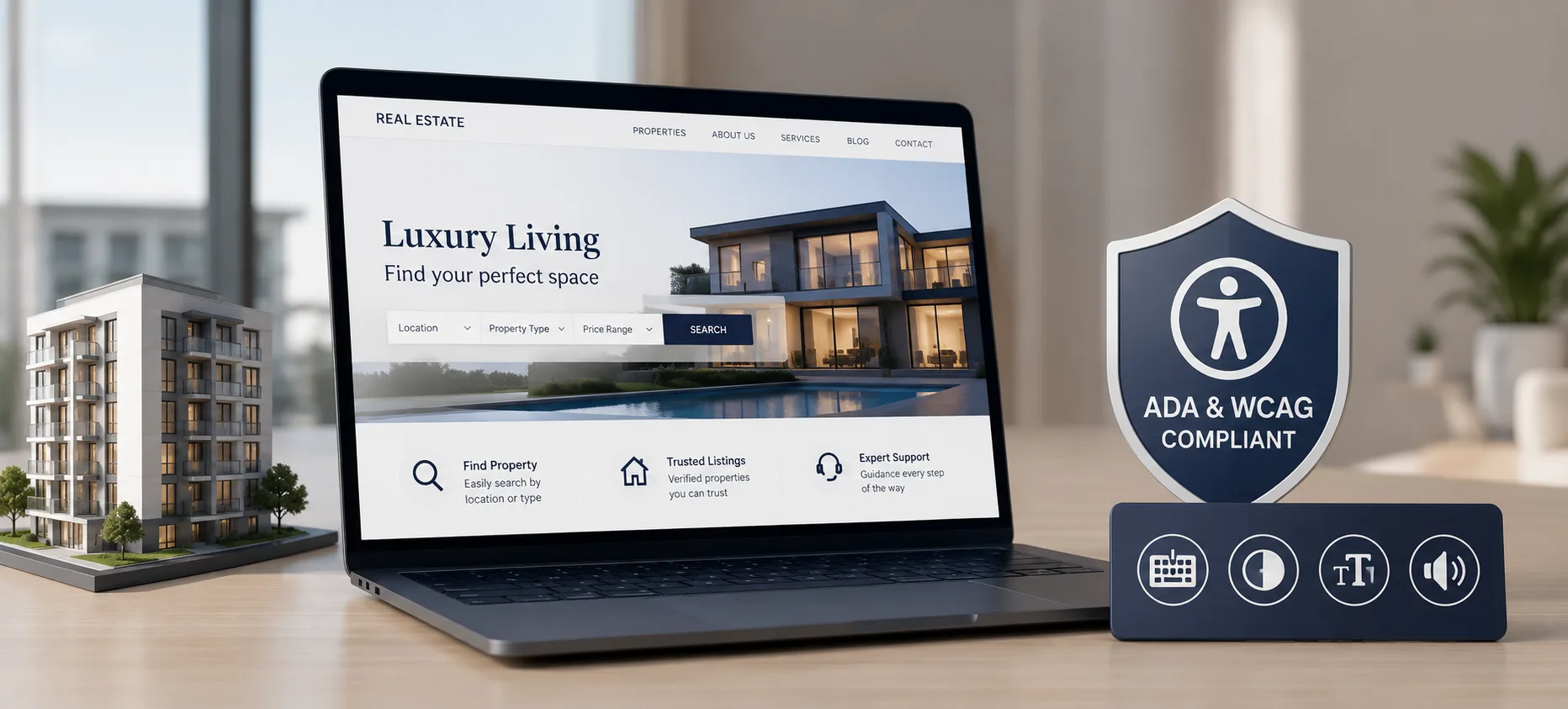 Real Estate
ADA & WCAG Accessibility Compliance for Real Estate Websites: What Operators Must Fix Before They Get Sued
This blog breaks down ADA and WCAG accessibility compliance for real estate websites, focused on what actually creates legal exposure. It explains why WCAG 2.1 Level AA has become the practical legal standard even without a formal Title III regulation for private businesses. It walks through the six accessibility failures responsible for 96% of all detected errors across the web, using real listing-page examples. It also warns against relying on accessibility overlay widgets, citing the FTC's 2025 action against accessiBe over deceptive compliance claims. The piece closes with a step-by-step audit process, an in-house versus compliance-partner comparison, and a 10-question FAQ section.
August 20, 2026
Ready to book a 30-minute strategy call?
We'll map the right digital moves for your real estate business, no pitch deck, no commitment.