

Atul Kumar
Real estate & PropTech specialist
Real estate digital transformation consultancy 2026
Published May 30, 2026|14 min read
Real estate digital transformation consultancy is the advisory and execution work that helps property businesses modernize their operations, data, and technology in one connected program. In 2026, this work centres on five priorities: unifying fragmented data into a single source of truth, replacing or recovering legacy ERP and property management platforms, embedding AI and automation across leasing, finance, and operations, building investor-grade reporting and dashboards, and redesigning the operating model so the new technology actually delivers value. Programs typically run 6 to 18 months and generate measurable returns through reduced operating cost per unit, faster decision cycles, and improved valuation outcomes.
What is a real estate digital transformation consultancy?
Real estate digital transformation consultancy is the advisory and delivery work that helps property businesses modernize how they operate, use data, and apply technology. It is broader than a single platform rollout. A transformation program touches the operating model, the data architecture, the technology stack, the team capabilities, and the measurement framework, all in a single, connected sequence.
In 2026, the work is no longer optional for ambitious operators. The gap between the firms that have modernized and the firms that have not is widening fast, and capital, talent, and tenant experience are all flowing toward the firms that have done the work.
Why does real estate need a digital transformation consultancy in 2026
Real estate needs a digital transformation consultancy in 2026 because the industry is moving through its largest operational shift in a decade, and most firms cannot lead the shift alone.
The numbers tell the story.
According to [Deloitte's 2026 Commercial Real Estate Outlook](), 61 percent of commercial real estate firms still rely on legacy core technology infrastructure, and nearly half are actively trying to modernize. The same report finds that 19 percent of organizations are still in the early stages of their AI journey, and 27 percent are facing active implementation challenges.
[McKinsey and Company](https://www.mckinsey.com/industries/real-estate/our-insights) estimates the real estate industry stands to gain between 110 billion and 180 billion US dollars in productivity through automation, with the majority of the value sitting in operational workflows.
The PropTech market itself is on a steep growth curve. According to industry analysis, the global PropTech market is projected to grow from 44.59 billion US dollars in 2026 to 104.57 billion US dollars by 2034, more than doubling in just a decade.
The takeaway is simple. The capital is moving, the technology is maturing, the productivity opportunity is real, and most firms do not have the internal capacity to lead the transformation without external help. A digital transformation consultancy fills that gap.
What does a real estate digital transformation consultancy actually do
A real estate digital transformation consultancy does six things in a typical program.
It runs a current state diagnostic across leadership, operations, finance, and technology, so leadership has an evidence-based picture of where the business actually sits.
It designs the future state operating model, with a written description of how the business should run after transformation.
It defines the technology and data strategy, including system of record decisions, integration architecture, and AI use case identification.
It builds the execution roadmap, with phases, timelines, owners, and dependencies.
It delivers the platforms through its own teams, including [custom software development],
[CRM implementation],
[systems integration], and [custom AI solutions].
It measures outcomes against KPIs tied to revenue, cost, and customer experience, so leadership can see the value the program is producing.
What are the five priorities of digital transformation in real estate in 2026
Five priorities define a strong digital transformation program for real estate in 2026.
Priority 1: unify fragmented data into a single source of truth
The biggest blocker to transformation is data sitting in disconnected systems. The first move is to map every data source and design a unified architecture that powers reporting, AI, and decision-making.
Priority 2: modernize or recover legacy property platforms
Most real estate businesses run on platforms that were either built for a smaller portfolio or never fully adopted. A transformation program either modernizes them, recovers them, or replaces them, based on a structured diagnostic.
Priority 3: embed AI and automation across leasing, finance, and operations
AI use cases that are paying back fast in real estate include automated valuation, predictive lead scoring, AI-assisted contract review, predictive maintenance, and tenant communication automation. The work is to identify the high-ROI use cases and implement them in sequence. Our companion piece [AI in real estate: top 10 applications] covers the use cases in detail.
Priority 4: build investor-grade reporting and dashboards
A real-time dashboard layer over the portfolio is the single most visible outcome of a transformation program. Leadership sees margin per unit, occupancy, collection cycle, and operating cost in one view, every day.
Priority 5: Redesign the operating model so the new technology actually delivers value
Technology without process redesign produces expensive software that mirrors the old, broken workflow. The operating model has to evolve in parallel with the platforms.
How does AI fit into a real estate digital transformation program?m
AI fits into a real estate digital transformation program as a force multiplier across leasing, finance, operations, and analytics, not as a single, le standalone initiative.
The right approach is to use case first, platform second. We identify the workflows where AI produces measurable value: lead scoring, tenant communication, document review, valuation, maintenance prediction, and reporting automation. We then implement them through our [custom AI solutions] practice, integrated with the rest of the technology stack.
"AI in real estate is not about replacing people. It is about removing the administrative drag that stops them from doing higher-value work," said one operator we worked with on a 2026 transformation program. "The agents and managers who were freed from the busy work became the team's biggest contributors within six months."
For the full set of production-ready AI applications in real estate, the reference piece on [AI in real estate] walks through ten use cases with the data behind each.
How long does a real estate digital transformation program take
A real estate digital transformation program in 2026 typically runs 6 to 18 months for the core program, with longer tails for full adoption and continuous improvement.
The phases:
Phase 1: diagnostic and current state mapping (weeks 1 to 6)
Phase 2: future state operating model and technology strategy (weeks 6 to 12)
Phase 3: roadmap, vendor decisions, and program governance setup (weeks 10 to 16)
Phase 4: execution and platform rollout (months 4 to 18)
Phase 5: measurement, adoption tracking, and continuous improvement (months 12 onwards)
Programs that try to compress this into a sprint usually fail at adoption. Programs that allow the right time per phase usually land cleanly.
What are the most common digital transformation mistakes in real estate
Four mistakes appear repeatedly in stalled or failed real estate digital transformation programs.
Mistake 1: technology-first instead of outcome-first
Choosing the platform before defining the outcomes leads to expensive software that does not move the KPIs that matter.
Mistake 2: skipping the operating model redesign
Installing new technology on top of old broken processes locks in the same problems at a higher cost.
Mistake 3: underestimating change management
A transformation program changes how people work daily. Without focused change management, adoption stalls, and the platforms sit underused.
Mistake 4: no measurement framework
Without baseline KPIs and ongoing measurement, leadership cannot tell whether the program is delivering, and budgets get pulled at exactly the wrong moment.
How does Noseberry Digitals deliver real estate digital transformation consulting?
Our real estate digital transformation consultancy sits inside our [real estate consultancy practice]() and runs in five phases.
Phase 1: diagnostic acrosthe s operating model, data, technology, AI readiness, and ESG.
Phase 2: future state design with written operating model, technology strategy, and AI use case prioritisation.
Phase 3: roadmap with vendor decisions, integration architecture, and KPI framework.
Phase 4: execution through our delivery teams across [custom software development](https://noseberrydigitals.com/services/software), [CRM implementation](https://noseberrydigitals.com/services/crm), [systems integration](https://noseberrydigitals.com/services/integrations), [custom AI solutions](https://noseberrydigitals.com/services/ai), and [digital marketing](https://noseberrydigitals.com/services/digital-marketing).
Phase 5: measurement, adoption tracking, and continuous improvement.
We work with real estate developers, property management firms, brokerages, and PropTech founders across the United States, India, and the Middle East. The model is shaped around the maturity of the business, not a template.
- Real estate digital transformation consultancy combines advisory and delivery work to modernize operations, data, and technology.
- 61 percent of commercial real estate firms still rely on legacy infrastructure, per Deloitte's 2026 outlook.
- 19 percent of real estate organizations are still early in their AI journey, 27 percent face active AI implementation challenges.
- McKinsey estimates 110 to 180 billion US dollars in real estate productivity gains from automation.
- The global PropTech market is projected to more than double from 44.59 billion US dollars in 2026 to 104.57 billion US dollars by 2034.
- Five transformation priorities: unify data, modernize platforms, embed AI, build investor-grade reporting, redesign operating model.
- AI in real estate works as a force multiplier across leasing, finance, operations, and analytics.
- Transformation programs typically run 6 to 18 months for the core program.
- Common mistakes include technology-first decisions, skipping operating model redesign, weak change management, and no measurement framework.
- A real estate management consultancy combines diagnostic, strategy, execution, and measurement under one engagement.
Why trust Noseberry
Our content is written by practicing real-estate and PropTech professionals, fact-checked by a dedicated editorial team, and reviewed against the latest industry data before publication.
- 10+ years of industry expertise
- All facts independently verified
- No sponsored rankings in guides
- Updated when the industry changes
FAQ
What is real estate digital transformation consultancy?
Real estate digital transformation consultancy is the advisory and execution work that helps property businesses modernize their operations, data, and technology in one connected program. It covers operating model design, data unification, platform modernization, AI adoption, investor-grade reporting, and team enablement.
Why does real estate need digital transformation consultancy in 2026?
Real estate needs digital transformation consultancy in 2026 because 61 percent of commercial real estate firms still rely on legacy infrastructure, the AI opportunity is large but most firms are not yet equipped to capture it, and capital is concentrating on operators with modernized operations and data.
What are the priorities of digital transformation in real estate in 2026?
The five priorities are unifying fragmented data into a single source of truth, modernizing or recovering legacy platforms, embedding AI and automation across leasing, finance, and operations, building investor-grade reporting and dashboards, and redesigning the operating model so the new technology delivers value.
How does AI fit into a real estate digital transformation program?
AI fits as a force multiplier across leasing, finance, operations, and analytics, not as a standalone initiative. The right approach is use case first, platform second. High-ROI use cases include automated valuation, predictive lead scoring, AI-assisted contract review, predictive maintenance, and tenant communication automation.
How long does a real estate digital transformation program take?
A real estate digital transformation program typically runs 6 to 18 months for the core program, with longer tails for full adoption and continuous improvement.
Related insights
 Real Estate
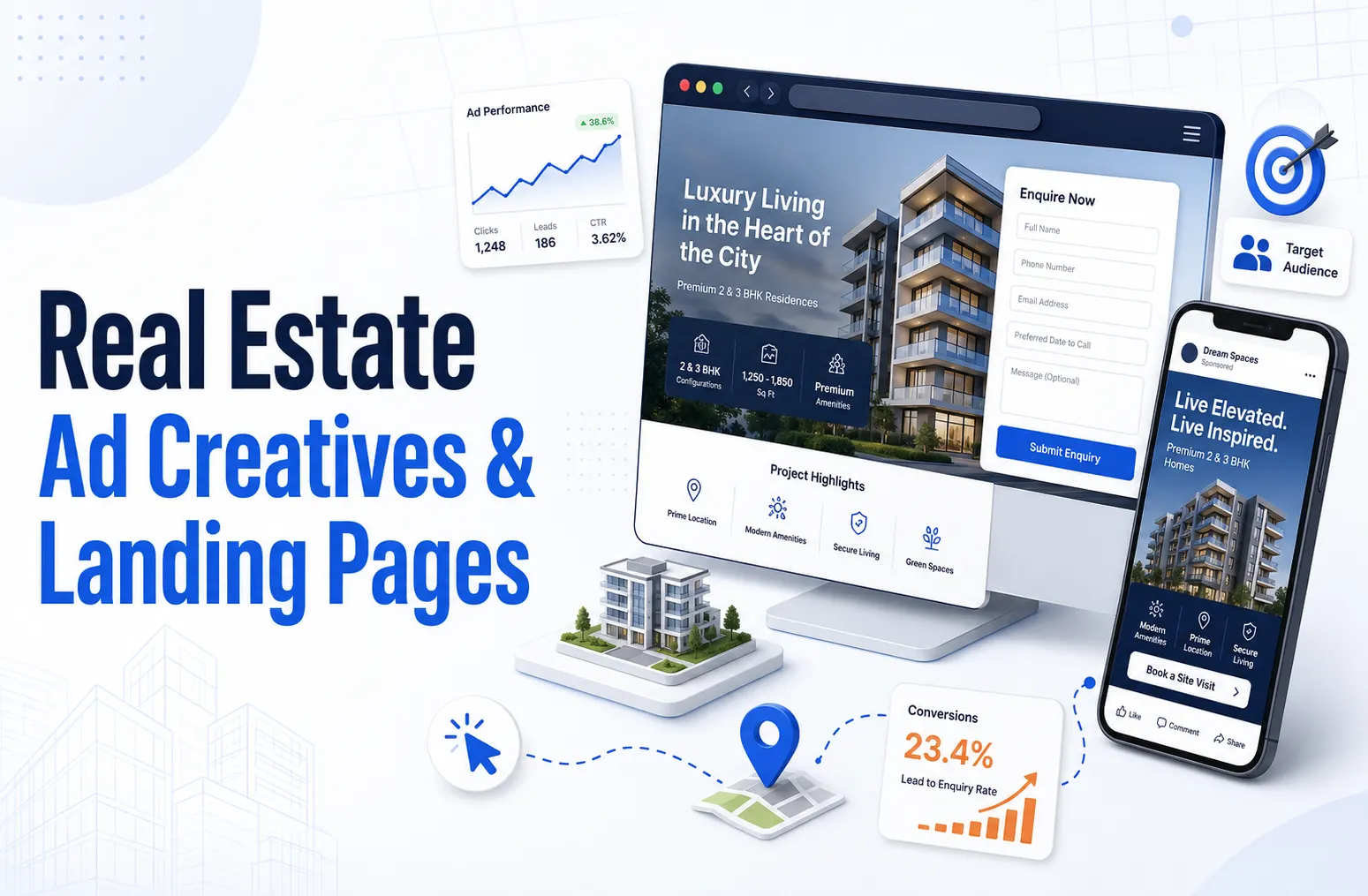
Real estate ad creative and landing pages: the 2026 conversion playbook
Real estate ad creative and landing pages are the two conversion levers that decide whether paid traffic turns into qualified pipeline or wasted spend. In 2026, the strongest operators run short vertical video that shows the actual unit with honest price, location, and possession details in the first three seconds, then send that traffic to a dedicated single-goal landing page rather than a homepage. Done well, this pairing lifts landing-page conversion rates to 8 to 15 percent for high-intent search traffic and cuts cost per qualified lead by 30 to 50 percent, because the creative qualifies the audience before the click and the page removes every reason to bounce after it.
July 17, 2026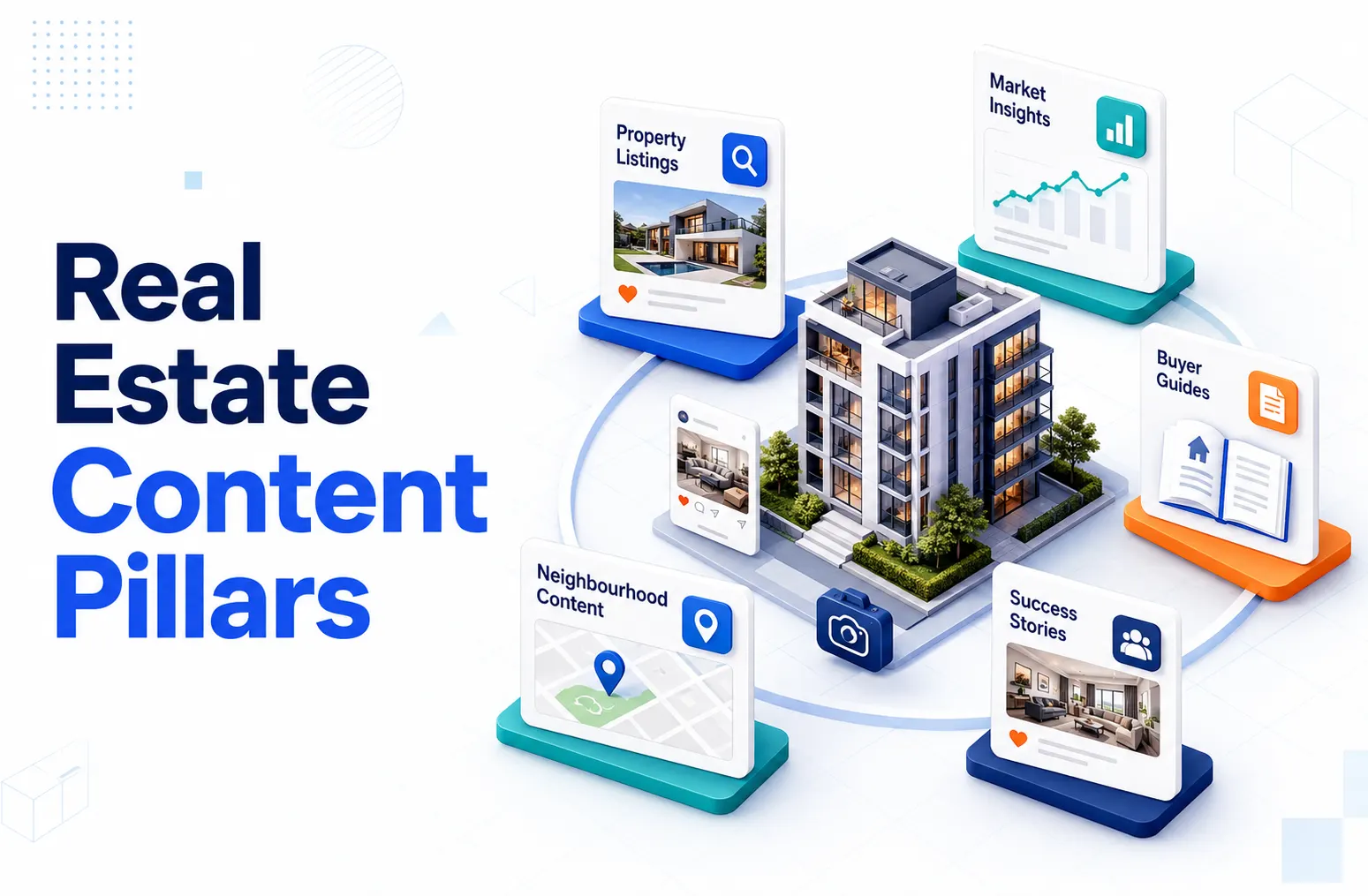 Real Estate
Real estate content pillars: how to build and execute your 4–6 pillar topics
Real estate content pillars are the four to six core topics an operator owns and publishes against consistently, each supporting 20 to 50 individual pieces over 24 months. The five pillars that drive the most measurable pipeline in 2026 are market reports, neighbourhood and city guides, buyer and seller education, operator playbooks, and original research. To execute them, assign every planned piece to one pillar, cluster related pieces into topic hubs that internally link to a central pillar page, and publish four to six pieces per month split across pillars. Done properly, a pillar-first structure compounds topical authority and lifts both Google rankings and AI search citation rates, rather than scattering effort across disconnected posts.
July 17, 2026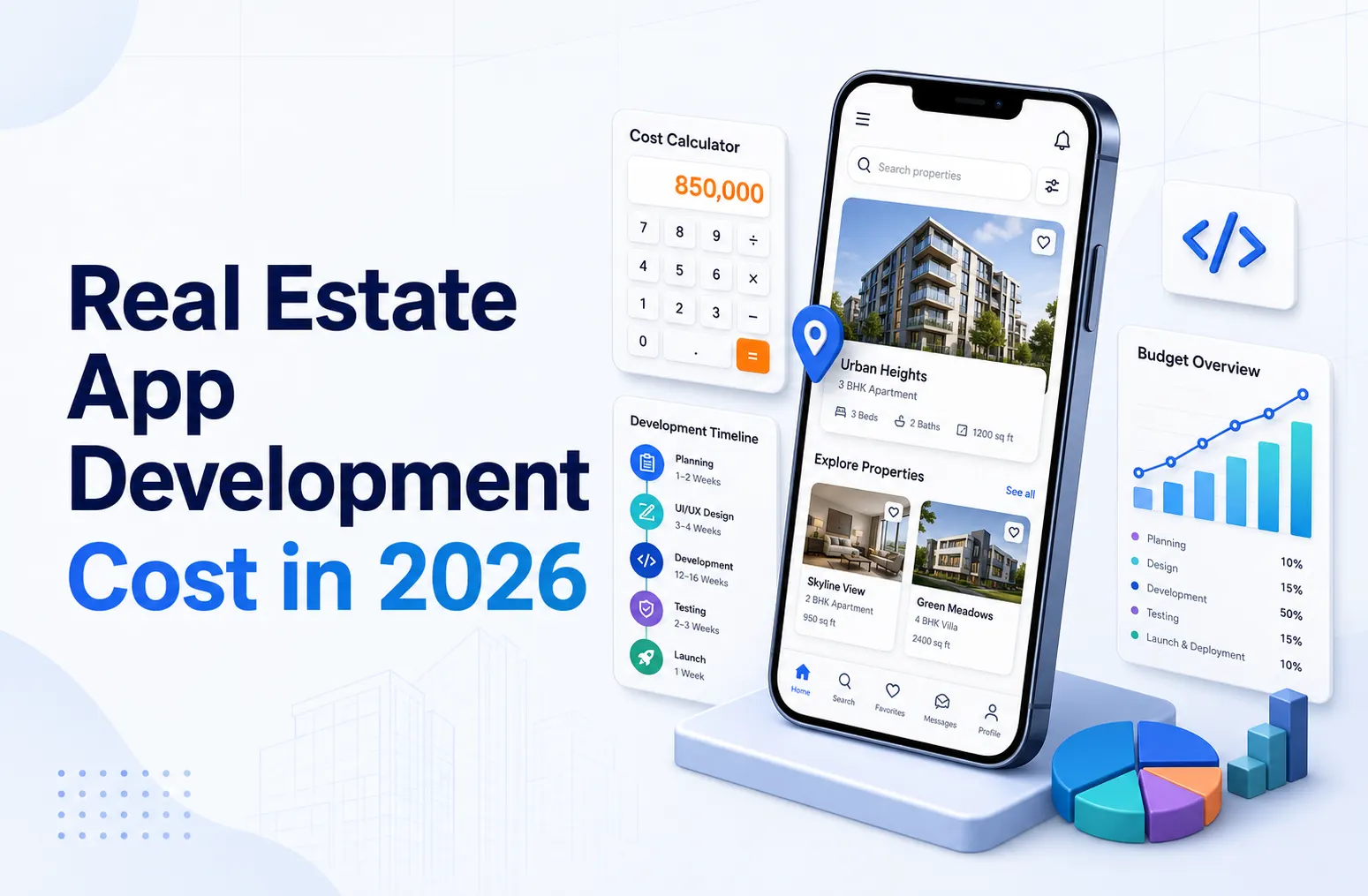 Real Estate
Real estate app development cost in 2026: full guide
Real estate app development in 2026 costs between USD 25,000 and USD 280,000+ depending on scope, platform, and feature depth. A single-platform MVP with basic listing and booking features starts at USD 25,000 to USD 45,000. A cross-platform iOS and Android app with CRM integration, payments, and native listings runs USD 65,000 to USD 140,000. A full property platform or coliving operating system with tenant portal, PMS integration, community features, and AI capabilities costs USD 140,000 to USD 280,000+. Most operators recover the build cost in 8 to 18 months through direct booking uplift and reduced third-party channel commissions.
July 17, 2026
Ready to book a 30-minute strategy call?
We'll map the right digital moves for your real estate business, no pitch deck, no commitment.