

Mayank Pokharna
COO, Noseberry Digitals & Industry Expert
PropTech Software Development: How Noseberry Digitals Builds Smarter Real Estate Solutions in USA
Published September 7, 2026|9 min read
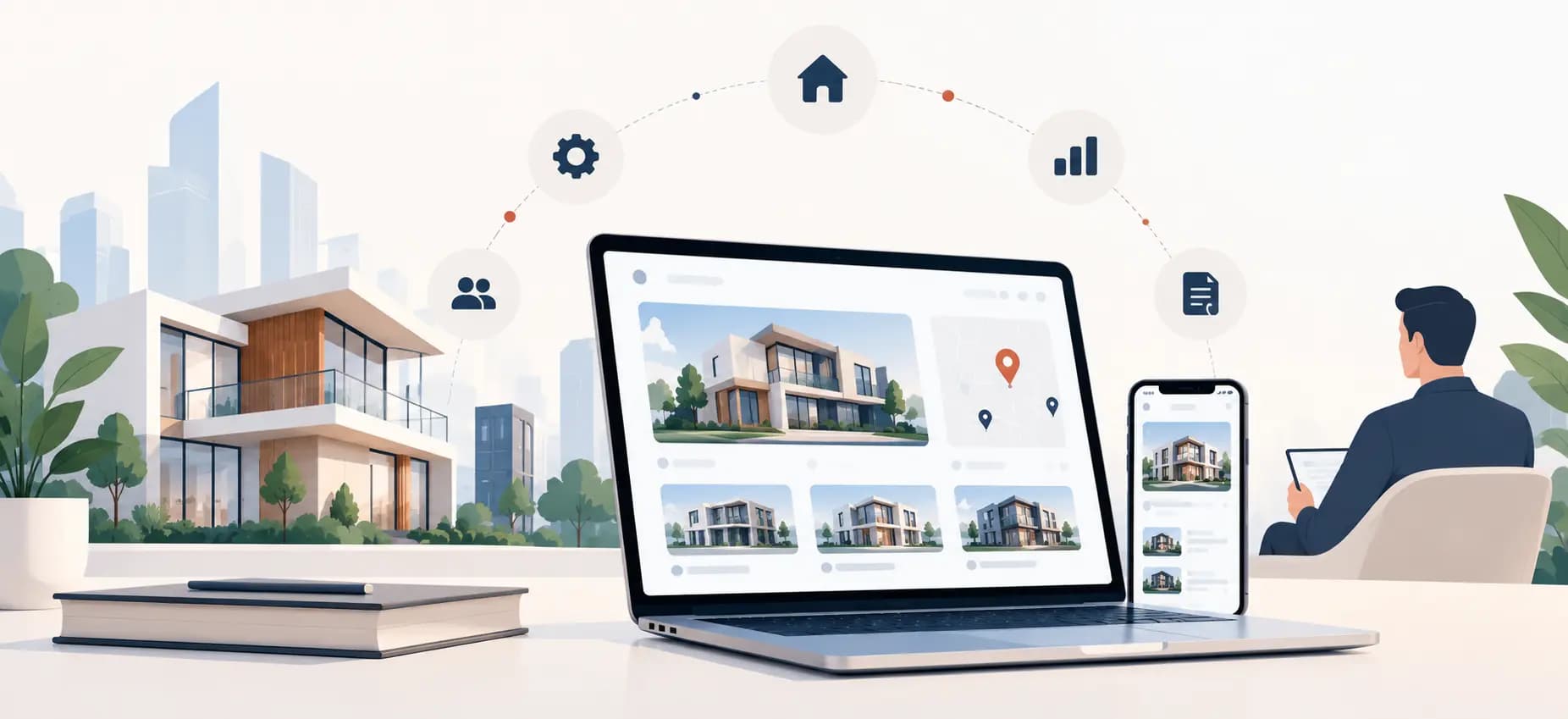
This blog explains what proptech software development actually involves and why real estate businesses need purpose-built platforms instead of generic SaaS tools. It covers what to look for in a proptech software development company, from code ownership to pricing structure to documented build timelines. It walks through how Noseberry Digitals runs its six-phase build process, the types of platforms it builds most often, and the compliance awareness baked into that work. The piece includes real case study results, a comparison of in-house, freelance, and agency development models, and common mistakes real estate companies make when choosing a partner. It closes with a direct answer to why choose Noseberry Digitals as a proptech software development agency, backed by verifiable stats rather than marketing claims.
A proptech software development company in USA builds custom platforms for real estate, like property management systems, broker tools, and marketplaces. It matters because generic software wasn't built for real estate's specific workflows. Lease cycles, commission splits, and multi-party closings need software designed around them, not bent to fit a template.
I've watched real estate operators outgrow rigid, subscription-locked platforms the moment their business gets complex. A template that worked fine at 50 units starts to crack at 500. That's the gap a proptech solution development agency is built to close. My team at Noseberry Digitals has spent over seven years building software only for real estate and proptech. This guide covers what that work looks like. It also covers what to check before hiring a partner. And it answers a question worth asking directly: why choose Noseberry Digitals as a proptech software development agency?
What Is PropTech Software Development and Why Does It Matter?
PropTech software development means building custom applications for real estate operations. That includes property management systems, broker platforms, marketplaces, investor portals, and valuation tools. It matters because generic software forces real estate businesses to bend their process around someone else's assumptions.
Real estate has quirks most software categories don't share. A coliving operator needs bookings and tenant management running together. A brokerage needs deal pipelines tied to commission splits across many agents. A capital markets team needs identity checks and signatures built into a deal room. Those checks can't be added later as an afterthought.
The market backs this up with real numbers. Grand View Research's 2026 proptech market report puts the global proptech market at roughly $50.1 billion in 2026. The report projects annual growth of 12.6% through 2033. North America holds the largest share of that spend. That growth shows operators are moving past spreadsheets. They want software built just for them, not adapted from another industry.
What Should You Look for in a PropTech Software Development Company?
Look for real estate-specific experience first. Then check for a clear code ownership policy, honest pricing, and a documented process with real timelines. Skip any of these checks, and you risk getting locked into software you don't actually own.
Most vendor lists rank companies by star ratings and portfolio size. That tells you almost nothing about what happens after you sign a contract. A pretty portfolio doesn't guarantee you'll own your own platform two years from now. Here's what actually matters when you evaluate a proptech solution development agency:
Does the agency focus on real estate, or is proptech just one of many industries they list?
Who owns the code and the data once the project ships?
Is pricing a flat fee, or does it grow with every new user you add?
What does the build process look like, and how long does each step take?
Can they show real case studies with actual numbers, not just client logos?
Do they understand basics like security readiness or investment rules for fractional ownership deals?
Clutch.co's review of real estate software developers shows most listed agencies compete on star ratings and broad cost ranges. Few publish clear answers on code ownership or pricing structure. That gap is exactly where operators get burned. It usually happens after the software is already live and switching feels too risky to attempt. Ask these six questions on the very first call, not after a proposal has already landed in your inbox.
How Noseberry Digitals Builds PropTech Software
Noseberry Digitals runs every project through six phases. These are discovery, architecture, prototype, production build, launch, and ongoing support. Each phase has a clear goal and a clear exit point. This structure catches problems early. It stops small issues from turning into expensive rework halfway through the build.
The prototype phase usually runs on real client data, not sample data made up for a demo. It wraps in 6 to 8 weeks. A production-ready platform follows in 12 to 20 weeks. The exact timeline depends on how complex the build is. That range holds steady across the software we build most often:
Property management systems for coliving, build-to-rent, and vacation rental portfolios
Broker and agent platforms with deal pipelines and commission tools
Two-sided marketplaces with search, messaging, and transaction flows
Investor portals with identity checks, e-signature, and capital tracking
Multi-tenant products with separate workspaces for each client
Fractional ownership platforms built with securities rules in mind
Our proptech startup services page covers how this same process shrinks down for early-stage founders. They need a working MVP fast. A full enterprise build can wait until the business has proven itself.
Code Ownership and No Per-Seat Fees
Every project ends with 100% of the source code handed over. There's no licensing fee sitting between a client and the software they paid for. There's no per-seat pricing that quietly grows a bill as a team scales. This one decision separates a true proptech software development company in USA from a SaaS vendor wearing a development hat. It's a simple test to run on any proposal you receive: ask directly who owns the repository once the invoice is paid, and get the answer in writing before you sign.
Security-Ready Architecture and Compliance Awareness
Platforms get built with enterprise security in mind from day one. Nothing gets patched on later as an afterthought. Our core software development work treats this as a starting requirement.
For deal rooms and fractional ownership platforms, that awareness goes further. It extends to securities exemption rules like Regulation D and Regulation Crowdfunding. It also extends to advertising rules under the Fair Housing Act for any platform with search or listing features. Those rules matter the moment a platform starts handling real investor money or public listings.
Comparing Software Development Models: In-House, Freelance, and a Dedicated PropTech Agency
Model | Typical Cost | Speed to MVP | Best For |
In-house team | $150,000 to $400,000+ per year in salaries | Slow, 6 to 12 months to first release | Later-stage operators with steady, long-term roadmaps |
Freelance developers | $30 to $150 per hour, variable total cost | Fast to start, inconsistent to finish | Small, narrowly scoped features or fixes |
PropTech software development company | Fixed fee, scoped to the project | Focused, often 60 days to MVP | Founders who need real estate expertise built in from day one |
Each model has its place. The pattern we see most often looks like this. An operator starts with freelancers for a quick fix. They hit a wall on real estate-specific complexity. Then they bring in a dedicated proptech solution development agency once the stakes get higher. By that point, the cost of switching has usually gone up too.
None of this means freelancers or in-house hires are the wrong choice. A small feature update rarely needs a full agency engagement. The decision comes down to complexity and risk. A simple booking widget is not the same problem as a multi-party investor deal room, and the right team should match the actual stakes involved.
Why Choose Noseberry Digitals as a PropTech Software Development Agency?
Why choose Noseberry Digitals as a proptech software development agency comes down to two things: focus and proof. We've served 100+ operators across 14+ countries. We've shipped 250+ digital products. We've built documented playbooks across 60+ real estate verticals since our founding in 2019.
That focus shows up in real work, not just claims. Our case studies include a full software platform built for coliving marketplace Fllat.com. That platform reached 4% higher occupancy after launch. A design and engineering platform rebuild delivered 65% faster navigation for a proptech client. It also doubled demo interactions. Canadian coliving platforms we built and optimized reached 1 to 2.5 million search impressions. Those platforms now carry 78,000 active users.
Clients also get a full team under one roof, not a single narrow specialist. That includes custom app development for iOS and Android. It includes CRM setup for tools like HubSpot and Salesforce. It includes AI agent development for teams ready to automate lead follow-up or underwriting steps. Fixed-fee proposals usually arrive within five business days of a first scoping call. Operators aren't left waiting weeks just to see a number.
Common Mistakes Real Estate Companies Make When Choosing a Software Partner
Picking the cheapest freelancer for a complex, multi-party platform, then paying far more later in rework
Signing a contract without confirming who owns the source code at the end
Assuming a generalist agency understands real estate rules, like fair housing or investment regulations
Skipping a documented process, then discovering scope creep once invoices start climbing
Ignoring support needs after launch, then scrambling when the platform breaks during a fundraising round or busy leasing season
Most of these mistakes trace back to one root cause. Teams treat a proptech solution development agency selection like any other vendor decision. It isn't. Real regulatory and operational stakes are attached, and those stakes only get bigger once real tenants, buyers, or investors start using the platform.
Conclusion
PropTech software development works best when the team lives inside real estate's actual problems. That means lease cycles, investor rules, and messy multi-party deals, not treating real estate as one vertical among many. A proptech software development company in USA earns trust through a documented process, honest pricing, and full code ownership at handover. A polished pitch deck alone doesn't cut it, and it never really did.
The clear takeaway: choosing the right proptech solution development agency means checking code ownership, pricing structure, and real case study proof. Do this before you sign anything, not after the first invoice arrives.
If you're weighing a rebuild, an MVP, or a full platform for your real estate business, start with a quick self-check. Our PropTech Readiness Index is a good place to begin. Then reach out to talk through scope. You can also read more about our team and track record on our about page before booking a call.
- A proptech software development company in USA builds software around real estate-specific workflows, like lease cycles and commission splits, that generic SaaS doesn't handle well.
- The global proptech market reached an estimated $50.1 billion in 2026, growing at a 12.6% CAGR through 2033, with North America holding the largest regional share.
- Vendor evaluation should focus on code ownership, pricing structure, documented process, and real case study proof, not just star ratings.
- Noseberry Digitals runs a six-phase build process, with prototypes ready in 6 to 8 weeks and production platforms in 12 to 20 weeks.
- Every Noseberry Digitals engagement includes 100% source code transfer and no per-seat licensing fees.
- Real case studies include a coliving marketplace reaching 4% higher occupancy and a proptech platform achieving 65% faster navigation.
- Noseberry Digitals has served 100+ operators across 14+ countries with documented playbooks across 60+ real estate verticals since 2019.
- In-house teams, freelancers, and dedicated proptech agencies each fit different stages and budgets, with agencies best suited for complex, compliance-sensitive builds.
- Common hiring mistakes include skipping code ownership checks and assuming a generalist agency understands real estate compliance.
- Fixed-fee proposals from Noseberry Digitals are typically delivered within five business days of an initial scoping call.
Why trust Noseberry
Our content is written by practicing real-estate and PropTech professionals, fact-checked by a dedicated editorial team, and reviewed against the latest industry data before publication.
- 10+ years of industry expertise
- All facts independently verified
- No sponsored rankings in guides
- Updated when the industry changes
Have any questions?
What does a proptech software development company in USA actually build?
A proptech software development company in USA typically builds property management systems, broker platforms, real estate marketplaces, investor portals, and valuation tools. The common thread is software designed around real estate workflows, like lease cycles, commission splits, and multi-party deals.
How is a proptech solution development agency different from a general software agency?
A proptech solution development agency focuses only on real estate workflows, rules, and buyer types, while a general agency treats real estate as one industry among many. That focus usually means faster discovery and fewer costly guesses during the build.
Why choose Noseberry Digitals as a proptech software development agency over a generalist firm?
Noseberry Digitals has focused only on real estate and proptech for over seven years. We've served 100+ operators across 14+ countries with playbooks across 60+ verticals. Clients also get full source code ownership and fixed pricing instead of per-seat fees.
How long does proptech software development take?
A working prototype on real data usually takes 6 to 8 weeks. A production-ready platform follows in 12 to 20 weeks, depending on complexity. Simpler MVPs can launch in as little as 60 days when the scope stays tight upfront.
How much does it cost to build proptech software?
Costs vary by scope, but fixed-fee proptech builds commonly run $70,000 to $300,000 or more for a full release. In-house teams often cost $150,000 or more a year in salaries alone, before tools and management overhead.
Who owns the code after a proptech software development company in USA finishes the project?
This depends entirely on the contract, which is why it needs to be confirmed before signing. Some agencies keep partial ownership or licensing rights that limit what you can do later. Others, including Noseberry Digitals, hand over 100% of the source code at the end, with no strings attached.
What compliance issues matter most for proptech platforms?
Compliance needs shift by platform type. Common ones include security checks for enterprise buyers, fair housing rules for search and marketing features, and money rules like Regulation D for investor platforms. A good partner should flag these issues early. You shouldn't have to find out about them after launch, when a fix costs far more.
Is it better to hire a freelancer or a proptech software development company in USA?
Freelancers can work well for small, narrow fixes. They rarely offer the structured process or long-term accountability a full platform needs. A dedicated proptech software development company in USA is usually the safer pick once money or compliance enters the picture.
What's the biggest mistake real estate companies make when hiring a software partner?
The biggest mistake is signing a contract without confirming code ownership or pricing structure upfront. Teams often discover scope creep or licensing lock-in only after the platform is already live and switching costs have climbed. Checking real case studies and asking direct questions before signing prevents most of this.
Does Noseberry Digitals only build software, or does it offer other services too?
Noseberry Digitals offers a full range of services beyond software. That includes branding, website development, app development, CRM setup, digital marketing, and AI agent development. All of it is built only for real estate and proptech clients, under one accountable team instead of several disconnected vendors.
Related insights
 Real Estate
Why Noseberry Digitals is one of the best real estate mobile app development company in USA
This blog explains why Noseberry Digitals stands out as a real estate mobile app development company, built around a focused history of property and proptech clients rather than general app development. It walks through the seven-phase development process, the native versus cross-platform decision, and the app store compliance work behind a 14-of-16 first-try approval rate. It shares measurable client results, including faster navigation, lower bounce rates, and occupancy gains from real coliving, brokerage, and marketplace projects. It also compares Noseberry against typical generalist agencies on cost, ownership, and post-launch support. The article closes with a 10-question FAQ covering cost, timeline, and technology choices for anyone evaluating a real estate app development partner.
September 8, 2026 Real Estate
Top 5 Software Development Company for Real Estate in USA: Full Comparison Guide
This blog ranks and compares the top five software development companies for real estate in the USA, starting with Noseberry Digitals and covering Ascendix Technologies, TechAhead, Chetu, and Itransition. It walks through what actually separates a real estate specialist from a general software vendor, including source code ownership, industry focus, and post-launch support. The piece includes a side-by-side comparison table covering headquarters, experience, and specialty for each company. It also breaks down realistic pricing ranges, engagement models, and red flags to watch for before signing a contract. The article closes with a 10-question FAQ section covering selection criteria, costs, and timelines.
September 7, 2026 Real Estate
Real Estate Transaction Management Software Development: How Noseberry Digitals Helps US Businesses Build Smarter Workflows
This blog explains what it takes to build custom real estate transaction management software and why growing US brokerages and proptech businesses are moving away from off-the-shelf transaction tools. It breaks down the core modules a custom platform needs, including deal pipeline tracking, e-signature workflows, commission automation, and compliance checks. The piece includes real cost and timeline benchmarks for custom builds compared to off-the-shelf pricing, along with market growth data for the transaction management software category. It also covers the federal and fair housing compliance rules that apply to any platform handling closing documents and client data.
September 7, 2026
Ready to book a 30-minute strategy call?
We'll map the right digital moves for your real estate business, no pitch deck, no commitment.