
Build-to-rent operators
BTR is won at stabilised occupancy with resident retention that compounds. Every pillar below is a lever we work with operators to move.
Framework: the 12 Pillars of real estate
What we do for build-to-rent operators
Noseberry Digitals builds the digital operating stack build-to-rent operators need to lease up, retain residents, and report to investors, resident apps, leasing conversion funnels, occupancy and NOI dashboards, INREV-aligned investor packs, and Yardi / RealPage integrations.
Resident app and portal
Leasing, payments, amenity booking, and maintenance in one branded app across iOS and Android, tied to the PMS.
Leasing conversion funnel
Tour scheduling, waitlist, deposits, and e-sign wired into CRM so leads move from first click to signed lease without leaking.
Occupancy and NOI dashboards
Asset-level and portfolio-level views of occupancy, rent roll, and NOI, filterable and drill-down ready for asset managers.
Investor reporting for BTR funds
INREV and ILPA-aligned quarterly packs automated from operating data, close-to-report inside 15 to 30 days.
Yardi, RealPage, and BMS integrations
Bidirectional data flow across property management, revenue, and building systems so one source of truth feeds every report.
Every pillar below is a lever we work with build-to-rent operator teams to move, so assets reach stabilised occupancy and hold ninety-five percent through the hold period.
The 12 Pillars, applied to build-to-rent
Every pillar plays out differently here. This page walks how each one applies, what good looks like, and where we solve it.
Business Models
The operator's problem
BTR earns recurring rent from owned, operated buildings. Every empty month is real money and stabilised occupancy is the whole game.
What good looks like
Ninety-five percent stabilised physical occupancy inside 18 months of practical completion, resident retention above 65% at year one, and NOI margin at underwriting or better by the end of stabilisation year one.
How Noseberry solves it
We model the operating economics, stress-test lease-up and document strategy.
- Full operating model with sensitivities
- Lease-up curve stress-test
- Amenity ROI analysis
- Operating strategy narrative
Concept & Product Design
The operator's problem
The building is the product. Amenities that add cost without adding rate quietly kill margin over asset life.
What good looks like
Unit mix and amenity spec survive a live catchment pressure-test against 8 to 12 named comparables, achieved rent growth runs 100 to 200 bps above the local index, and average tenure crosses 22 months.
How Noseberry solves it
We test unit mix and amenity ROI against real demand.
- Unit mix and amenity pressure-test
- Competitor comparables review
- Amenity ROI analysis
- Resident narrative per unit type
Customer Experience
The operator's problem
Residents live with your operation for months to years. Broken digital experience or slow maintenance turns recurring into churn.
What good looks like
Resident NPS above 45, year-one renewal above 65%, complaint-to-close cycle inside 48 hours, and 20 to 30% of new leases traced to resident referrals through a coded referral link in the resident app.
How Noseberry solves it
We map the full resident journey and build the touchpoints that hold it.
- Resident-journey map with retention targets
- Leasing site and tour-booking flow
- Resident app for payments and maintenance
- Renewal and referral programme
Fundraising & Investment
The operator's problem
BTR is capital-heavy. Senior debt, equity and JV all want different diligence. One deck for all three slows the close.
What good looks like
Senior debt, LP equity, and JV variants of the deck each answer the diligence set that stakeholder actually asks, and the capital stack closes inside the planned 6 to 9 month window with no rework of the model.
How Noseberry solves it
We build pitch, IM, financial model and data room.
- Investor deck variants
- IM with lease-up assumptions
- Financial model with NOI and yield-on-cost
- Data room and diligence
Design & Architecture
The operator's problem
The building sells itself in the first tour. Communal spaces, unit finishes, amenity design and brand all decide whether a prospect signs.
What good looks like
Communal spaces, unit finishes, and channel-ready photography convert 40 to 55% of booked tours into applications, and launch content generates 250+ user-posted stays across Instagram and TikTok in the first 6 months.
How Noseberry solves it
We produce brand identity, interior visualisation and communal space design.
- BTR brand identity system
- Interior visualisation and 3D
- Communal-space design and specification
- Marketing collateral and virtual tours
Marketing Strategies
The operator's problem
Lease-up is a concentrated race. Every month of empty units burns money. Marketing has to build a waitlist and hold occupancy through asset life.
What good looks like
Pre-opening waitlist covers 60 to 80% of Phase 1 units by handover, blended CPL stays under 45 dollars across search, portals and social, and 95% physical occupancy holds inside months 12 to 18 of trading.
How Noseberry solves it
We run brand, launch site, waitlist mechanics and demand generation.
- BTR brand and launch site with waitlist
- Search, social and portal campaigns
- Referral and advocacy programme
- Reporting dashboard tracking lease-up
Operations & Property Management
The operator's problem
Rent collection, maintenance, resident communication, turnovers and renewals happen every day. Friction reduces retention and NOI.
What good looks like
Every move-in, ticket, renewal, and rent collection flows through one PMS, maintenance SLAs are met on 95%+ of tickets, and unit turnover time between residents holds under 5 working days across the portfolio.
How Noseberry solves it
We build the operations stack across leasing, PMS, resident app and reporting.
- Leasing and PMS platform integration
- Resident app for full lifecycle
- Maintenance workflow and SLAs
- Ops reporting
Apps & Technology
The operator's problem
BTR stacks fail when leasing platform, PMS, resident app and finance do not talk. Renters expect Airbnb UX; operators want institutional reporting.
What good looks like
Leasing site, PMS (Yardi Voyager or MRI), resident app, and finance ledger share one identity graph, occupancy and NOI dashboards refresh nightly, and no CSV export is needed before the monthly board pack.
How Noseberry solves it
We design and build the stack for BTR unit economics.
- Leasing website with application flow
- Resident app across iOS and Android
- PMS and finance integrations
- Analytics on occupancy and NOI
HR & Training
The operator's problem
Property managers handle tours, move-ins, maintenance escalations and difficult conversations. Weak enablement shows up as poor retention.
What good looks like
Every property manager completes the same 4-week onboarding, tour-to-application conversion holds within 5 points across the portfolio, and Google review scores stay above 4.5 with staff replies inside 24 hours.
How Noseberry solves it
We build the enablement package.
- Property manager playbook
- Brand voice and comms guide
- Digital tools for tours and ticketing
- Onboarding and training
Sales & Lead Generation
The operator's problem
Response time and tour conversion decide whether you beat the private market next door. Slow response loses.
What good looks like
Portal and website enquiries get a first human reply inside 8 minutes, a tour booked within 48 hours, application signed inside the same week, and every stalled lead recovered by a triggered CRM cadence.
How Noseberry solves it
We build the lead engine and CRM that stops leads leaking.
- CRM configuration for BTR intent
- Instant follow-up automation
- Tour booking flows
- Application-to-move-in tracking
Market Research & Trends
The operator's problem
Site, mix, amenity and pricing all rest on real demand. Guessing compounds over the asset's life.
What good looks like
Every site, mix and pricing decision cites a named catchment demand study, 10+ comparable rents pulled inside the last quarter, and a documented view of local supply pipeline for the next 24 months.
How Noseberry solves it
We provide research from real market data.
- Catchment demand analysis by persona
- Competitor supply and pricing
- Amenity and add-on pricing studies
- Site and pricing decision document
Compliance & Legal
The operator's problem
Tenancy law, licensing, deposit protection, safety rules and data protection all vary by market. Compliance mistakes invalidate leases and expose fines.
What good looks like
Right-to-rent, deposit protection, tenancy agreements, and GDPR consents are captured inside the leasing flow, the audit trail is queryable per resident, and no tenancy has been voided by a compliance gap in 24 months.
How Noseberry solves it
We build compliance into every platform.
- Tenancy and deposit-protection integration
- Data protection compliance
- Consent capture and audit trail
- Right-to-rent and identity checks
Signals it is time to talk to us
If you recognise two or more of these in your current or upcoming plan, the pillars framework will move the needle faster than another point solution.
- 01
Lease-up is behind pace and the tail is compounding into carrying costs.
- 02
Retention is weaker than the underwriting assumed and renewals are dropping.
- 03
Your leasing platform, PMS and resident app do not talk and leads leak between them.
- 04
Investors want tighter, more frequent reporting than your stack can produce.
- 05
You are launching in a new market where the operator brand has no equity yet.
- 06
The next scheme's underwriting depends on beating the last one's stabilised numbers.
Why operators trust us
Real people, real projects, real clients
A decade of shaping one industry. Every case study we publish is a real operator we have shipped for.

Atul Kumar Yadav
Founder & CEO
Founded Noseberry Digitals in 2019 and continues to lead the company as CEO. Sets vision and growth strategy across brand, software, marketing and AI for real estate and PropTech operators.

Related guides
Long-form reading tied to the pillars above. Every guide goes deeper on what works, what breaks, and what to build against.
- Build-to-Rent Operating GuideThe operational blueprint for a BTR asset from lease-up through stabilised occupancy.
- Real Estate Digital Marketing & Lead GenerationHow launch and ongoing campaigns are structured across property channels.
- Real Estate App DevelopmentWhere a buyer portal or resident app earns its keep across the property lifecycle.
- Real Estate Branding & DesignHow brand and design carry the sale before the product is touched.
- Custom Real Estate CRM DevelopmentWhen off-the-shelf CRM stops working and a custom build starts paying back.
- Property Management SoftwareThe operational software backbone of a property management or operator business.
From the blog
Shorter takes on what we are seeing across engagements. Field notes, playbooks and observations from live projects.
What should a PMS do for small-scale property managers?
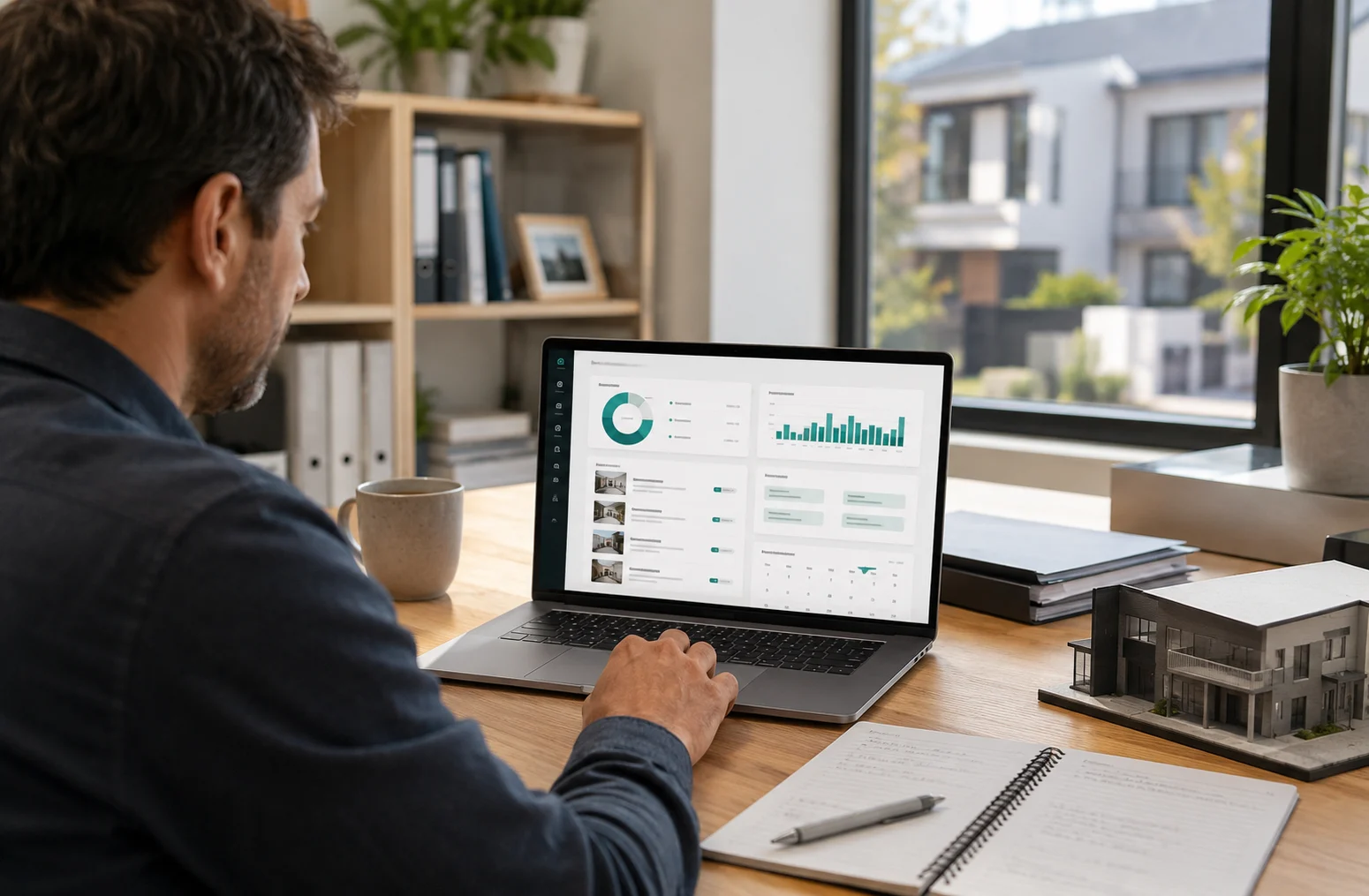
The ideal PMS for a small-scale property manager (typically 10 to 500 units) should do ten things well: capture every rent payment automatically, log every maintenance ticket with photo evidence and vendor dispatch, hold every tenant lease and document in one searchable place, generate owner and investor statements in one click, run automated rent reminders and late-fee escalation, screen tenants with credit and eviction history, sync with the operator's accounting stack (QuickBooks, Xero), work on mobile so field checks and unit walks happen on a phone, integrate with a website for listing marketing and online applications, and produce broker-visible dashboards that let the manager see occupancy, delinquency, and cash flow at a glance. AppFolio Property Manager Core, Buildium, DoorLoop, Rentec Direct, and Hemlane are the platforms most adopted at this scale in 2026, at $1.40 to $4 per unit per month. This post covers what the ideal PMS should do, which platforms actually deliver it, and how to pick without overpaying.

Which AI tools work best for real estate developers in 2026?
The best AI tools for real estate developers in 2026 fall into eight categories that map to the developer lifecycle: land sourcing and site selection (Cherre, Reonomy, HouseCanary, LandGate), feasibility and financial modelling (Northspyre, TestFit, custom Excel plus GPT), design and architectural planning (Autodesk Forma, Higharc, Cove.tool, Snaptrude), construction management and progress tracking (Procore AI, Autodesk Construction Cloud, Buildots, Doxel, OpenSpace), pre-launch marketing and renders (Restb.ai, MidJourney, Adobe Firefly), off-plan sales CRM (Salesforce, HubSpot, Follow Up Boss, Rechat), ESG and net-zero analytics (Measurabl, Enertiv, Aquicore), and handover to operations (BIM AI, tenant portal AI). Used well, they cut construction cost 10 to 20 percent, compress design cycles 30 to 50 percent, and lift off-plan sales conversion 20 to 40 percent. Used badly, they burn subscription budget and produce plans that do not build. This post walks through each category, which tools actually work, and how to sequence adoption.
ADA & WCAG Accessibility Compliance for Real Estate Websites: What Operators Must Fix Before They Get Sued
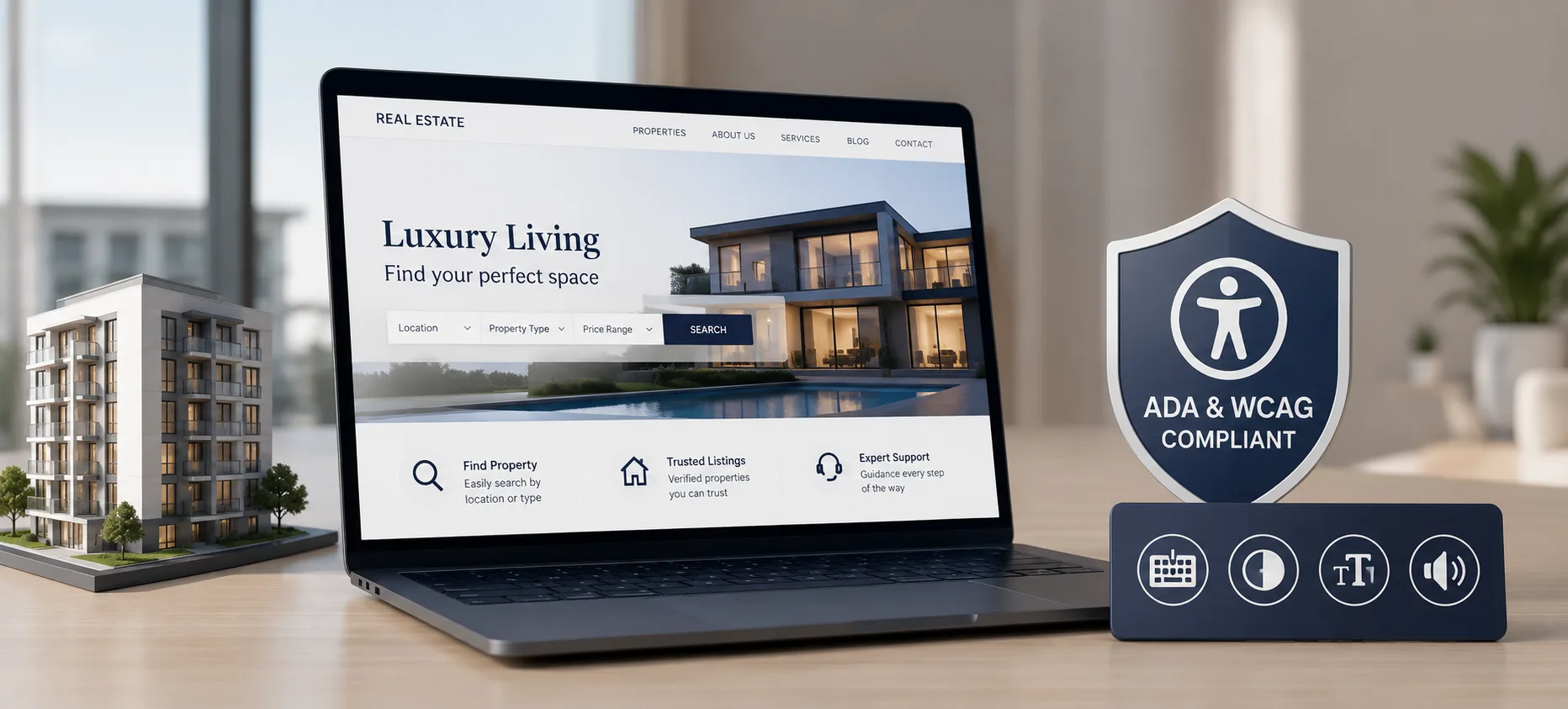
This blog breaks down ADA and WCAG accessibility compliance for real estate websites, focused on what actually creates legal exposure. It explains why WCAG 2.1 Level AA has become the practical legal standard even without a formal Title III regulation for private businesses. It walks through the six accessibility failures responsible for 96% of all detected errors across the web, using real listing-page examples. It also warns against relying on accessibility overlay widgets, citing the FTC's 2025 action against accessiBe over deceptive compliance claims. The piece closes with a step-by-step audit process, an in-house versus compliance-partner comparison, and a 10-question FAQ section.
Frequently asked questions
What does a digital agency do for BTR operators?
We help operators reach and hold ninety-five percent stabilised occupancy, across brand, leasing site, resident app, PMS integration, retention marketing and compliant data.
How do you help a BTR asset lease up faster?
By building the pre-opening waitlist, tuning marketing to real renter search behaviour, and wiring in fast-response CRM with tour-booking flows that convert.
Do you build resident apps for BTR?
Yes. Resident apps for payments, maintenance, community and renewals, branded to your operator identity, built on iOS and Android.
Can you help raise BTR finance?
Yes. We build investor materials with lease-up assumptions and stabilised assumptions, financial model with NOI and yield-on-cost, and the data room organised for BTR-specific diligence.
What size of BTR operator do you work with?
From first-block operators through portfolio owners running multiple assets. The engagement flexes with the scope.
The full build-to-rent operator plan
Whether it is your first block or a rolling portfolio, lease-up and retention are won across all 12 pillars. Tell us where you are and we will map the pillars that most affect your NOI.
Build-to-rent operators · 12-pillar plan · Reply within 24 hours